Riddling, Disgorging
Lees Aging & Dosage
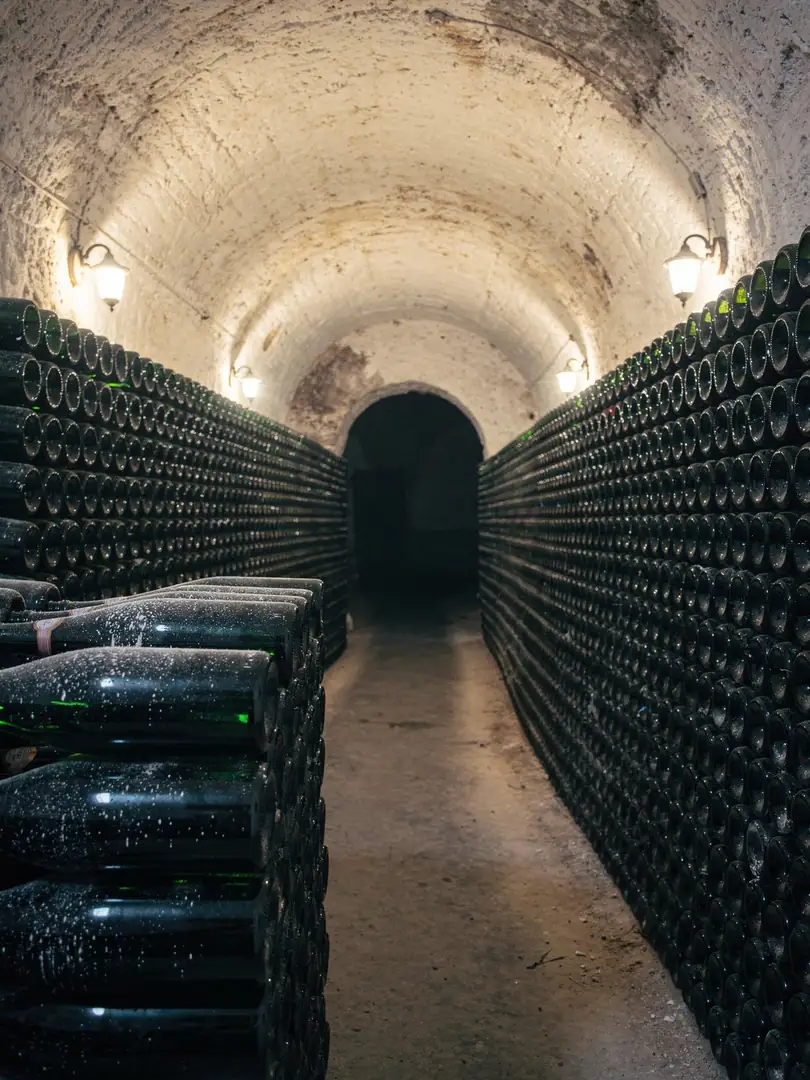
After bubbling, the bottles sleep on their lees. For non-vintage Champagne, the law requires at least 15 months from tirage to sale, of which at least twelve must be spent uninterrupted on the lees. A vintage Champagne needs 36 months from tirage.
Many houses in Aÿ, Dizy and the valley's other villages voluntarily leave their bottles resting longer than the law requires. Bollinger in Aÿ disgorges some vintages only after many years, shortly before sale. R.D. on the label stands for récemment dégorgé, recently disgorged.
What happens during this time is called autolysis: the dead yeast cells break down and release aromas of brioche, bread and nuts, along with a creamy mouthfeel, into the wine. The longer this lasts, the more pronounced this note becomes.
To remove the yeast from the wine, riddling takes place. In the past, each bottle was turned a little every day on a riddling rack until the yeast collected in the neck; today machines called gyropalettes usually do this work. The wine journey tells the story of the 1816 riddling rack.
During disgorgement, the neck of the bottle is dipped into a brine at minus 20 degrees, freezing the yeast plug. The crown cap is removed, the pressure shoots the plug out, and the bottle becomes clear. The dosage follows, a solution of sugar in wine that compensates for the loss and sets the final taste. At most, 0.5 percent additional alcohol by volume is permitted here.
The sweetness levels are precisely defined: Brut Nature has under 3 grams of sugar per liter, Extra Brut 0 to 6, Brut under 12. Extra Dry, at 12 to 17 grams, is therefore sweeter than Brut. Dry, or sec in French, means 17 to 32 grams, demi-sec 32 to 50, and mild, doux in French, over 50 grams. Most Champagnes carry the designation Brut.