Fruit, Brioche, Lift
Tasting
A Meunier-led Champagne from the Marne Valley smells of red apple, ripe pear and fresh brioche. On the palate it feels softer than a Champagne made from almost pure Chardonnay. The acidity is there, but it steps back behind the fruit.
Three houses of the valley serve well as examples of this style. Bollinger's Special Cuvée from Aÿ has a high proportion of Pinot Noir and comes across powerful, nutty and dark-fruited. Billecart-Salmon's Brut Réserve from Mareuil-sur-Ay is finer, with pale fruit and a delicate bready note.
Deutz's Brut Classic, also from Aÿ, sits between the two, balanced and bright. In Germany, the house is known through its Breisach relative Geldermann, which, however, makes its own sparkling wines.
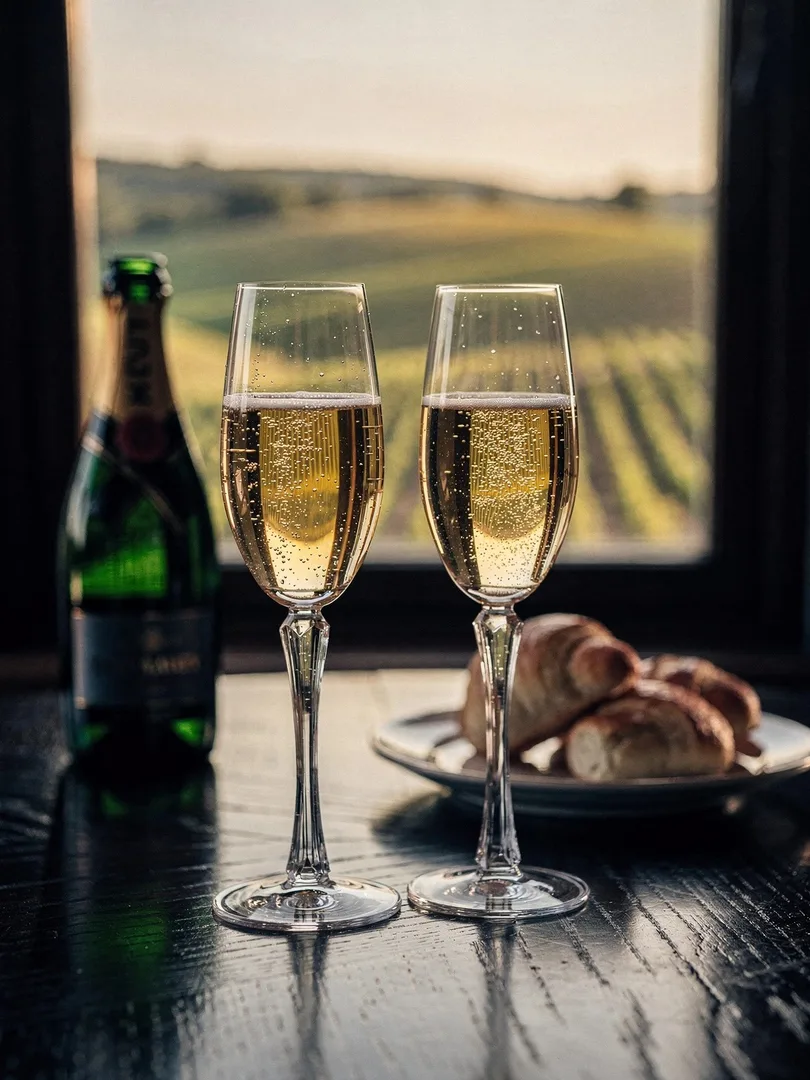
For the glass, a tulip or a slender white wine glass works better than the flat coupe. In a coupe, aroma and bubbles escape quickly, while a tulip holds both together and lets the bubbles rise in a fine chain.
Serve well chilled, at about eight to ten degrees. Too cold, and it shuts down its aromas; too warm, and it overflows when poured. Fill the glass only two-thirds full, so the bouquet has room to open.
When opening, it is safest to hold the bottle at an angle and keep the cork firmly in hand. You then turn the bottle, not the cork, letting the pressure escape with a quiet hiss rather than a loud pop. Around six bar of pressure sits inside the bottle, so it should never be pointed at anyone.