Hogback and Terraces
Soil & Climate
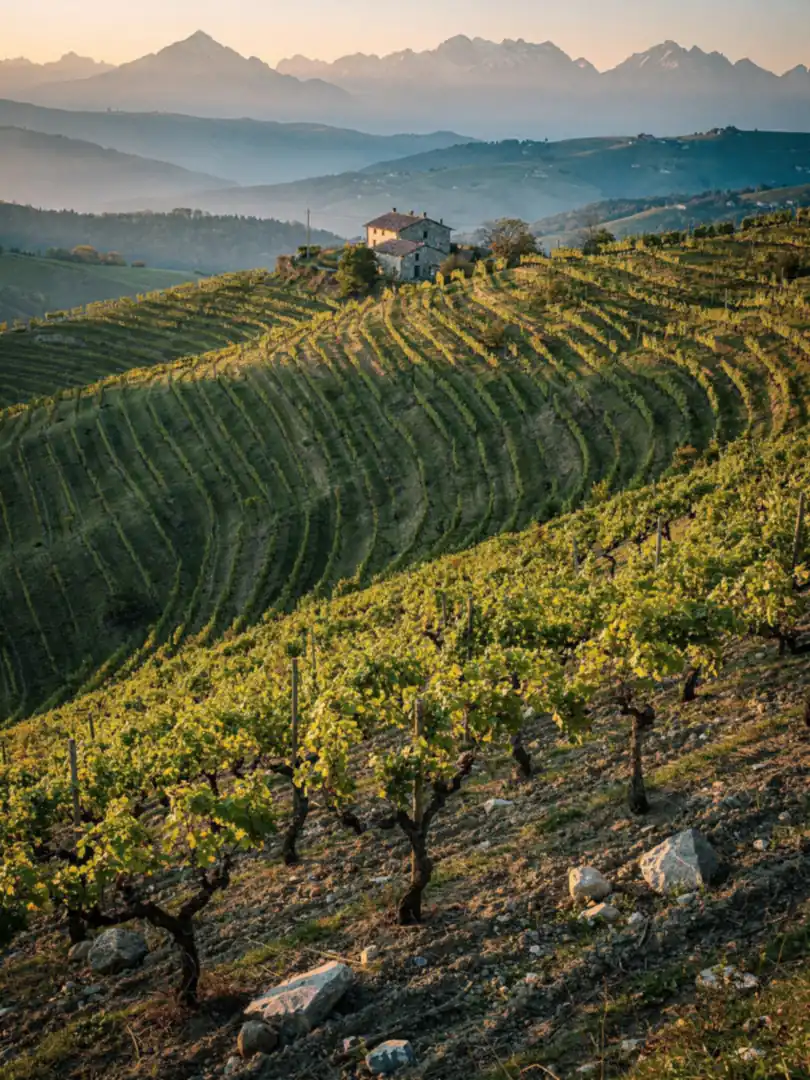
Between Conegliano and Valdobbiadene, the hills roll like waves one after another, each ridge narrow and steep, with tight valleys in between. UNESCO calls this shape hogback. To the north rise the foothills of the Alps; to the south, the plain opens out toward the Adriatic.
The soil is former seabed. Marl, sandstone, and conglomerate, laid down over millions of years, form the subsoil. Where clay dominates, the soil turns heavy and holds water; where sand prevails, it's lighter and dries faster. This shift often appears within a single slope, from plot to plot, and that's exactly why the Rive exist, individually named vineyard sites.
For sparkling wine, acidity is everything, and the climate provides it. At altitude, nights cool noticeably, so the grapes ripen slowly and keep their freshness. South-facing slopes get more sun and yield riper grapes, while shadier sites stay leaner. For the wine, that means brighter fruit, moderate alcohol, and a freshness the cellar can only preserve later, never create.
Since the 17th century, winemakers have shaped the slopes into ciglioni, narrow grass strips that follow the contour lines. The grass holds the soil during heavy rain, and the steps channel the water away. Vine rows alternate running parallel and perpendicular to the slope, forming a checkerboard pattern when seen from above.
For the steepest plots, the term heroic viticulture applies: machines can barely reach them, so canopy work and harvest are done by hand. The sites with their own names are called Rive—43 in all, each tied to a municipality or hamlet. On the label, a Rive wine shows the name of the site and the vintage. Cartizze, about 107 hectares around San Pietro di Barbozza, Santo Stefano, and Saccol in Valdobbiadene, is considered the region's grand cru.