Apple, Pear, Blossom
Tasting
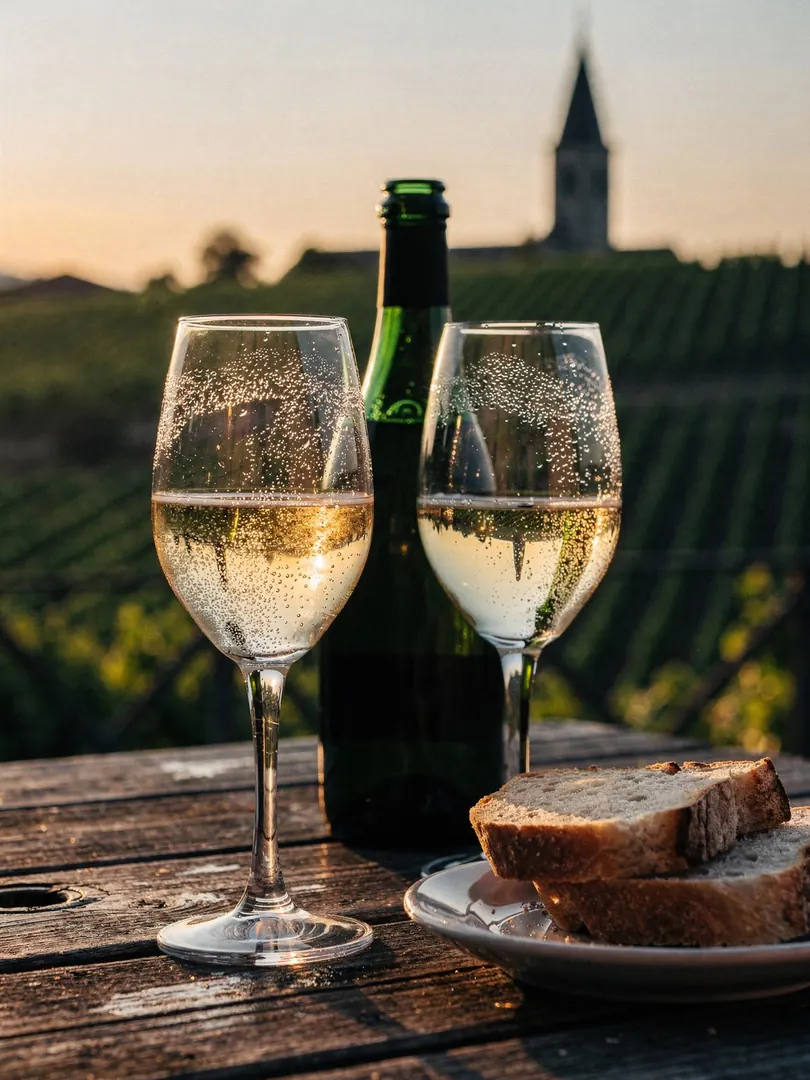
A Conegliano Valdobbiadene Prosecco Superiore smells of green apple, pear, citrus, and white blossom. On the palate, it's light, lively, with a fine, not overly forceful mousse. Alcohol usually sits around eleven percent. The acidity is fresh but not sharp. A Brut feels lean, an Extra Dry softer and fruitier. When tasting, it helps to focus first on the nose, then the mousse, and finally the palate: where does the sweetness sit, how long does the fruit linger?
Three houses are well suited for comparing styles: Carpenè Malvolti from Conegliano, Mionetto from Valdobbiadene, and Collalto, which among others bottles an Extra Dry. Tasting different sweetness levels from the same origin side by side quickly reveals just how much sugar changes the impression.
Rive and Cartizze are the single-vineyard wines of the region and let the hillside show through: often a touch more spice, more length, a finer aroma. A Sui Lieviti tastes different: cloudy in the glass, drier, with a hint of bread crust and yeast alongside citrus, and typically a gentler mousse.
The glass can be a tulip, a flute that narrows slightly toward the top, or a medium-sized white wine glass. A wide bowl lets the bubbles escape faster and the aroma dissipate, making it a poor choice for a wine with delicate fruit. Fill the glass only halfway, so the aroma has room to develop.
Well chilled between six and eight degrees Celsius, it tastes clearest; too cold, and the chill mutes the aroma. When opening, loosen the wire cage, hold the cork firmly, turn the bottle, and let the pressure escape quietly rather than popping it. A Sui Lieviti should stand undisturbed beforehand so the lees don't get stirred up.