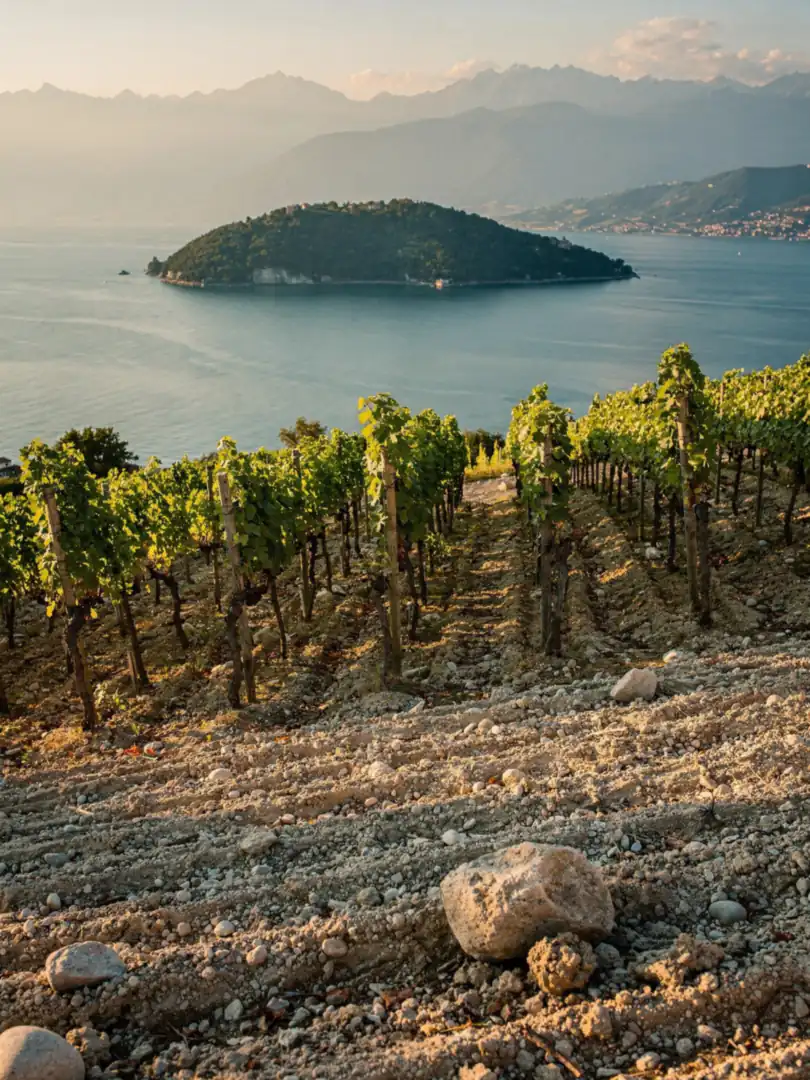
Moraines and lake breeze
Soil & Climate
At the end of the last Ice Age, a glacier pushed from the Val Camonica into the Alpine foreland and split into two arms behind what is now Lake Iseo. As the ice retreated, it left behind mountains of rubble, sand and silt. From these formed the gentle hills of Franciacorta, an amphitheater opening toward the lake.
The soil here is therefore not limestone as in Champagne, but moraine debris: sandy, rich in silt, low in clay, often deep and very well-draining. Rainwater runs off quickly, forcing the vines to send their roots far down. Local experts distinguish six soil types. On the hill ridges lies fine moraine in a thin layer, while in the paths of the old glacial streams there is coarser, deeper alluvial soil, and each type gives the wine its own character.
The lake moderates the climate. In summer, cool air drifts from it into the vineyards; in winter, it releases stored warmth and protects against frost. The Monte Orfano ridge also has a balancing effect. Overall it's warmer here than in Champagne, which is why harvest often begins as early as August.
Because the grapes arrive at the winery early and ripe, the style of many Franciacorta wines turns out a bit rounder and fruitier than their northern models. Acidity nevertheless remains essential, since without it the wine couldn't withstand the long aging on the lees.
For visitors, the lake is the backdrop. In front of Monte Isola, the inhabited island in the middle of the water, artist Christo installed his "Floating Piers" in 2016, walkable walkways connecting the shore at Sulzano with the island. From the vineyards around Erbusco and Adro, it's only a short drive to the water.