Semi-Sparkling or Sparkling
Region & History
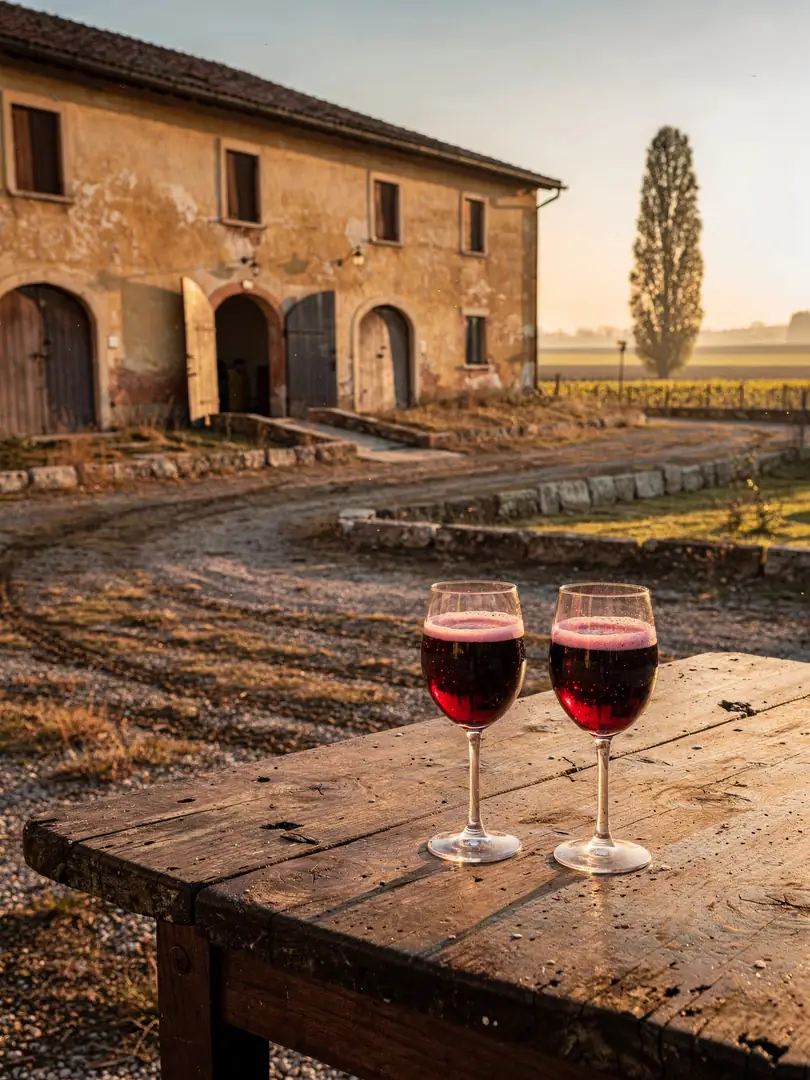
Is Lambrusco a semi-sparkling or a sparkling wine? Both, and the law separates the categories by the pressure inside the bottle. Under EU law, semi-sparkling wine (frizzante) has 1 to 2.5 bar of overpressure, sparkling wine (spumante) at least 3 bar, and quality sparkling wine, called Sekt in German, at least 3.5 bar. Red Lambrusco from the area between Modena and Reggio Emilia is sold both as frizzante, meaning semi-sparkling, and as spumante, in red as well as rosé.
According to the house's own account, Cleto Chiarli began producing the first Lambrusco in Modena in 1860, the year of Italian unification. Pressure tanks did not yet exist back then. They arrived with Federico Martinotti, who had his process patented in Asti in 1895. Eugène Charmat improved it in 1907, and to this day the method is known in Italy as Metodo Martinotti.
With the tank, volume grew. Trade publications describe the 1970s and 1980s as a Lambrusco boom, one that this process alone made possible. For 2023, reports on producers cite around 35 million bottles of DOC wine and nearly 100 million bottles of Emilia IGT. Champagne, by contrast, has no red sparkling wine, as its appellation is limited to white and rosé sparkling wines.
Since January 1, 2021, there has been a unified umbrella organization, the Consorzio Tutela Lambrusco. It emerged from the merger of three consortiums and oversees eight designations of origin. The most important include Lambrusco di Sorbara, Lambrusco Grasparossa di Castelvetro, and Lambrusco Salamino di Santa Croce, along with Reggiano and Modena. According to press reports, around 70 members farm more than 10,000 hectares.
How the variety family earned its reputation is told in the wine journey through Emilia-Romagna. Here, the focus is on what happens in the bottle: pressure, tank, yeast, and what's allowed on the label.