Color in the Sparkle
Grape Varieties
Lambrusco isn't a single wine but a family of grape varieties, each member carrying its own designation of origin. Where it comes from and how it earned its reputation is part of the wine journey. Here, what matters is what the varieties contribute to the sparkle.
The DOC Modena requires at least 85 percent Lambrusco varieties, including Grasparossa, Salamino, and Sorbara. The DOC Lambrusco Grasparossa di Castelvetro, per its production regulations, demands at least 85 percent Grasparossa. The same grapes also produce rosé, with the regulations explicitly naming rosato as a type.
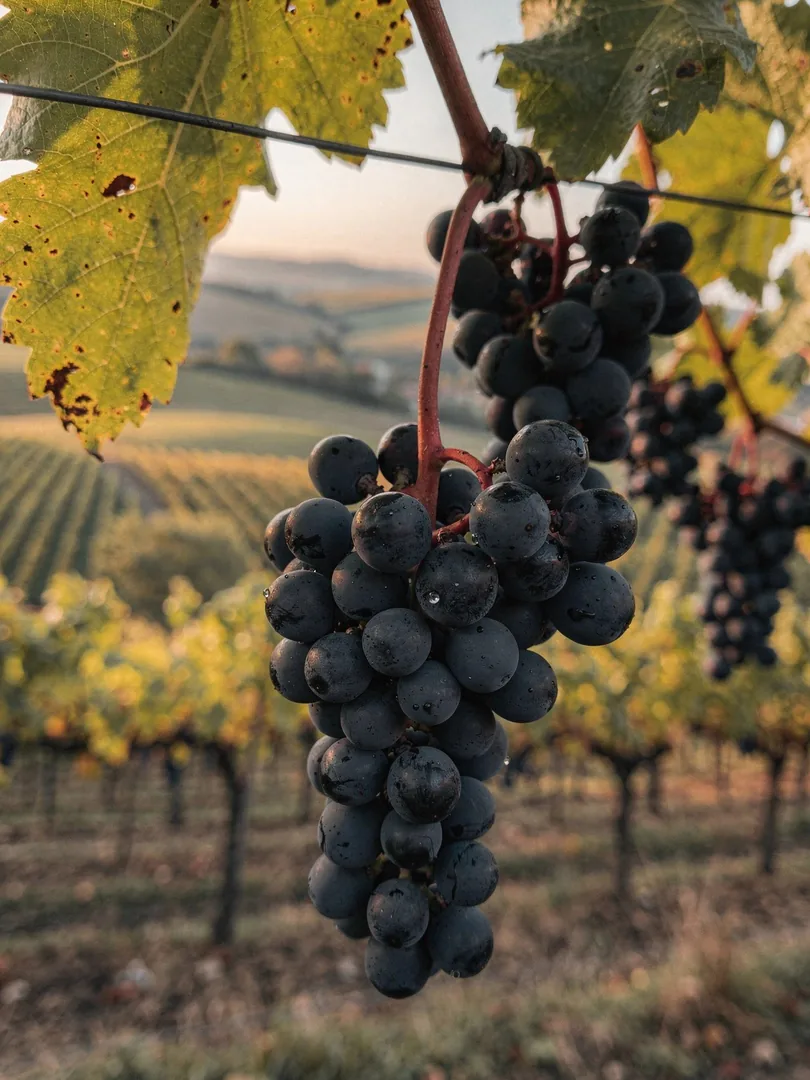
That's unusual for a sparkling wine, since the grapes yield dark berries. Color and tannin come from the skins, and both affect how the sparkle looks and how the carbon dioxide tastes. Dissolved carbon dioxide acts like extra acidity, which can make a tannic wine seem harsh. Winemakers therefore time the harvest and maceration so the tannins stay restrained.
In the glass, you often find violet or pink foam. A Champagne made from Pinot Noir, by contrast, is pressed quickly so the skins don't release their color. With Lambrusco, color is the whole point.
Lambrusco di Sorbara is considered the palest and most acid-driven of the family, with a delicate scent of violets. It takes well to fine perlage, which is exactly why winemakers favor it for bottle-fermented versions. Because the names sound so similar, it's worth checking the label: the designation of origin names the grape. Grasparossa grows on the slopes around Castelvetro, bringing dark color, noticeable tannin, and a full body.
Salamino di Santa Croce takes its name from the small, dense clusters that resemble a short salami. Anyone familiar with red sparkling wines from other countries, say from Pinot Noir, will notice above all the difference in tannin when tasting Emilia's version.