The short answer
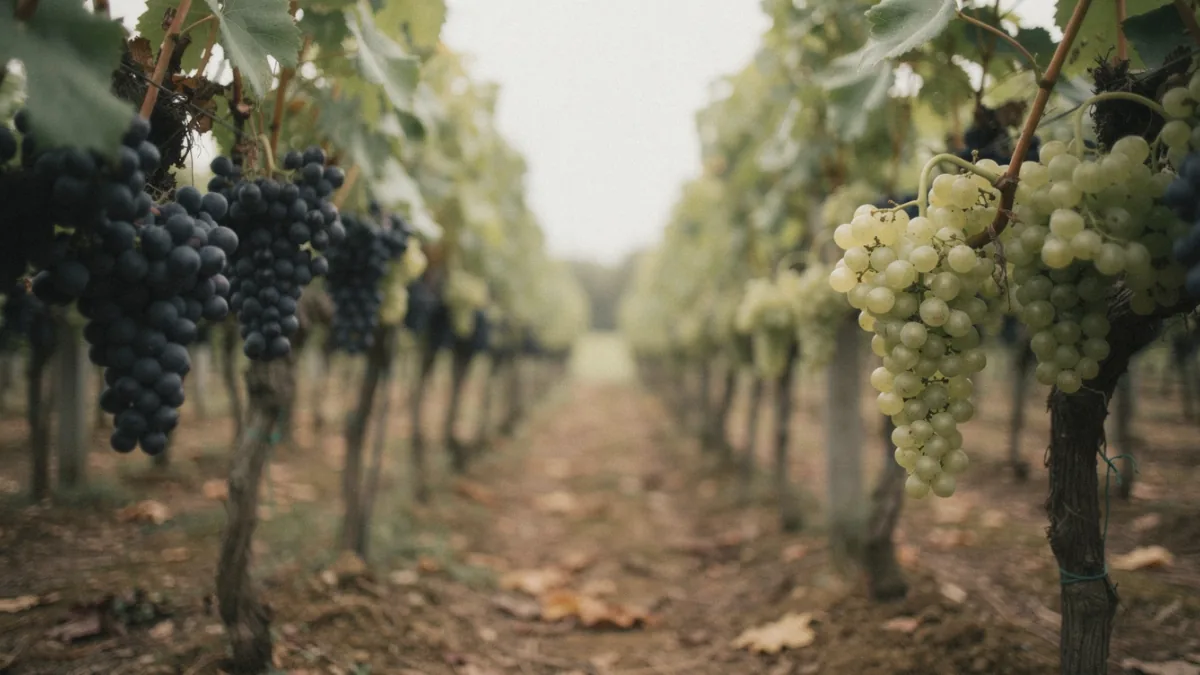
Schwarzriesling is a red grape variety from the Pinot family. It's also called Müllerrebe or Pinot Meunier. It has nothing to do with white Riesling. The name is simply misleading here.
One name, several contexts
In Germany, Schwarzriesling grows mainly in Württemberg. In Champagne, the same grape is known as Meunier, where it goes into Champagne. So the same varietal name shows up in very different drinks.
As a red still wine—meaning a wine without carbonation—Schwarzriesling is considered fruity and fine. There are dry and off-dry versions. If you're just going by the name, it's worth checking both the wine type and the sweetness level.
A grape variety name isn't a flavor description. Schwarzriesling, Müllerrebe, and Pinot Meunier all refer to the same red grape. Which of the three names appears on the label mostly comes down to where the wine is from. Once you know all three, you'll notice more quickly on the shelf that these aren't three different wines.
The second layer of confusion comes from the type of drink. Under this varietal name, you might come across a Champagne or a red still wine from Württemberg. Those are two completely different evenings. The grape variety alone won't tell you what's in the bottle. So first check what kind of wine it is. The grape comes second.
How to avoid a mix-up
Your guests want Riesling? Then Schwarzriesling isn't a substitute, even though the names look similar. If instead you want to explore a red wine, ask for a fruit-forward style. Describe the mouthfeel you're after.
The comparison with Spätburgunder (Pinot Noir) is worth making. Start with the impression in the glass. You don't need to taste a family tree. Two related grapes are far from identical. You're allowed to clearly prefer one over the other, or to enjoy both on different occasions.
At the wine counter, you'll get further by describing your goal: a lighter-bodied red, fruit-forward, dry, or with noticeable residual sweetness. The grape name alone leaves too much open. Schwarzriesling comes both dry and off-dry. Feel free to mention whether the wine needs to pair with food or stand on its own in the glass.
If guests expect Riesling and get a red wine instead, the disappointment comes from the expectation, not the wine. A quick line while pouring clears things up: a red grape from the Pinot family, despite the name it's something entirely different from white Riesling. After that, everyone can taste with an open mind. The naming question is off the table.
How to find a Schwarzriesling you'll enjoy
The order of these four steps is really the trick: you settle the wine type and sweetness before anyone even mentions the grape variety.
By your next shopping trip, you'll barely need to think through these steps consciously. What sticks is the habit of reading a label by wine type first. The grape name comes last. This order protects you with any variety whose name promises more than it delivers.
| Step | Specific question or action |
|---|---|
| In conversation | What style does this red Pinot-family grape show? |
| On the label | Schwarzriesling is not a red version of white Riesling. |
| While tasting | Do I like the specific red fruit and structure? |
| Your comparison | Also search under Müllerrebe or Pinot Meunier for the same grape. |
Schwarzriesling has nothing to do with Riesling
The biggest misunderstanding lies in the name. The syllable 'Riesling' leads many to think of a dark variant of white Riesling. That's not the case. The name also says nothing about sweetness. There are dry and off-dry wines made from this grape, and both carry the same word on the label.
The second misconception concerns the Pinot family. Schwarzriesling and Spätburgunder (Pinot Noir) are related. Even so, one can't replace the other. Kinship explains similarities, but it guarantees nothing. One more note: Müllerrebe has nothing to do with Müller-Thurgau. The two names easily get muddled in memory.
Putting Schwarzriesling next to a Spätburgunder
Set two bottles side by side: a Schwarzriesling and a Spätburgunder. Both dry, both in a similar price range. Pour small amounts and taste them alternately. Pay less attention to aromas you can name and more to the feel in your mouth. Does the wine feel heavy or lean? And how long does the impression linger?
A second comparison is just as rewarding: a dry versus an off-dry Schwarzriesling. Here you'll immediately notice how strongly winemaking style shifts the character of the grape. Jot down a few notes in both cases. Otherwise the impressions blur together after the third sip. And you never have to justify a favorite wine.