Short and Fruity
Lees Aging & Dosage
With Lambrusco, lees aging means: short. For quality sparkling wine from the tank, EU law prescribes a minimum production period of six months, plus 90 days of fermentation including yeast contact. These deadlines apply to sparkling wine, not semi-sparkling wine. A Lambrusco frizzante from Modena doesn't need them.
During this time, the yeast does on a small scale what it does for years in a Champagne cellar: dead cells release compounds that give the wine softness and bread-like notes. Experts call this autolysis. That process takes months to years, and with Lambrusco, fruit is meant to take center stage, not pastry notes. A short aging period in the tank also protects the freshness that a wine from the warm plain urgently needs.
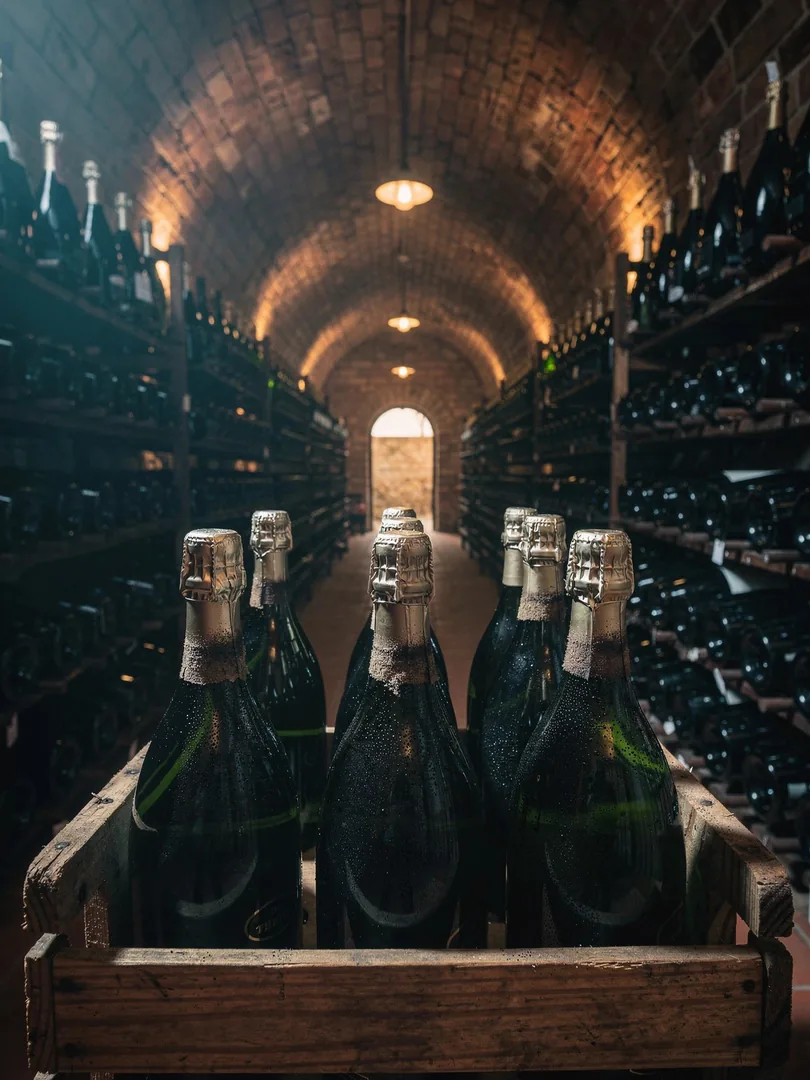
Riddling and disgorgement are skipped in the tank method, meaning with Metodo Martinotti. The finished wine is cold-filtered and bottled under counter-pressure so the sparkle doesn't escape. Buying an ancestrale bottle, on the other hand, means taking the yeast home with you: it settles, and the bottle reaches the market without riddling.
Sugar is worth a closer look. On sparkling wine labels, secco, meaning dry, means 17 to 32 grams of sugar per liter — more than brut (under 12) or extra dry (12 to 17). A Lambrusco spumante labeled this way, then, is no strictly dry wine. Dolce, meaning sweet, means over 50 grams.
Semi-sparkling wine follows the still-wine scale, where dry means at most 4 grams, or up to 9 grams if acidity is high. The dosage added to classic sparkling wines after disgorgement may raise the alcohol by no more than 0.5 percent by volume. In the tank, sugar can also be controlled by timing when fermentation is cooled.