Tank or Bottle
The Second Fermentation
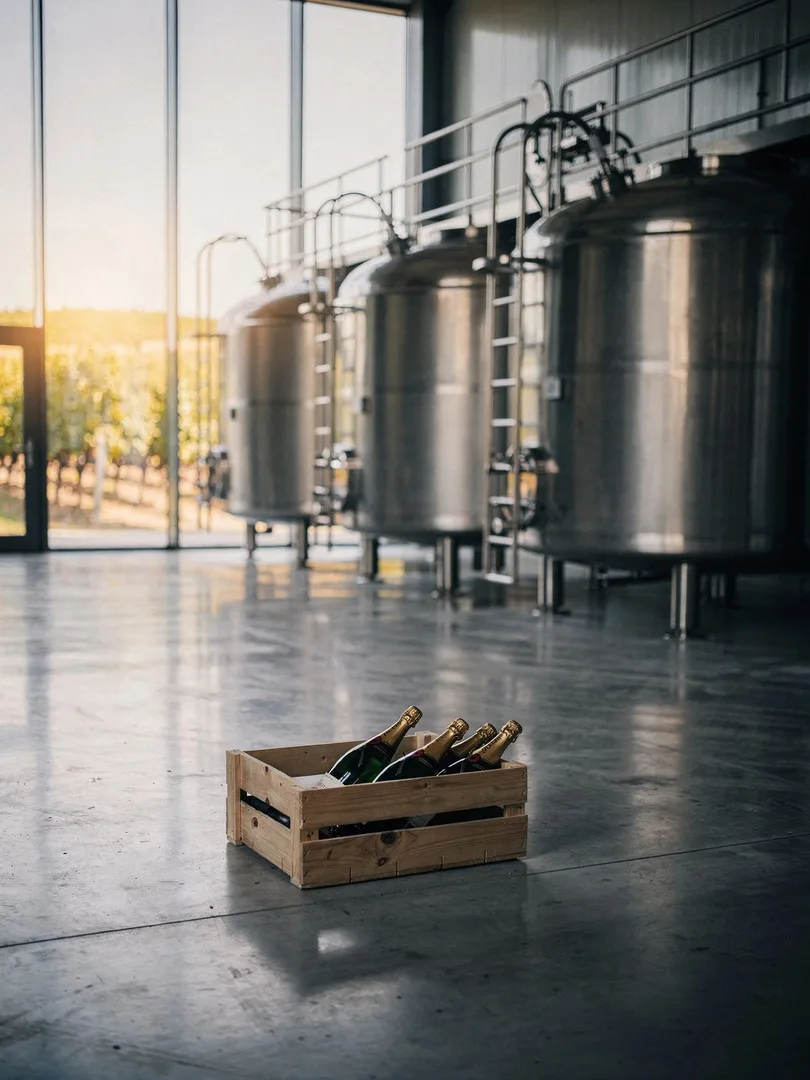
Two paths lead to the sparkle in Lambrusco. The common one runs through the pressure tank; the other through the bottle, where the wine begins a second fermentation and rests on its own yeast. Italians call this rifermentazione in bottiglia. The production regulations for Grasparossa di Castelvetro allow both: natural fermentation or secondary fermentation in the bottle, as well as in the autoclave, as the pressure tank is called there.
In the tank, the second fermentation begins once yeast and sugar are added to the base wine. The process is known as Martinotti or Charmat; it's faster than the bottle method, cheaper, and easier to control. For quality sparkling wine with protected origin, EU law requires a production period of at least six months and 90 days of fermentation including yeast contact, or just 30 days if the tank has a stirring mechanism.
Semi-sparkling wine stays below this threshold. At 1 to 2.5 bar, it legally doesn't count as sparkling wine, and the sugar scale for still wines applies instead. A Lambrusco frizzante, then, has a gentler fizz and faces fewer regulatory deadlines than a spumante, even though both may come from the same tank.
The ancestrale method works differently: the wine is bottled before the first fermentation has finished. It continues fermenting in the bottle, the carbon dioxide stays locked in, and the yeast settles as sediment at the bottom. According to trade press reports, this way of making Lambrusco is making a comeback, especially for delicate Sorbara wines with fine perlage.
So seeing a bottle with sediment doesn't automatically mean you're holding a wine labeled "traditional bottle fermentation." That label term requires nine months on the lees and disgorgement, meaning the removal of the sediment from that same bottle. Sediment in the glass is a hallmark of the method, not a flaw.
Lambrusco di Sorbara frizzanteTank fermentation · Lambrusco di Sorbara
- Time on lees
- 0–1 Months
- Sugar
- 0–9 g/l
- Alcohol
- 10.5–11.5 % vol
Pale ruby, violet aroma, delicate perlage, and crisp acidity.