Violet Foam
Tasting
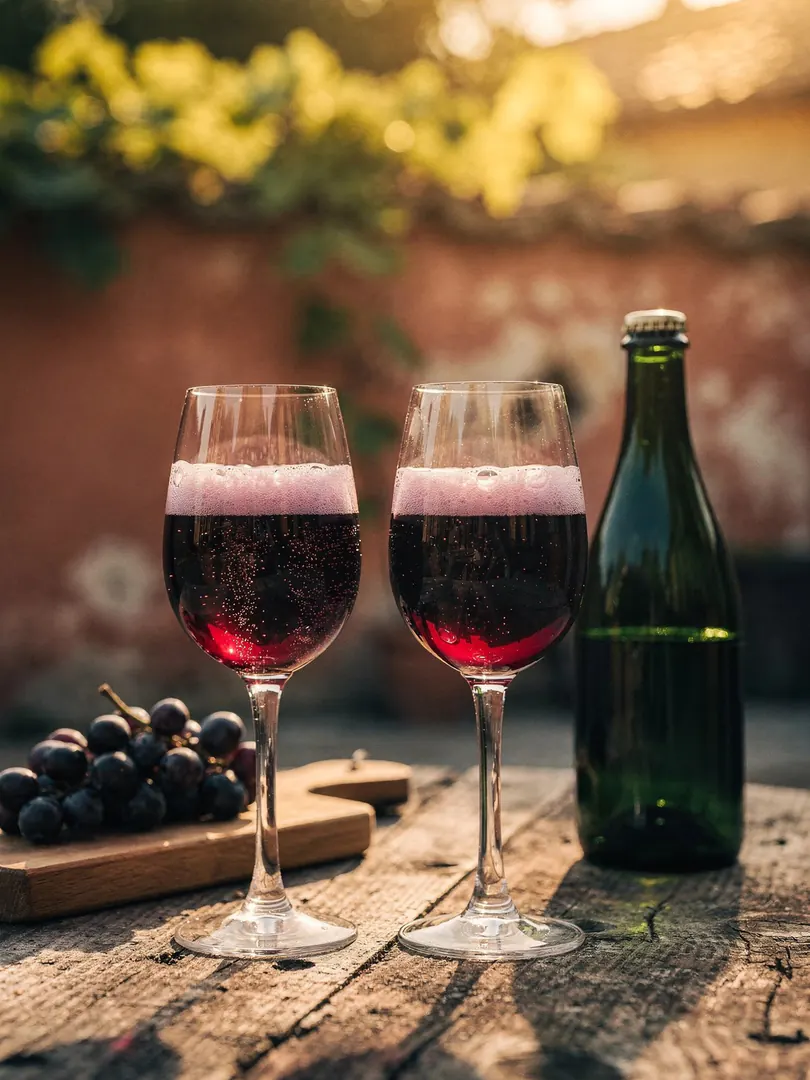
In the glass, Lambrusco looks nothing like a white sparkling wine. The wine is deep red to violet, the foam pink or purple, and the aroma carries wild violets and blackberries. That's the image that sets a red sparkling wine apart from a white one, and it all comes down to the grape skins. A Sorbara is paler and looks almost like a dark rosé, while a Grasparossa is nearly opaque.
Two producers show the range. Cleto Chiarli's Lambrusco di Sorbara Vecchia Modena represents the pale, acid-driven side of the family. Medici Ermete's Concerto, from the DOC Reggiano, is an example from the neighboring province of Reggio Emilia. A Grasparossa, by contrast, shows more tannin and body, holding its own alongside hearty food.
For tasting, a tulip glass, one that tapers slightly toward the top, works well. It gathers the aroma and lets the perlage rise for longer. A flat coupe lets the carbon dioxide dissipate quickly, while a large red wine glass swallows it. A stemmed glass keeps the hand away from the wine, keeping it cold longer.
Lambrusco tastes best chilled. Around 10 to 12°C (50 to 54°F) is typical: too cold and the fruit hides, too warm and the sparkle turns coarse while the sugar dominates.
When opening, hold the bottle at an angle, grip the cork firmly, and turn the bottle, not the cork. That way the carbon dioxide escapes quietly and the sparkle stays in the glass. Lambrusco's foam rises vigorously, so pouring in two stages calms it down. For wines with sediment, taste decides: if you prefer it clear, leave the bottle standing and pour gently. If you prefer it creamier, give it a turn beforehand.