Cool, Clear, Early
Base Wine & Blend
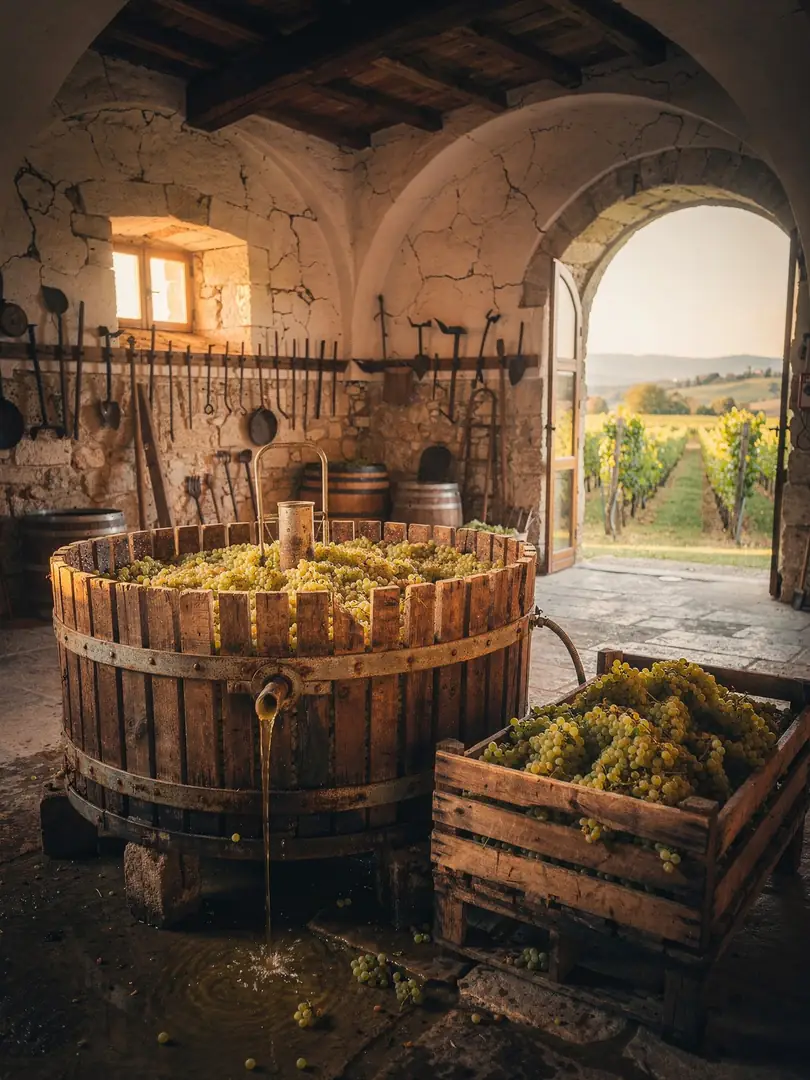
It all starts with a still base wine that should be as fresh as possible. Harvest usually begins in September, depending on the year and site. On the plains near Oderzo and Treviso, machines often move through the rows; on the steeper slopes around Asolo, grapes are more often picked by hand. They're brought in as quickly as possible so they don't sit in the heat.
Pressing is gentle, usually in pneumatic presses, where an air cushion presses the grapes softly against the wall. The must then rests briefly in the cold so sediment can settle. It then ferments at low temperature in stainless steel tanks, to preserve the delicate aromas of apple and blossom. Oak and reserve wines play no role here.
Those without their own vines buy grapes or base wine. The DOC system is built for this: nearly twelve thousand grape growers face roughly a thousand wineries. A bottler blends batches from many estates and sites until the house style is right. This is the tank houses' art of assemblage, and it usually works with the current year's wine rather than reserve wines.
The base wine is kept cold and protected in the tank, often for months. Only when a batch is needed does the second fermentation begin. This way the trade gets fresh product all year round, even though harvest happens only once a year. That's the principle behind these volumes: the winery plans according to orders, not according to harvest.
Many bottles carry no vintage. Those looking for one will find the Millesimato, whose grapes come at least 85 percent from the stated year. For the Rosé, it's mandatory. Because Glera and Pinot Nero come together there, the Rosé is created as a blend of white and red, which is permitted for sparkling wine but banned for still wine under EU law.