Glera and Its Companions
Grape Varieties
At least 85 percent of every bottle of Prosecco DOC is Glera. Prosecco is the origin, Glera the grape. The remainder may come from companion varieties: Verdiso, Bianchetta Trevigiana, Perera and Glera lunga, old local varieties, plus Chardonnay, Pinot Bianco, Pinot Grigio and Pinot Nero, provided the latter is vinified white.
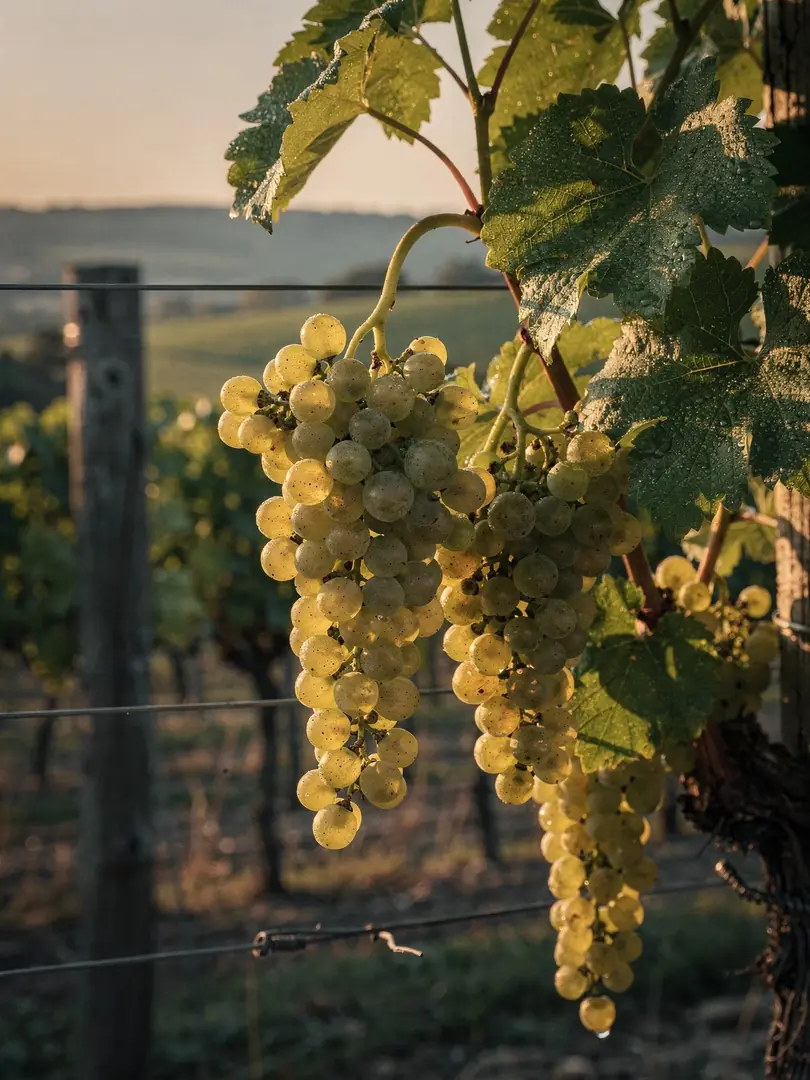
Glera is a vigorous variety. It grows strongly, forms long, loose bunches and ripens late. In the glass it doesn't bring heavy aromas but something quiet: green apple, pear, a touch of citrus and acacia blossom. This very restraint is what makes it well suited to the tank, since little of these delicate notes is lost during the second fermentation.
Acidity is the second argument. Glera retains it fairly well even in warm years, as long as picking is timed right, and a sparkling wine without long lees aging and without oak needs this freshness. The alcohol of the base wine is allowed to be lower here than for other quality sparkling wines: EU law grants Prosecco an exception that permits a total cuvée alcohol of 8.5 percent, instead of the usual 9.
Since 2020 the DOC has also included a pink line. Prosecco DOC Rosé consists of Glera with 10 to 15 percent Pinot Nero. The red grape contributes color and a hint of red berries. This wine exists only as a Millesimato, meaning a vintage wine whose grapes come at least 85 percent from the stated year.
Asolo Prosecco Superiore is also a Glera wine. The difference from the large DOC lies not in the variety but in the location of the hills around Asolo and in the stricter rules. The label reveals it: if it says Asolo, the grapes come from the hills around the town; if it just says Prosecco, they can come from any of the nine provinces.