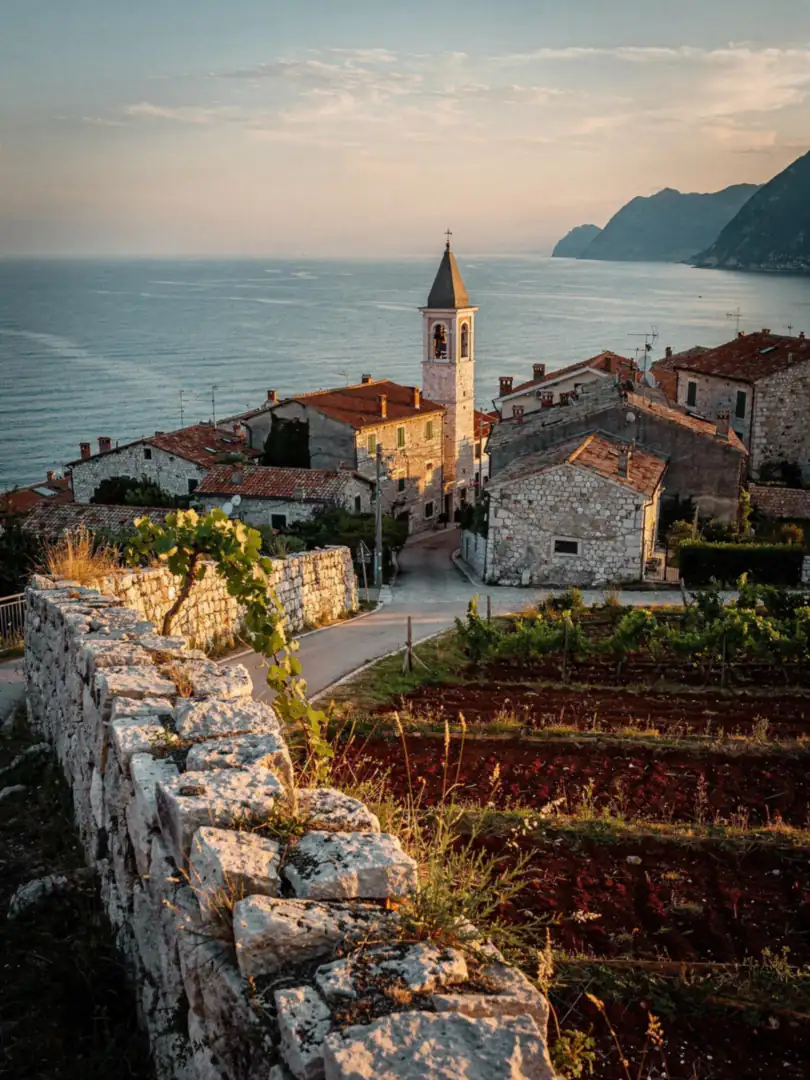
The Village of Prosecco
Region & History
Where does Prosecco come from? From Trieste, not from the hills around Valdobbiadene. The village of Prosecco belongs to the city of Trieste and sits on the edge of the Karst plateau high above the gulf, just a few kilometers from the harbor. The wine is named after this village.
Even the oldest known reference points here. The Englishman Fynes Moryson wrote in 1593 that a wine called Pucinum grew in this area, now called Prosecho, which Pliny himself had praised. Tradition holds that this was the wine the Romans knew from the castle of Pucinum. Whether it was truly the same wine remains legend.
In the 18th century, the vine migrated to the lower-lying areas of Veneto and Friuli. Over time, the Karst wine became a wine of the plains and later a mass-produced product. This created a problem: Prosecco was both a place name and a grape variety name, and a grape variety can be grown by anyone, even far from Trieste.
The ministerial decree of July 17, 2009 resolved this. Since January 1, 2010, the grape variety has been called Glera, and Prosecco is now a protected designation of origin alone. A variety name could never have been effectively protected. A place name, however, could—and the village near Trieste provided it.
Since then, the Prosecco DOC has encompassed nine provinces: five in Veneto and four in Friuli-Venezia Giulia, namely Gorizia, Pordenone, Trieste, and Udine. Some labels carry the addition “Trieste.” According to the consortium's rules, this requires that harvesting, production, and bottling all take place within the Province of Trieste. So this journey leads to the eastern edge of the region, to where it all began.