Limestone, Bora, Gravel
Soil & Climate
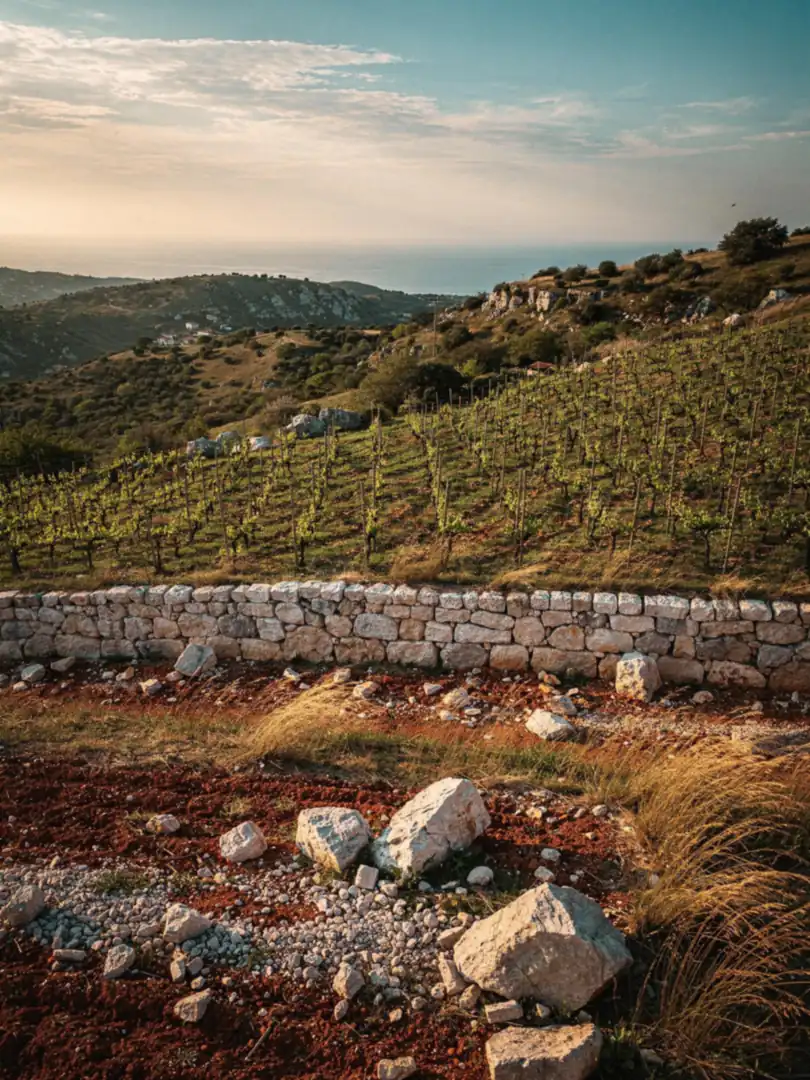
Behind Trieste, the land rises steeply. The Karst plateau consists of pale limestone, covered only by a thin layer of red, iron-rich soil known as terra rossa. Between the rocks, enough soil for vines collects only in a few spots, mostly on terraces and in small hollows. What grows here receives little water and plenty of light.
The climate is harsh. The Bora, a cold, dry katabatic wind from the northeast, sweeps across the plateau especially in winter, drying the grapes quickly after rain. The sea is close enough that summers never become parched. This is favorable for sparkling wine, which needs acidity to stay fresh after the second fermentation and dosage, rather than turning cloying and heavy.
Further west in Friuli, the soil looks quite different. On the plain of Pordenone, along the Livenza river, old river gravel mixes with clay and limestone. The soil is stony and well-draining, forcing roots to dig deeper than on the fertile plains of their Venetian neighbors.
Producers praise these soils, claiming they yield more concentrated grapes. That's the view from the wineries, and it depends heavily on how strictly yields are pruned back, since up to 18 tonnes of grapes per hectare are permitted. Anyone harvesting that much will get simple grapes even from good soil.
Cellars carved into rock play no part in this sparkling wine. The Karst caves are better known for cheese, since one of them is where Jamar, a cheese of the plateau, ages. Prosecco, by contrast, rests in cool tanks, with the chill coming from refrigeration technology. The landscape instead gives the wine light, wind, and acidity.