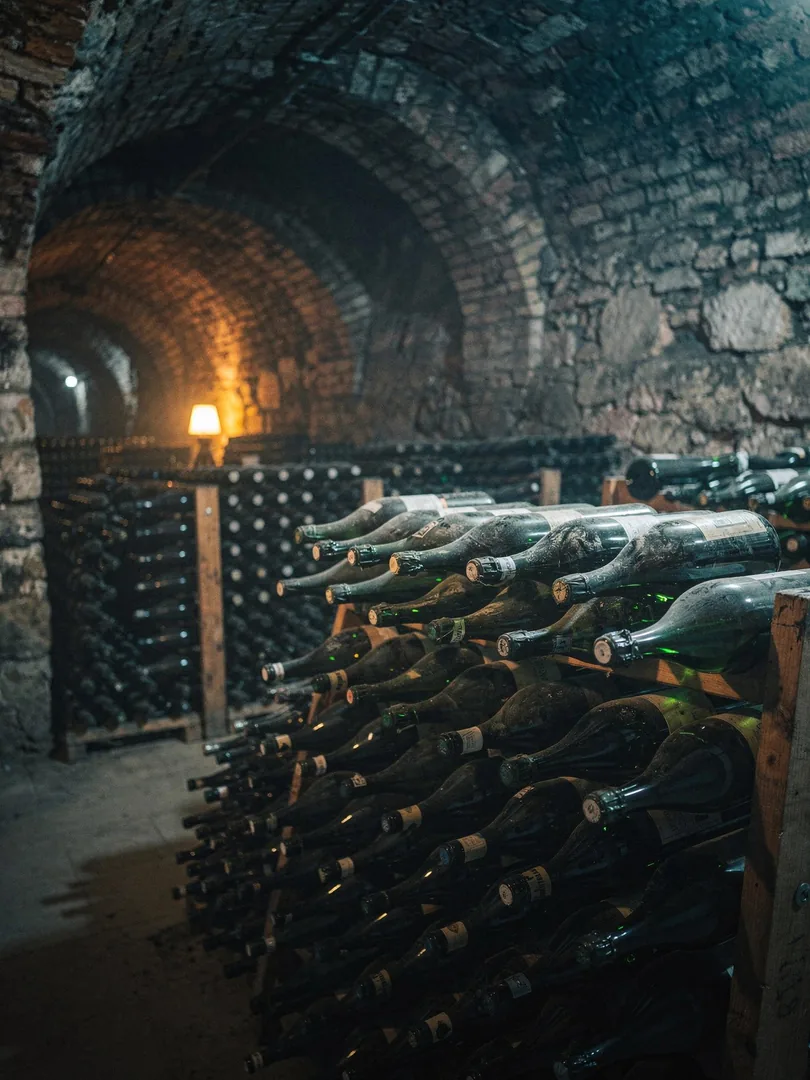
Patience in the Cellar
Lees Aging & Dosage
How long must sparkling wine from Lower Austria rest on the lees? At least 18 months for Reserve, and at least 30 months for Große Reserve. Over time the yeast cells break down, and this autolysis produces brioche, nut, and that creamy fullness on the palate.
This creates a calendar of its own. A Große Reserve from the 2022 vintage may go on sale no earlier than October 22, 2025, while a Reserve from the same vintage can be released as early as October 22, 2024. The lees-aging period runs within this timeframe.
Eventually the yeast collects in the neck of the bottle. At Bründlmayer, it's hand-riddled before disgorgement. During disgorgement, the neck is frozen in a cold solution, the crown cap is removed, and the pressure shoots out the frozen yeast plug. The cellar then tops up the bottle with wine and adds the dosage before the bottle receives its final cork.
The sugar balances the acidity. For a taut base wine from the Kamptal or Weinviertel, just a few grams are often enough to round it off. Anyone who wants to preserve the acidity exactly as it is reaches for Extra Brut. Reserve and Große Reserve may contain no more than 12 grams of sugar per liter.
Stating the sweetness level is mandatory for sparkling wine, and the actual sugar content may deviate from it by no more than 3 grams per liter. The label then shows tier, municipality, and sweetness level—nothing more is needed to place the bottle.