Apple, Honey, Brioche
Tasting
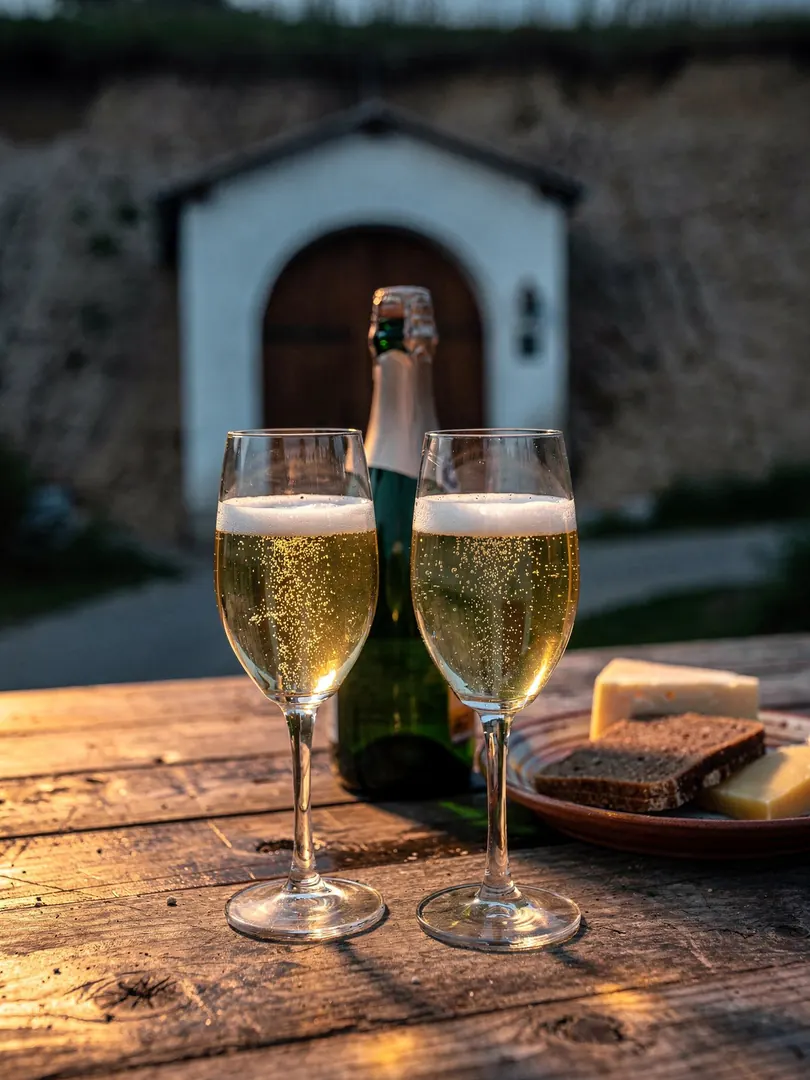
What does a sparkling wine made from Grüner Veltliner taste like? The data sheet for Steininger's Grüner Veltliner sparkling wine describes a yellow-green color, fine mousse, blossom honey, and fresh apple, along with mandarin peel and lime. On the palate it's meant to be taut, with yellow pear fruit and good acidity.
Examples of this range include Bründlmayer's Brut Rosé Reserve from Langenlois, the Cuvée Tradition Reserve Extra Brut from Weingut Taubenschuss in Poysdorf, and the Große Reserve Brut Rosé from Graf Hardegg. These showcase rosé from three red varieties, Extra Brut from the Weinviertel, and the municipality tier.
A tulip glass suits sparkling wine better than a flat coupe. The wide coupe lets bubbles and aromas escape quickly, while the tulip shape carries apple and yeasty notes to the nose and keeps the carbonation in the glass longer.
The ideal temperature is around 8 to 10 degrees Celsius. Too cold, and the sparkling wine stays closed; too warm, and the carbonation feels coarse. One to two hours in the refrigerator usually brings a bottle into this range nicely.
On the nose, fruit comes first, followed by yeast. The longer a sparkling wine has aged, the more pronounced the brioche and nut notes become, while young Klassik sparkling wines stay with apple and citrus. If a sparkling wine seems strikingly sweet, it's worth checking the sweetness level stated on the label.
When opening, hold the bottle at an angle, hand on the cork and wire cage, and turn the bottle, not the cork. Since at least 3.5 bar of pressure sits inside, the cork should never pop loudly but ease out with a quiet sigh.