Portugal's First Designated Origin
Region & History
How did Portugal come to have its first sparkling wine with protected designation of origin? Távora-Varosa, a highland region between the Douro and the Dão, was recognized as a DOC on November 15, 1989—a controlled designation of origin. The provisional names Encostas da Nave and Varosa were absorbed into the new name. From the very beginning, the focus was on Espumante, as sparkling wine is called in Portuguese.
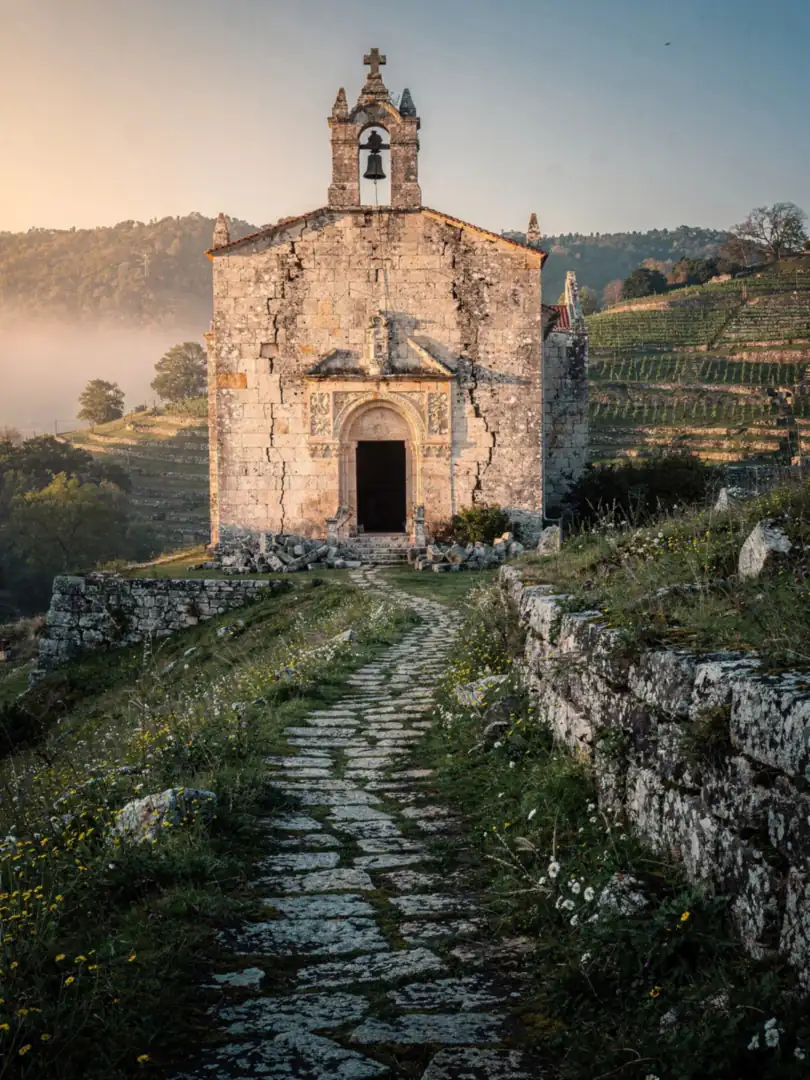
The backstory reaches further back still. According to tradition, Cistercian monks of the São João de Tarouca monastery were already making a sparkling wine from the mountain vineyards of the Beiras in the 17th century. That memory lives on in the name Terras de Cister, the land of the Cistercians, under which local wine is also sold in the area.
Today two wineries shape the region's image. Raposeira, named after a village near Lamego, and Murganheira near Tarouca form the core of production. Murganheira claims over sixty years of company history, 30 hectares of its own vines, and contract growers farming more than 1,000 hectares. Raposeira belongs, according to the house, to the same group.
What the designation of origin requires of the sparkling wine is clearly defined: classic bottle fermentation, meaning the second fermentation takes place in the very bottle that later sits on the shelf. The wine must mature for at least nine months before it can be sold. That puts the region at the minimum the EU requires for the traditional method.
The region is considered the smallest of Portugal's sparkling wine areas, and that's its advantage: it has a distinct identity of its own. Anyone searching for Portuguese sparkling wine usually ends up in Bairrada in the west as well. Távora-Varosa, by contrast, relies on altitude, granite, and its monastic backstory.