Granite and Altitude
Soil & Climate
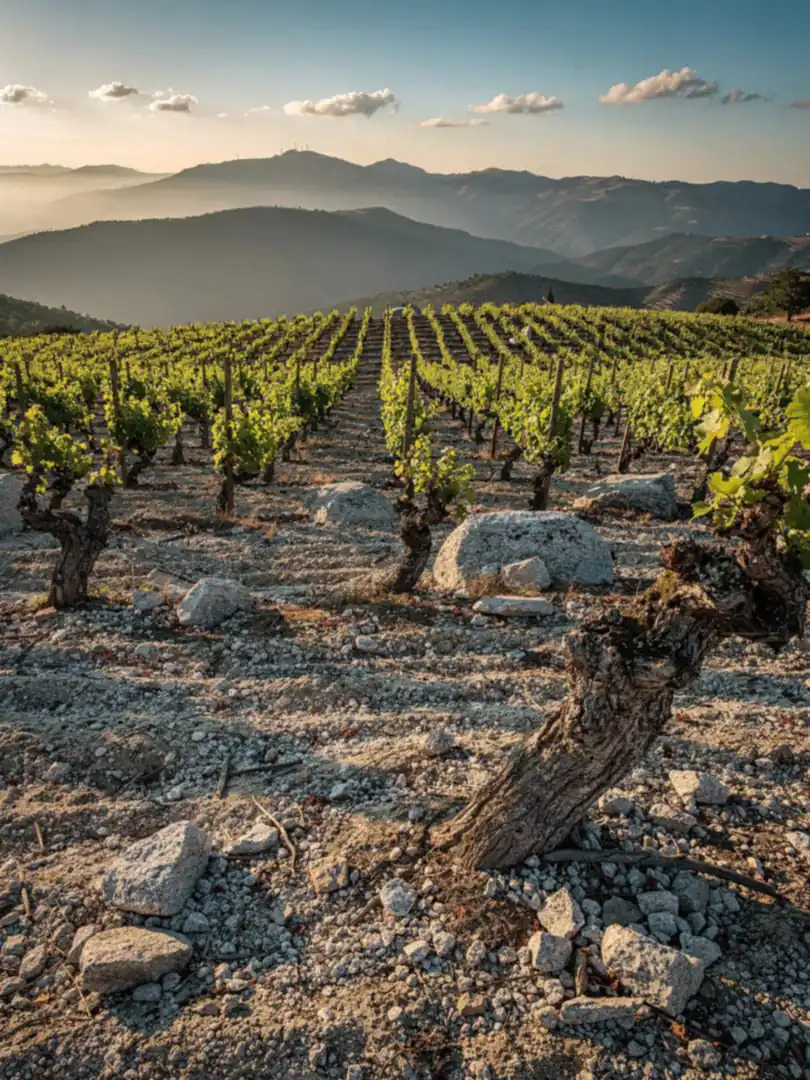
In Távora-Varosa, the base wine for sparkling wine grows on granite. The rock weathers into sandy, nutrient-poor soil, forcing roots to search deep and yielding only a few, small berries. Here and there, schist mixes into the subsoil.
More important than the soil is the altitude. The vineyards sit at 500 to 800 meters—some sources say up to 900 meters—in a high valley between the Douro and the Dão. Down in the Douro it's considerably warmer; up here the nights stay cool even in summer, and the grapes ripen more slowly.
Coolness means acidity, and acidity is what sparkling wine needs. The natural acidity gives the finished wine its freshness and carries it through months on the lees without becoming heavy. The grapes also don't need to accumulate excessive sugar, since the second fermentation in the bottle raises the alcohol anyway—by at most 1.5% abv under EU law.
Weather determines the harvest date here. In cool years the harvest starts late, in warm years early; what matters is the moment when sugar and acidity are in balance. For sparkling wine, picking tends to happen early so the acidity is preserved.
Even the cellar works with the stone. Murganheira stores, according to the house, more than a million bottles in cellars of blue granite, where the temperature stays constant. Steady coolness is ideal for lees aging, since fluctuating warmth makes a wine age unevenly.
The result is a distinct profile: granite instead of chalk, highland instead of coastal proximity. The wines therefore taste more taut and fresh than soft and round.