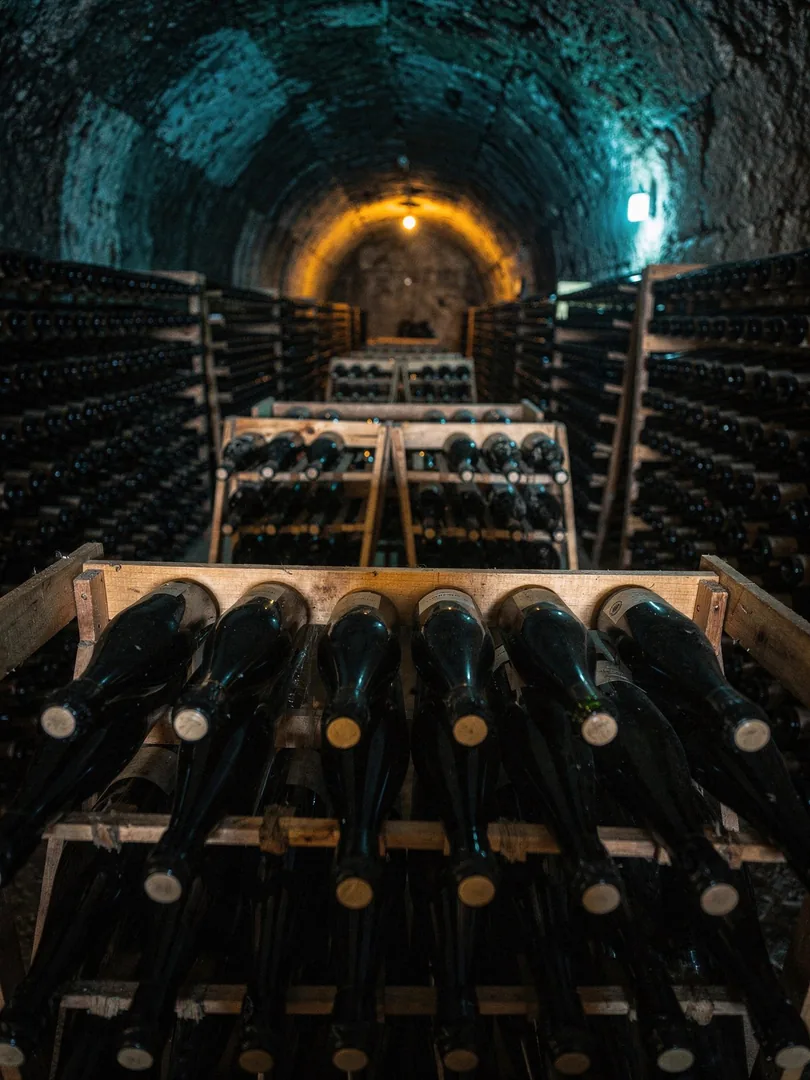
Waiting in the Rock
Lees Aging & Dosage
After fermentation, the waiting begins. An Espumante with DOC Távora-Varosa must mature in the bottle for at least nine months before it can be sold. Designations such as Reserva and Super Reserva, found on Raposeira's labels, are quality tiers involving longer aging.
During this time, lees autolysis takes place. The dead yeast cells slowly break down and release proteins, sugars, and aromatic compounds into the wine. This creates notes of brioche, biscuit, and nuts that layer over the fresh fruit. The coolness of the granite cellar slows this process and makes it more even.
After that, the lees must be removed from the bottle. During riddling, the bottles are tilted and turned periodically until the lees collect in the neck—done by hand on a riddling rack or by machine. During disgorgement, the neck is chilled heavily, the lees form a plug, and the pressure inside pushes it out.
Now comes the dosage, the shipping dosage. The cellar master tops up the bottle with a small amount of wine, often with a bit of sugar, which determines the sweetness level. Brut nature has under 3 g/l, extra brut 0 to 6 g/l, brut under 12 g/l.
So anyone who sees Bruto on the label is looking at a dry wine. Alongside Bruto, Raposeira also bottles Doce, the sweetest tier with over 50 g/l. And the word Seco, meaning dry, is a trap: it actually denotes 17 to 32 g/l—more sugar than Bruto.