Bottle, Not Tank
The Second Fermentation
The second fermentation determines whether the acidic base wine becomes sparkling wine. For Espumante with DOC Távora-Varosa, it's mandated to be classic bottle fermentation—that is, in the very bottle that will later be sold. In Portuguese, this method is called método clássico or método tradicional. Tank fermentation, as used for Prosecco, is not an option here.
It begins with the tirage. The cellar master adds the liqueur de tirage to the base wine—a mixture of sugar and yeast—bottles it, and seals it with a crown cap. The liqueur de tirage may raise the alcohol by at most 1.5% abv.
Over the following weeks, the yeast consumes the sugar and turns it into alcohol and carbon dioxide. The gas stays trapped and dissolves into the wine. As a rule of thumb, about four grams of sugar per liter produces one bar of pressure. For quality sparkling wine, EU law requires at least 3.5 bar at 20°C.
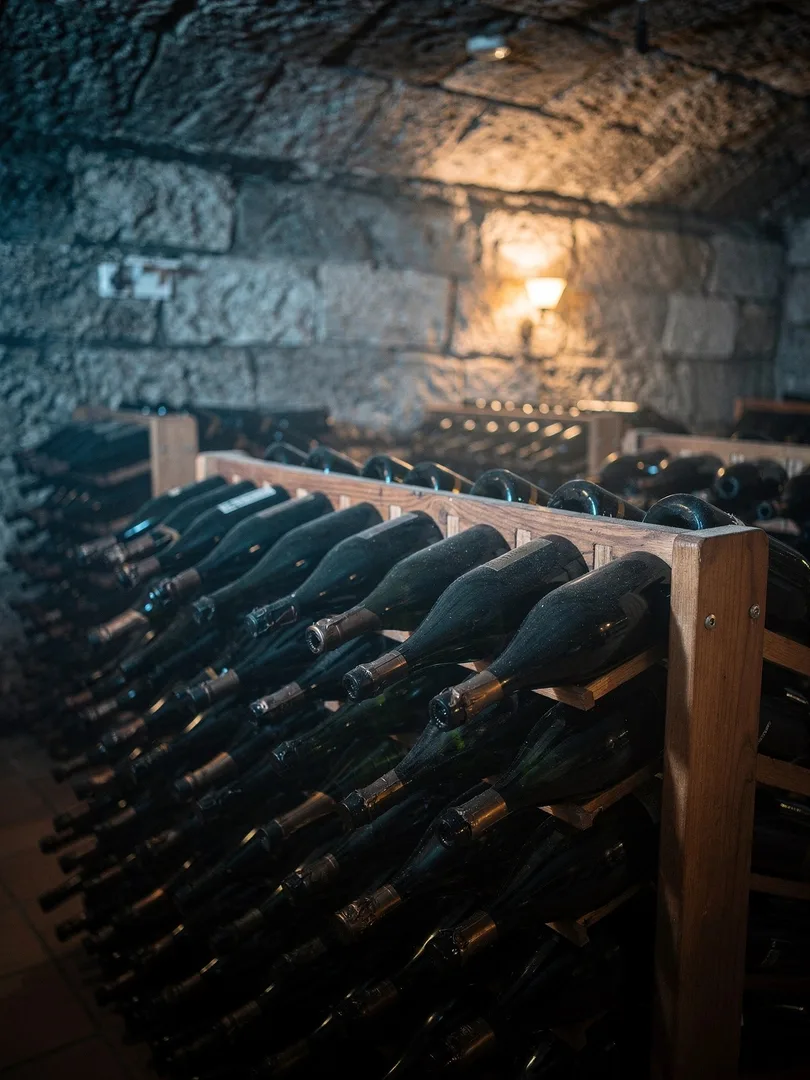
The bottles then rest on their lees and mature in the granite cellars. For quality sparkling wine with protected designation of origin, the rule is: a minimum production period of nine months from the start of the second fermentation, of which at least 90 days must be spent in contact with the lees.
Pét-Nat, where a single fermentation finishes in the bottle, and transfer method, where the wine is decanted into a tank, don't fall under this process. Why the bottle? The wine stays in contact with the lees and absorbs aromas, and the bubbles become finer, since the gas dissolves slowly.
Távora-Varosa Bruto BrancoBottle fermentation · Chardonnay, Pinot Noir, Malvasia Fina, Gouveio
- Time on lees
- 9–24 Months
- Sugar
- 0–12 g/l
- Alcohol
- 11.5–12.5 % vol
Fresh citrus and apple fruit, brioche, taut high-altitude acidity.