Cava Without Catalonia
Region & History
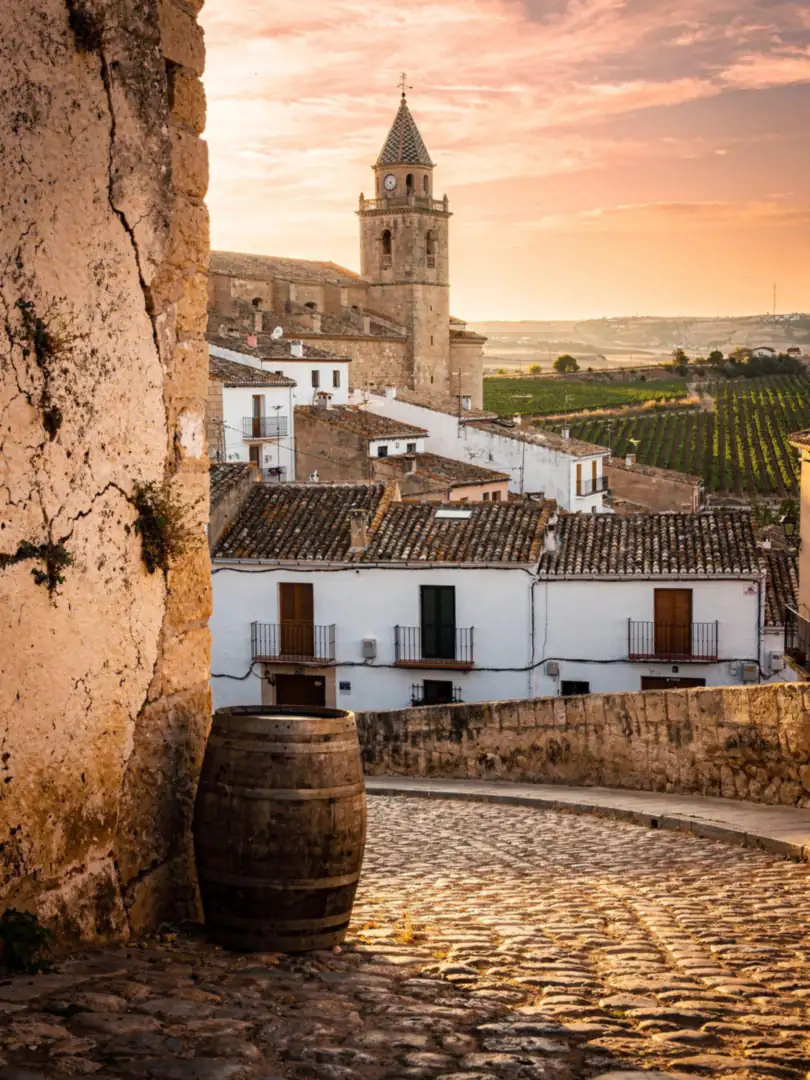
Cava comes from Catalonia, most people would say, and for the vast majority of bottles that's true. But the D.O. Cava appellation extends all the way to the Valencia plateau, the Ebro Valley and Extremadura. This page visits the edges of the region, where Cava is made in places few would expect.
Requena lies a good seventy kilometers inland from Valencia and is the only municipality in the region permitted to produce Cava. Seven wineries there have formed an association of Cava producers: Dominio de la Vega, Chozas Carrascal, Coviñas, Hispano+Suizas, Marevia, Pago de Tharsys and Torre Oria. The D.O. Cava lists Requena as its own zone.
Dominio de la Vega near San Antonio de Requena was, according to the winery, among the first producers outside the Penedès to be admitted into the D.O. Cava. Bobal, the region's signature grape, doesn't appear on the list of approved Cava varieties and remains reserved for still wine.
In the north begins the Cava of the Ebro Valley: Rioja, Navarra, Aragón and the province of Álava. The D.O. divides the area into the subzones Alto Ebro and Valle del Cierzo. In Haro, the wine city of Rioja, Bodegas Bilbaínas operates—founded in 1859 by the French trading house Savignon Frères & Cie and known under its current name since 1901, after businessmen from Bilbao took it over. Muga and Escudero also bottle Cava in Rioja.
In the south lies Almendralejo, the only municipality in Extremadura with the right to produce Cava. The zone is called Viñedos de Almendralejo, and the same rules apply there as everywhere else in the region: exclusively traditional bottle fermentation, with a minimum of nine months on the lees.