Altitude Instead of Coastline
Soil & Climate
The vineyards of Requena sit on a plateau between 600 and 900 meters above sea level, even though the coast is only about seventy kilometers away. The climate is continental with a Mediterranean touch: summer days are hot, but the nights are cool. This very difference between day and night preserves the acidity in the grapes, and acidity is the backbone of a base wine that will later spend months or years resting on its lees.
The Alto Ebro looks quite different. Between the Sierra de Cantabria to the north and the Sierra de la Demanda to the south, the Ebro flows through Rioja, and the vines grow at around 600 meters. The mountains shelter the valley, and the altitude ensures that even after a warm day, the evenings turn cool.
Downstream near Zaragoza lies the Valle del Cierzo subzone, at only about 200 meters elevation. The Cierzo is a cold, dry northwesterly wind that sweeps through the Ebro Valley and gives the area its name. Winters are cold, summers hot and dry, and the nights cool down sharply.
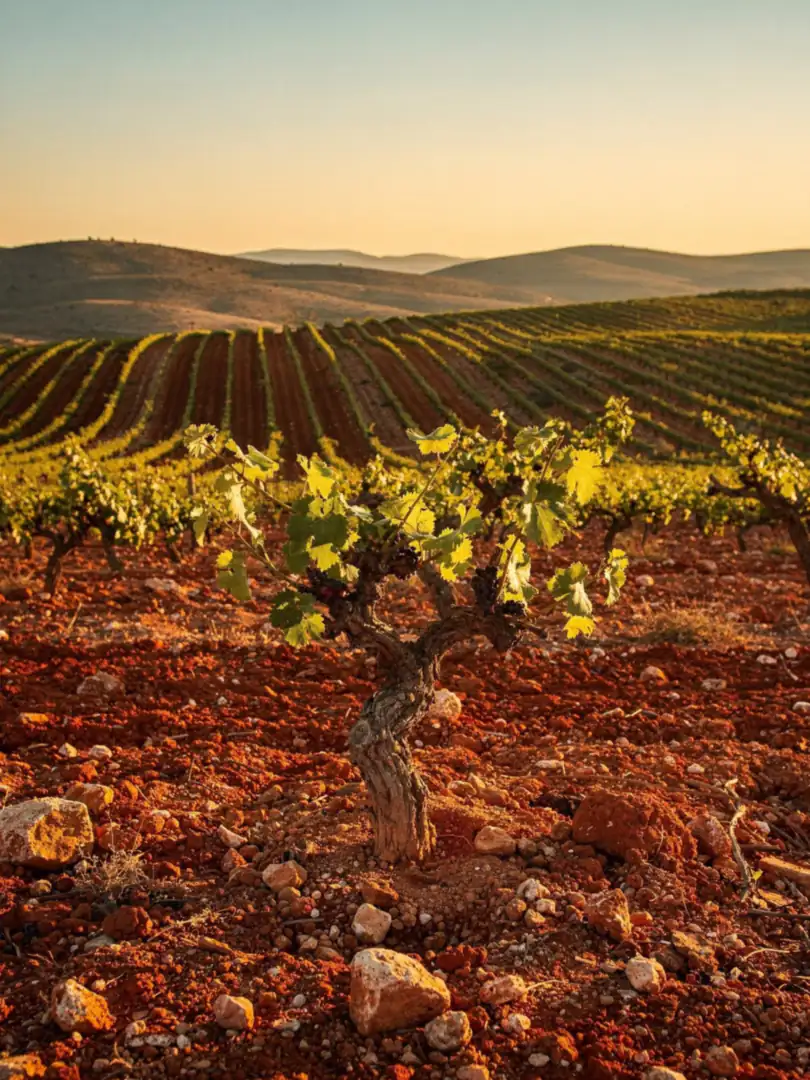
In the south, in the Tierra de Barros around Almendralejo, the land is flat and the soil reddish clay. Barros means clay in Spanish. Summers are long and dry, and since heat reduces acidity and raises sugar levels, growers harvest early for sparkling wine, while the grapes still taste fresh.
Where daytime temperatures soar, the cellar needs steady coolness. The more stable the temperature there, the more finely the sparkling wine matures on its lees.