Harvesting Early
Base Wine & Blend
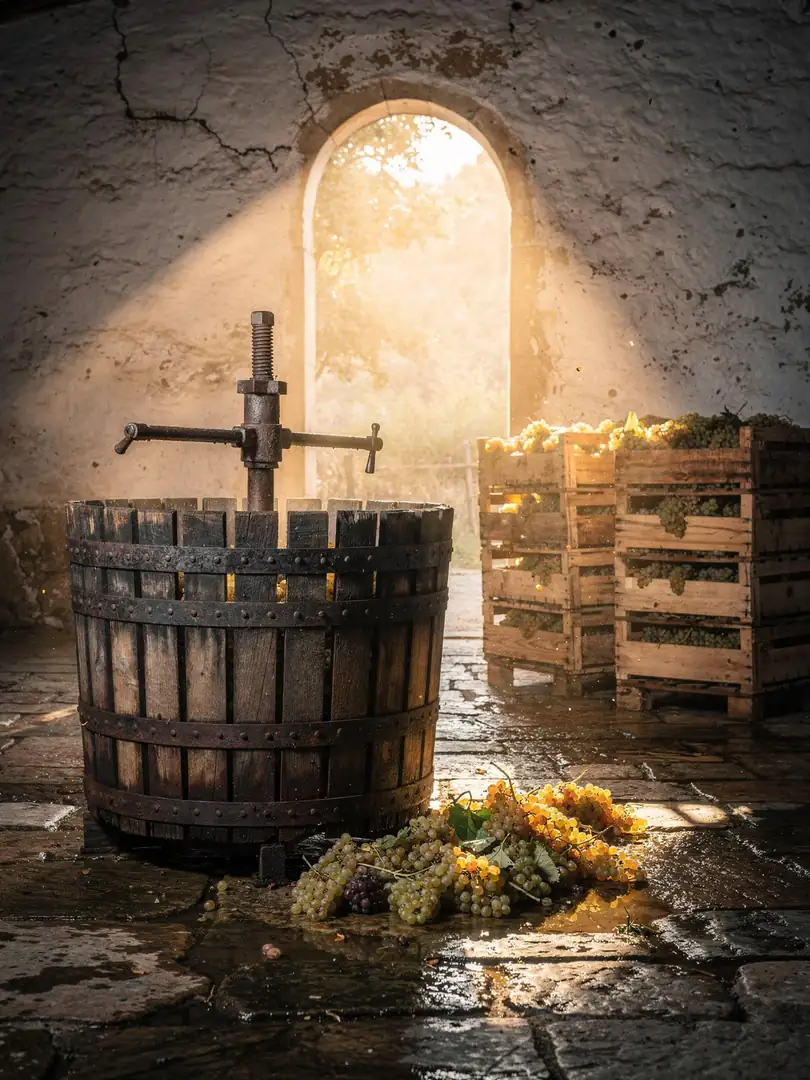
Everything begins with an early harvest. For sparkling wine, grapes are picked before they become fully sweet, since they need to carry low sugar and high acidity. In Almendralejo, where summers are long and hot, the harvest therefore comes considerably earlier than for a still wine.
From the grapes first comes a still, dry wine with no bubbles and pronounced acidity. It's not yet a wine for the table but raw material. The winemaker's craft lies in the cuvée, the blend of several such wines from different sites and varieties. In Requena, Macabeo can be paired with Chardonnay; in Rioja, Viura takes center stage.
Altitude helps with blending. A base wine from 600 meters brings freshness and tension, while a wine from a warmer site adds more fullness. Combining the two produces a rounder Cava that still stays lively.
According to reports from the regional agricultural press, a large share of Extremadura's base wines leaves the region in bulk and is finished at wineries elsewhere, mostly in Catalonia. The smaller share becomes Cava locally.
Non-vintage bottlings make up the simpler Cavas, meant to taste the same every year. To achieve this, the winemaker holds back reserve wines from older harvests to balance out weaker vintages. Cava de Guarda Superior, by contrast, always carries a vintage. A Blanc de Blancs is made from white varieties such as Macabeo and Chardonnay, a rosé from red grapes such as Garnacha and Pinot Noir.