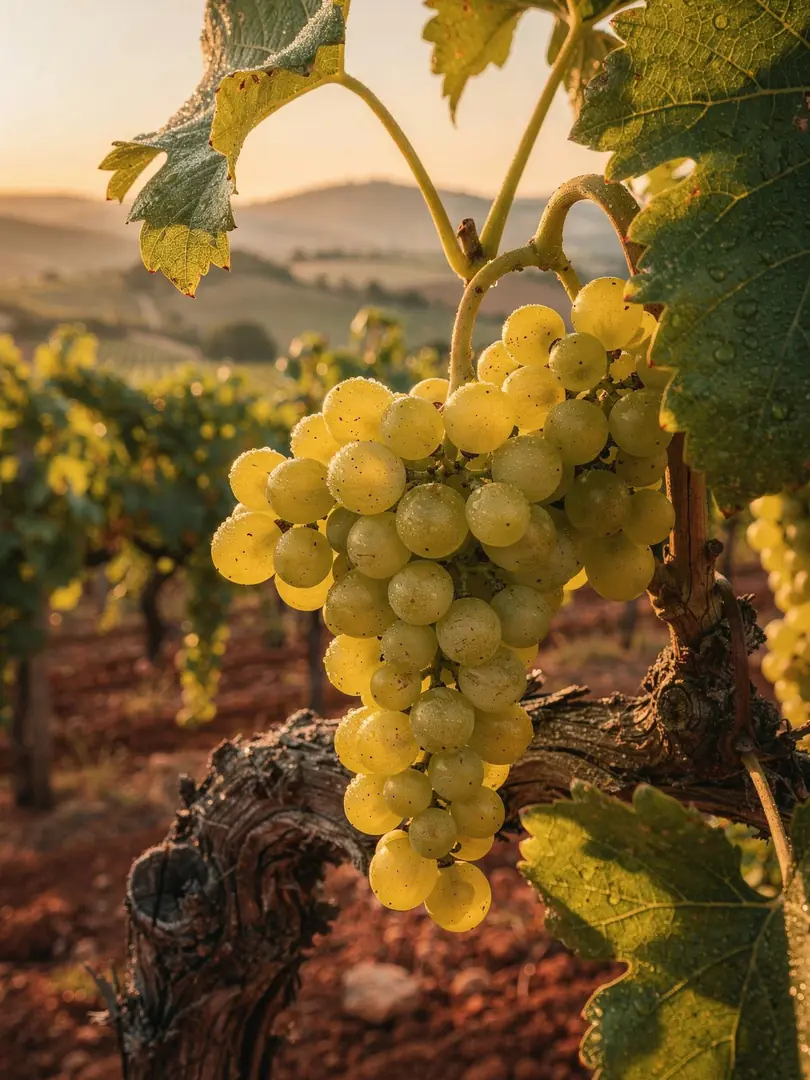
Viura and Macabeo
Grape Varieties
The same grape is called Viura in Rioja and Macabeo in Catalonia. It is the leading variety of Cava, making up a good third of the appellation's total vineyard area. Its wine is pale, fresh and rather restrained, with hints of green apple and white blossom. It's precisely this restraint that makes it such a good foundation for sparkling wine.
In Requena, Cava relies, according to the producers' association, on Macabeo, Chardonnay, Garnacha and Pinot Noir. Chardonnay gives the wine more body, while Garnacha and Pinot Noir are mainly used for rosé. Pinot Noir can also be pressed without skin contact, yielding a pale base wine.
In the Ebro Valley, Garnacha is among the key grapes, widely believed to have originated in Aragón. The Rioja wineries that produce Cava rely on Viura for their white Cava, which is already the region's most important white grape.
In Almendralejo, the base wine comes from Macabeo and Chardonnay; at Bodegas Romale, according to the winery, it's made from Macabeo and Parellada. Pardina and Cayetana, two white grapes long grown in the Tierra de Barros, don't appear on the list of approved Cava varieties.
Why these particular grapes? A sparkling wine demands grapes that retain their acidity and don't taste heavy. A strongly aromatic variety would overpower the delicate notes that develop later from lees aging. Macabeo, Chardonnay and Parellada bring enough freshness and let the lees take the lead.