Months on Lees
Lees Aging & Dosage
How long a Cava rests on its lees has, since the 2020 reform, determined its classification. Cava de Guarda requires at least nine months; Cava de Guarda Superior needs at least 18 months as a Reserva and at least 30 months as a Gran Reserva. Cava de Paraje Calificado rests for at least 36 months.
Over time, the yeast cells die off and slowly break down, releasing compounds into the wine reminiscent of bread, brioche and nuts. This process is called autolysis. A Cava with nine months on lees therefore tastes fruitier and fresher, while one aged three years tastes rounder and deeper.
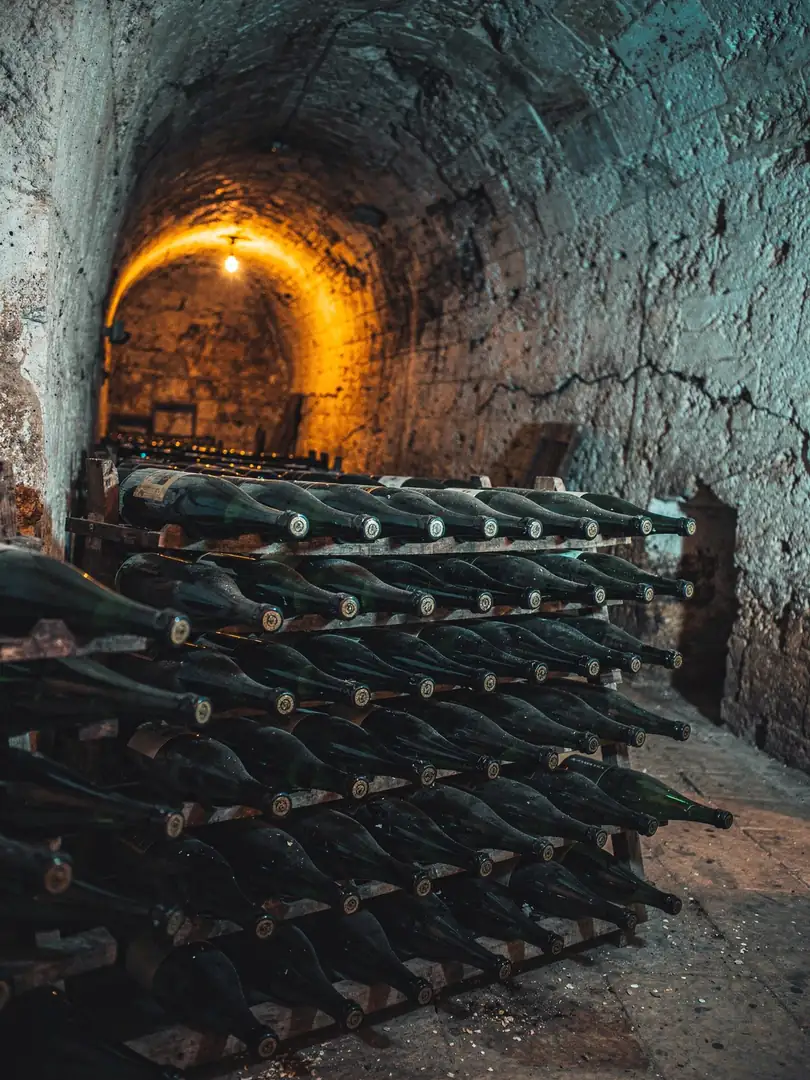
Beneath the old town of Requena, cellars carved into the rock have kept wine cool since the Middle Ages. The wineries along the Ebro and in Almendralejo, by contrast, mostly work in halls where the temperature is kept steady.
Eventually the lees must come back out of the bottle. The bottles are gradually turned upside down and riddled—once by hand on a riddling rack, today mostly by gyropalette—until the lees collect in the neck. During disgorgement, the neck is frozen, the crown cap is removed, and the plug of sediment shoots out.
After that, the winery tops up the bottle with the dosage, a mixture of wine and sugar. Brut nature contains under 3 grams of sugar per liter, Extra Brut between 0 and 6, Brut under 12. Gran Reserva and Paraje Calificado may only appear at these three levels. Anyone who sees "seco" on a label should expect more sugar than Brut—namely 17 to 32 grams per liter.