Hand Harvesting Required
Base Wine & Blend
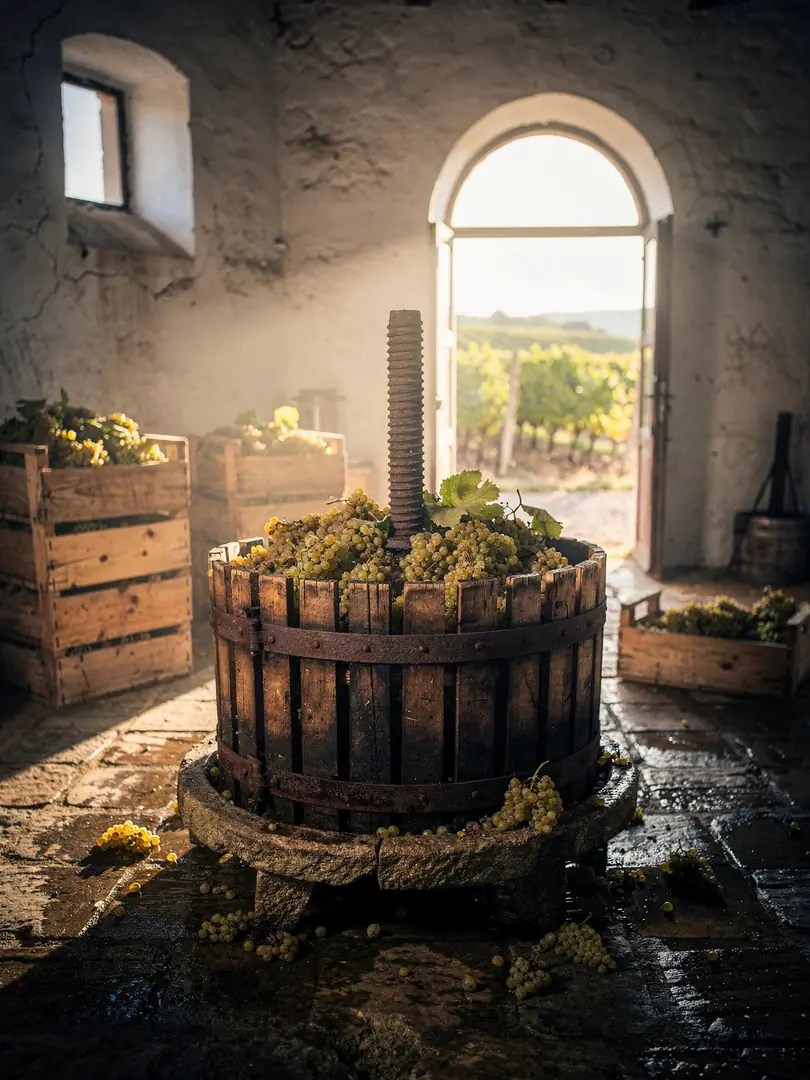
With Corpinnat, sparkling wine begins with shears, not machines. Hand harvesting is mandatory, and there's a practical reason: whole, undamaged berries produce a clean, pale must when pressed, without tannins from the skins. That's exactly the kind of must needed for a wine that will spend years on the lees.
Picking happens early so the grapes stay fresh. For the base wines, this means acidity that can support long lees aging and alcohol that won't feel too heavy in the finished bottle. Winemaking must take place in-house, so the houses don't buy in finished wine. An early harvest date also means the teams have to pass through the same vineyard several times, since not all the grapes ripen at once.
Each variety, and often each plot, is vinified separately at first. Only in winter does the cellar master assemble the blend: Xarel·lo for structure, Macabeu for fruit, Parellada for finesse. This process of combining is called assemblage. The blend can be adjusted year to year so a house maintains its style.
Reserve wines help with this—older base wines a house has set aside. Producers working without a vintage blend them in to smooth out the variations between harvests. Those bottling a vintage wine, by contrast, deliberately showcase a single year with all its character, from a cool harvest to a scorching summer.
Because white varieties dominate, many blends end up as a Blanc de Blancs. Rosé from red varieties is possible but remains the exception. Gramona, Llopart and Nadal are among the founding houses and age their base wines in their own cellars, as the brand's rules require. A multi-variety blend is seen as typical of the Penedès, while a pure Xarel·lo is considered the expression of a single site.