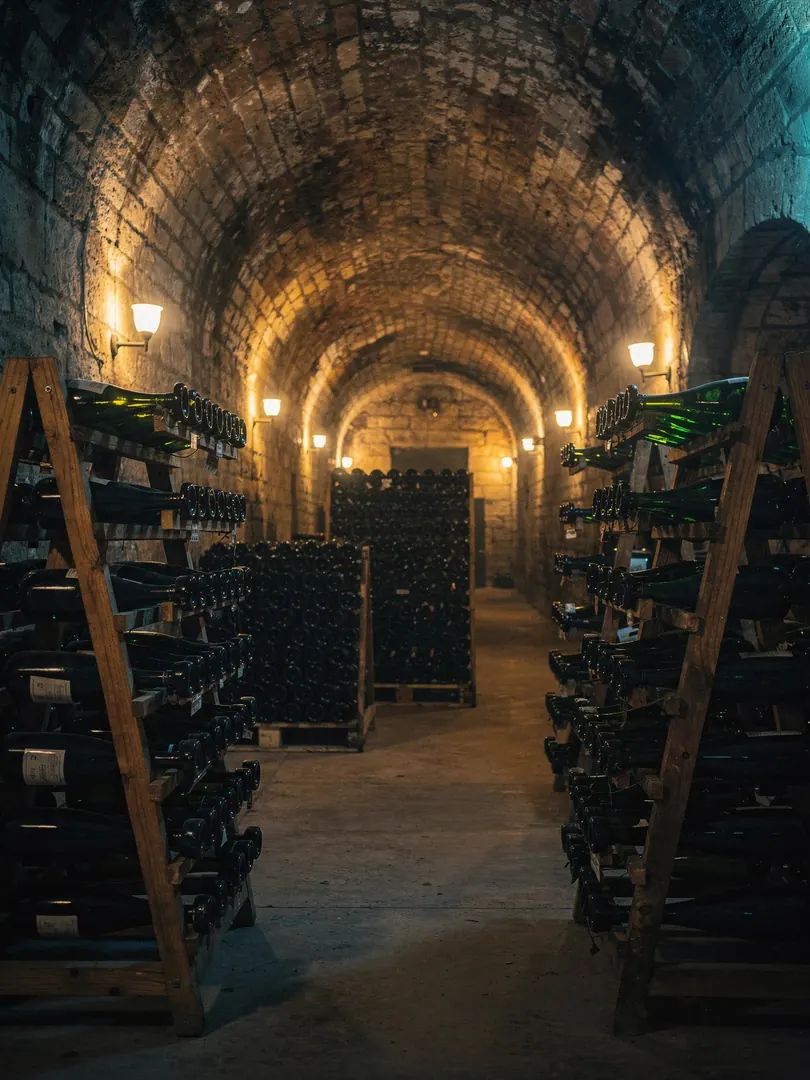
In the Bottle, Not the Tank
The Second Fermentation
A bottle of Corpinnat ferments twice. First, grape juice becomes a still wine; then it goes into the bottle, gets a dose of sugar and yeast, and ferments a second time inside. The carbon dioxide has nowhere to escape, dissolves into the wine and becomes the bubbles. In the process, the yeast consumes the sugar and produces gas and alcohol, adding roughly one percent alcohol to the wine.
Bottling with the sugar-and-yeast mixture is called tirage. The bottle is sealed with a pressure-resistant closure for this step. EU law requires at least 3.5 bar of pressure in the bottle for quality sparkling wine, meaning the wine sits under considerable tension until it's opened. That's why the bottles are made of thick glass.
Other methods are off-limits for the brand. Corpinnat is made using the traditional method: fermentation happens in the very bottle from which it's later poured, not in a tank. The label may therefore state "traditional bottle fermentation." The term "méthode champenoise," however, remains reserved for Champagne.
The same principle applies to Clàssic Penedès, the DO Penedès's sparkling wine with its own organic requirement. Here too, the wine undergoes a second fermentation in the bottle, and all grapes must come from the Penedès. Both paths lead to a finer mousse and more depth than a quickly produced tank wine typically achieves. The main difference between the two brands lies in the rules: Clàssic Penedès belongs to the DO Penedès, while Corpinnat belongs to the producers themselves.
The difference from standard Cava shows up above all in the aging. Instead of nine months, the EU minimum for traditional bottle fermentation, Corpinnat wines must rest at least 18 months in the bottle, and Clàssic Penedès at least 15. The profile below shows two typical styles.
Corpinnat Brut NatureBottle fermentation · Xarel·lo, Macabeu, Parellada
- Time on lees
- 18–60 Months
- Sugar
- 0–3 g/l
- Alcohol
- 11.5–12.5 % vol
Taut and saline, with citrus, brioche and almond from long lees aging.