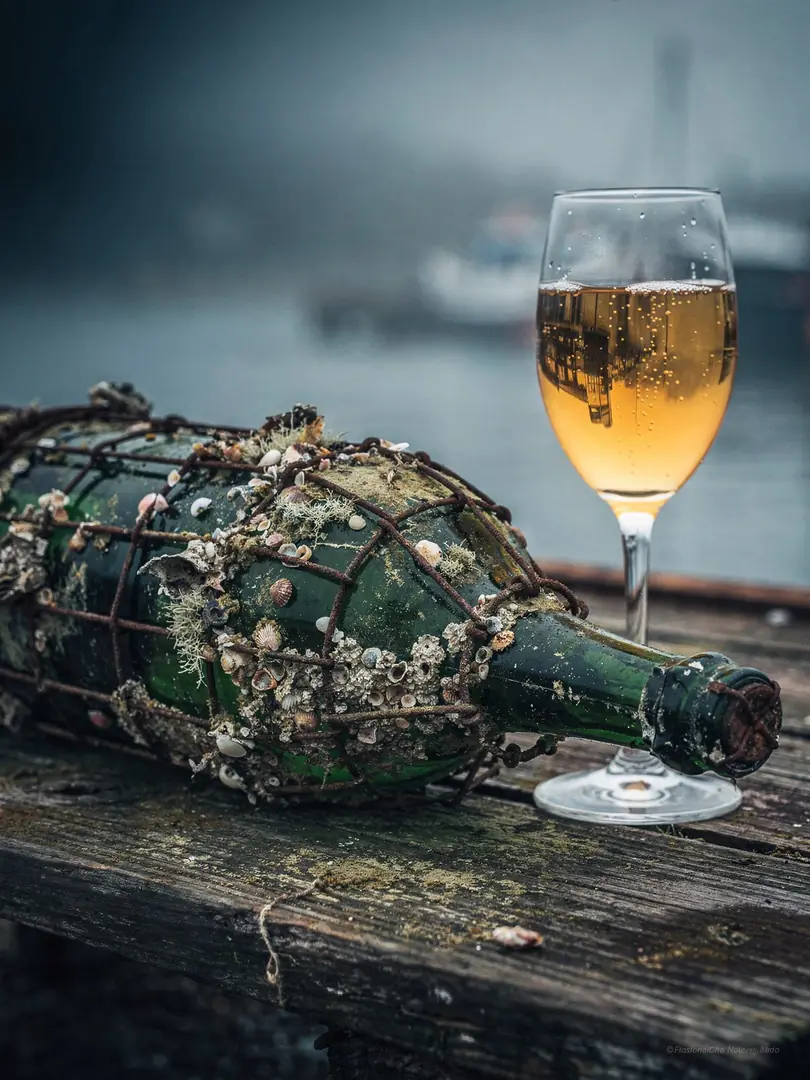
A find in the cellar
Found an old bottle of sparkling wine: drink it or not?
Whether an old bottle of sparkling wine is still worth drinking depends on style, storage, fill level, color, and cork. Tank-fermented branded sparkling wine is usually tired after many years, while well-stored Champagne can survive for decades. If the wine smells of vinegar, mold, or cork taint, it belongs down the drain.
What does the bottle reveal before you open it?
The first thing to check is the closure. If the capsule is sticky, crusted, or hanging loose, wine may have leaked out. A cork that sits noticeably deeper in the neck than usual, along with a heavily rusted wire cage, points to rough storage conditions. Next, check the fill level. In sparkling wine, it rarely drops much, since the pressure keeps the cork sealed tight. If the wine level sits noticeably lower than in a fresh bottle, gas and wine have likely escaped.
After that, a flashlight held behind the glass helps. A white sparkling wine is allowed to turn more golden with age. If it looks amber or brownish, oxygen has changed it — it's oxidized. In rosé, the color shifts toward orange, which is also a sign of age. Floating flakes in a disgorged sparkling wine are unusual and more of a warning sign. In Pét-Nat or Sui Lieviti styles, however, some sediment is simply part of the style.
Which sparkling wines can survive many years?
Style matters a lot here. A tank-fermented branded sparkling wine that's been sitting in the living room cabinet since an anniversary fifteen years ago is almost certainly flat and tastes like cardboard or applesauce. It was never meant for aging, and warm, fluctuating temperatures will have aged it even further. A bottle-fermented sparkling wine, Crémant, or Cava with extended lees aging has somewhat better chances.
The best chances belong to Champagne, especially a vintage wine, that has been stored dark and cool in a cellar. It can still be vibrant after twenty years, with aromas of honey, nuts, and coffee and a fine, gentle mousse. The storage history counts almost as much as the wine itself. A bottle from the attic has worse prospects than the same bottle kept in a consistently cool cellar vault.
Opening and tasting an old bottle: what to watch for
Even an old bottle can still hold pressure, so the usual precautions apply: cloth over the cork, neck pointed away from your face and from other people, loosen the wire cage, and keep a firm grip on the cork. Old corks are often brittle and can break off. In that case, a corkscrew helps — turn it in slowly while the cloth protects your hand. Sometimes there's barely a hiss left, since the carbonation has dissipated over the years.
After that, it's all about the nose. If the wine smells of vinegar, mold, wet cardboard, or solvent, it's spoiled or corked and should be poured out. If it smells of sherry, walnut, and honey, it's heavily matured, but not necessarily flawed. A small sip will show whether acidity and freshness remain. Some old sparkling wines then taste like a mature, lightly sparkling white wine — and that can be quite a treat.
Shipwreck find in the Baltic Sea: Champagne after 170 years
A find off the Åland Islands between Sweden and Finland revealed just how long Champagne can last under ideal conditions. In 2010, divers discovered 168 bottles of Champagne in a shipwreck roughly 50 meters deep. Estimates suggest they had rested on the seabed for about 170 years. Branded marks burned into the corks allowed experts to trace them to the houses of Veuve Clicquot Ponsardin, Heidsieck, and Juglar.
A team led by Philippe Jeandet of the University of Reims analyzed the wine and published their findings in 2015 in the journal PNAS. The wines contained around 150 grams of sugar per liter, compared to under 12 grams in a modern-day Brut. The researchers attributed the wine's remarkable condition to temperatures of 2 to 4 °C, complete darkness, and high water pressure. Tasters initially noted animal and cheesy aromas, which gave way to smoky, leathery, and fruity notes after swirling in the glass.