The short answer
Wine likes it dark, cool, and consistent. Big temperature swings do more damage than a few degrees too warm. For most bottles, a decent spot somewhere in your home is enough. One question matters more than any other: are you bridging a few weeks, or planning for years?
Start by figuring out the storage timeline
A bottle meant for dinner this weekend has different needs than a wine you plan to keep for years. Buy storage equipment to match what you actually have on hand. If you tend to drink your wine fairly soon anyway, what you mainly need is a sensible spot—plus a clear overview of which bottles you already have.
Sort your stock into two groups: "drink soon" and "deliberately aging." If you're unsure about a particular bottle, ask the producer about the recommended drinking window—the span of time when a wine tastes its best. You can't work that out just from the grape variety or the price.
In practice, this means buying in small batches as long as you don't have a proper storage space. If you keep twelve bottles neatly arranged, you won't lose track of any of them. Once your collection grows beyond what you can keep in your head, that's the moment to start a list—you still don't need new equipment for that.
Checking the location
A good average temperature is around 50–54°F (10–12°C). But for a home setup, other things matter just as much: no constant warmth, no direct sunlight, and as little fluctuation as possible. That rules out a shelf next to the stove or above the radiator.
Observe your planned spot for a week. Does the afternoon sun hit it? Is there a warm pipe running nearby? Does the temperature climb noticeably in summer? A simple thermometer will answer this far better than the word "cellar" on a floor plan ever could.
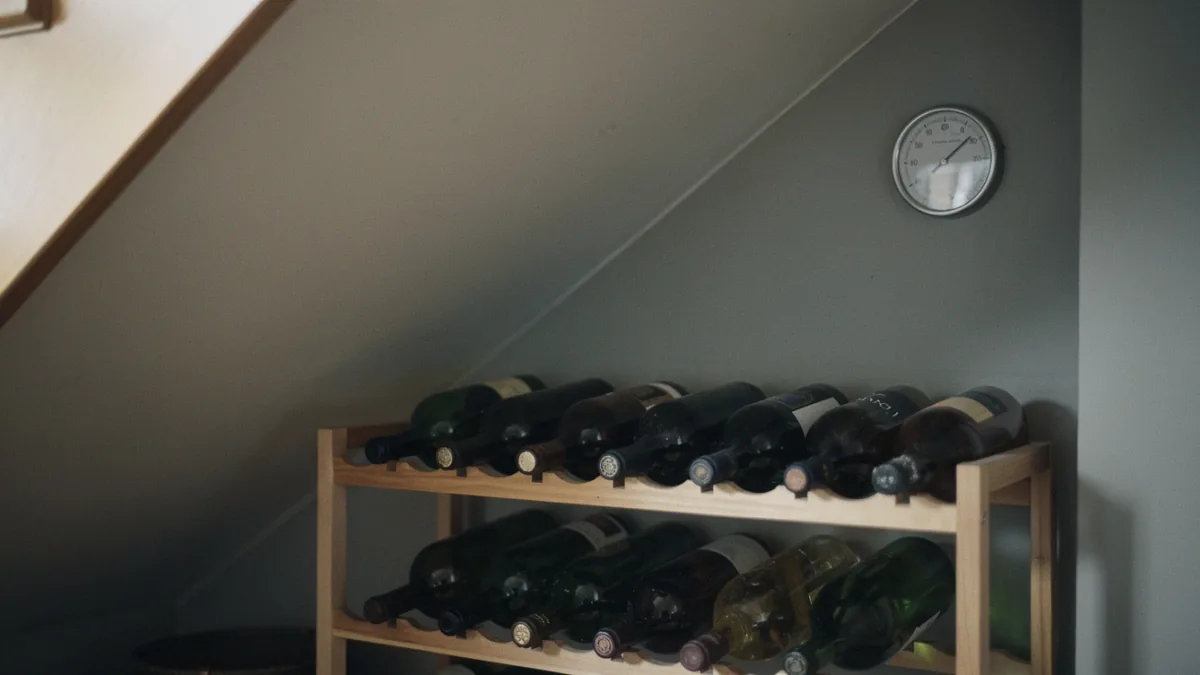
An interior room without an exterior wall or window is often the most stable spot in a home. A closet, the bottom of a cupboard, a nook under the stairs—these spots are rarely perfect, but they tend to fluctuate very little. If light gets in, a simple box over the bottles solves that. What matters more than any single good day is how the spot behaves across the seasons.
Lying down or standing up?
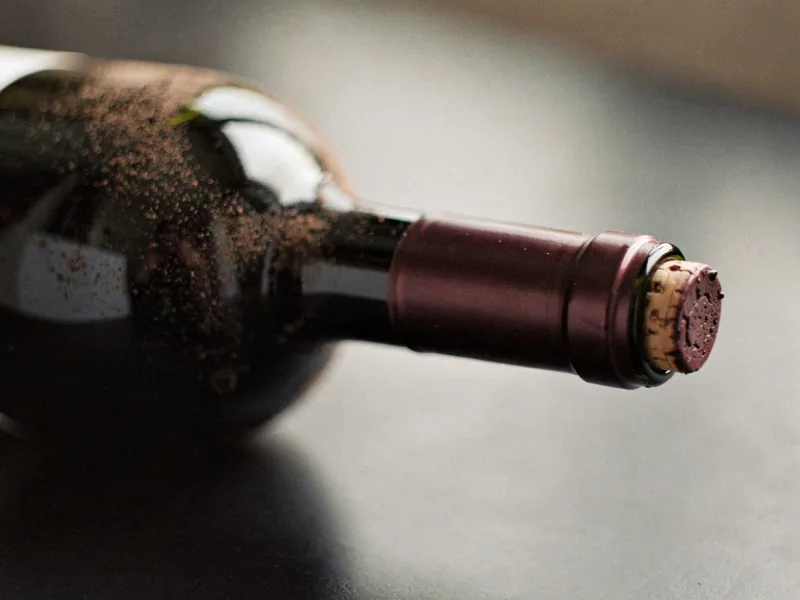
For natural cork, storing bottles on their side is the common starting point for long-term storage. Bottles with screw caps, glass stoppers, or synthetic closures can stand upright. This has nothing to do with quality ranking—the closure won't tell you whether you'll enjoy what's inside.
Arrange your bottles so you can pull them out safely. In hard-to-reach stacks, only the front bottles ever make it into the glass, while the rest get forgotten. A readable label or a small note about where a bottle is stored makes the collection actually usable day to day.
Take a quick look at the closure as you shelve a bottle, so you don't have to guess later. Screw-cap bottles do fine standing up in a regular rack. Cork-sealed bottles should lie down for longer storage. Both can share the same shelf without any issue. If you put wines for the next few weeks up front and long-term ones toward the back, you'll grab the right bottle more often.
Not every wine gets better with waiting
Wanting to keep a bottle says nothing about its aging potential. Fresh, uncomplicated wines are often made to be enjoyed soon. With wines built for aging, expectations shift—you're no longer looking for the same fresh fruit impression as on day one.
If you have several bottles of the same wine, a small log is worth keeping: date opened, storage location, and a sentence about the impression. That way you learn from your own stock. An already-opened bottle belongs to a completely different plan—it's not a candidate for years of cellar aging.
A wine you don't enjoy now rarely becomes your wine just by waiting. Time changes the impression, but it can't fix it. On the flip side: go ahead and open the last bottle of a wine you love. Nobody needs a keepsake sitting in a rack—a stock of wine is there to be drunk.
When a wine fridge actually makes sense
A wine fridge helps once you're storing longer-term and can't find a good spot in your home. When buying one, pay attention to the space that's actually usable for your bottle shapes. The stated bottle count is often misleading for wider Burgundy or sparkling wine bottles. Placement and operating noise matter too.
Storing and serving are two different tasks. A temperature that's good for storage isn't automatically the right one for the glass. So plan for a storage spot plus a short prep step before opening. Keeping every bottle constantly at drinking temperature isn't worth the effort.
Before buying, measure the space and factor in clearance from the wall. Also consider whether you'll mind hearing a soft hum in the evening. In many homes, a quiet, cool spot at the bottom of a cupboard is the more honest solution—put your money into bottles instead. A wine fridge only really pays off once you're actually bridging years, not weeks.
Storage mistakes that really do harm wine
"Cellar" is no guarantee of quality. A heated basement hobby room can be warmer and more variable than the bottom of a hallway cupboard. Conversely, wine often keeps better in some rental apartments than you'd expect. What counts is what the thermometer shows over months—not what the room is called on a floor plan.
Just as persistent is the idea that expensive wine has to be aged. Price and aging potential don't run parallel. A screw cap is likewise no sign of simple quality. If you want to know how long a particular bottle will bring joy, ask the producer. That's the shortest path to a reliable answer.