Limestone beneath Budafok
Soil & Climate
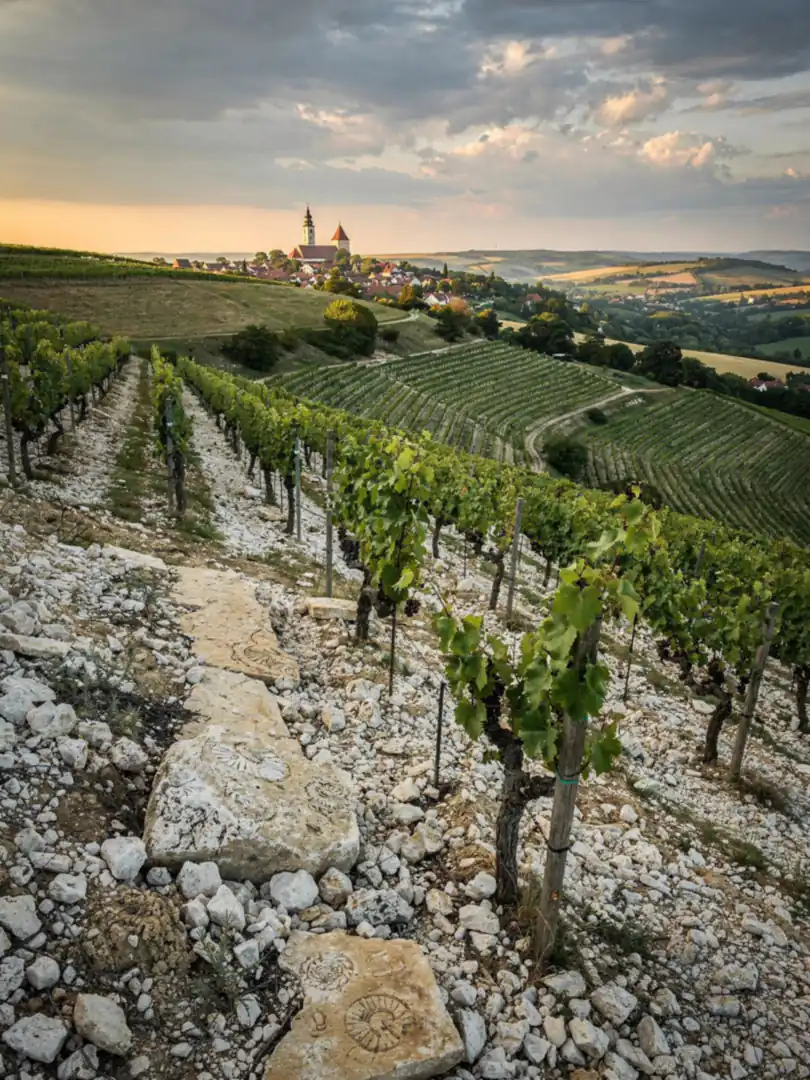
Limestone lies beneath Budafok, and cellar masters have carved their passageways into it. The rock maintains a constant temperature year-round, with no need for heating or cooling. For bottles resting on their lees for months, this is the ideal condition.
The vineyards from which Törley sourced its grapes also stand on limestone. They lie in Etyek, around 30 kilometers west of Budapest, in the Etyek-Buda region. It's one of Hungary's cooler wine regions, and cool sites retain their acidity even after a warm summer.
Acidity is the backbone of every sparkling wine. It keeps the wine fresh, even once some sugar is added later via the dosage, and it carries the bubbles. Limestone soils are considered a source of taut, mineral-driven wines, which suits a base wine destined for sparkling production.
Törley himself saw the soils of Budafok as the closest match to Champagne anywhere in Europe. Whether one would agree with that today is an open question. But the idea reveals his intent: he wanted to bring not just the technique but also the soil of Champagne to Hungary.
Anyone walking through Budafok today can see at the cellar entrances how much the town depends on the rock. Besides Törley, several other producers keep their cellars here, including Lics, György-Villa, and Várszegi.
Above the sparkling wine cellars of the Törley works stands Törley Castle, whose style recalls French chateaux. The family lived directly above their work.