Lees, Riddling, Label
Lees Aging & Dosage
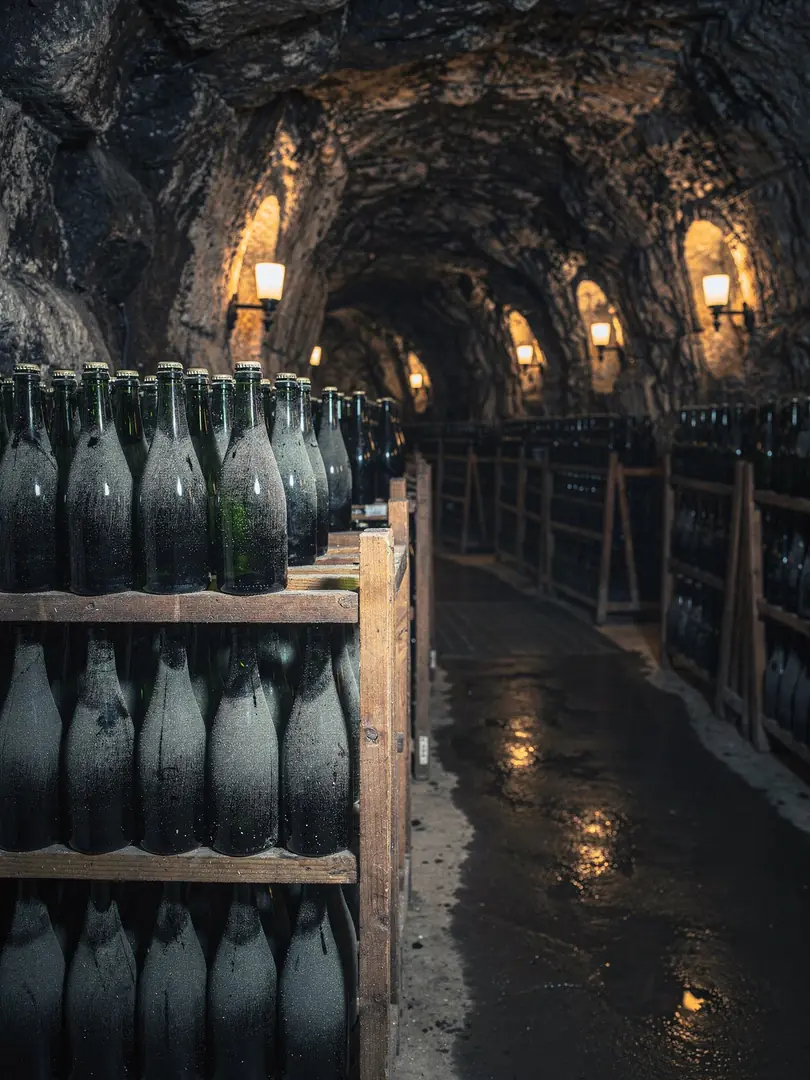
After fermentation, each bottle rests on its lees. The spent yeast cells slowly break down in a process called autolysis. It gives the wine aromas of brioche, nuts, and bread, along with a softer mouthfeel. How long a bottle ages depends on the house and the cuvée. The EU minimum of nine months for traditional bottle fermentation applies to European labels, not to Napa.
At the end of aging, the lees must come out of the bottle. The bottles are placed neck-down in riddling racks or gyropalettes and turned a little each day over several weeks until the lees settle in the neck. During disgorgement, the neck is frozen in a brine solution at around minus 20 degrees Celsius. The crown cap is removed, and the plug of frozen lees shoots out.
Afterward, the house tops up the bottle with the dosage, a mixture of wine and sugar. This determines the sweetness level. In California too, Extra Dry doesn't mean drier than Brut, but usually sweeter.
The word Champagne on a California bottle is a special case. For a long time, US winemakers were allowed to use it as a semi-generic term as long as they added the true origin, as in "California Champagne." In the wine agreement with the EU signed on March 10, 2006, the US agreed to restrict the use of 17 European names, including Champagne, Burgundy, and Chablis.
A grandfather clause allows exceptions: brands whose label was approved before March 10, 2006, may keep the name. New brands may not. That's why "Champagne" still appears on bottles like those from Korbel, while Chandon, Mumm Napa, Domaine Carneros, and Schramsberg simply say "Sparkling Wine."