Ripe Fruit, Brioche
Tasting
A sparkling wine from Carneros usually smells of ripe apple, pear, and citrus, with brioche notes from the lees. The region's cool climate keeps acidity taut, yet California sunshine often makes the fruit rounder and riper than in Champagne. That makes the style approachable, even for anyone trying a Champagne-method sparkling wine for the first time. On the palate, the mousse tends to feel fine and creamy, and the finish stays marked by citrus.
Four houses serve as good examples. Domaine Carneros's Brut shows the harmony of Chardonnay and Pinot Noir, while its Le Rêve Blanc de Blancs reveals pure Chardonnay freshness. Schramsberg's Blanc de Blancs represents the style poured in Beijing in 1972. Mumm Napa and Domaine Chandon stand for sparkling wine from houses with Champagne roots. Taste several side by side, and you'll quickly notice the difference between a lean Blanc de Blancs and a fuller cuvée built around Pinot Noir.
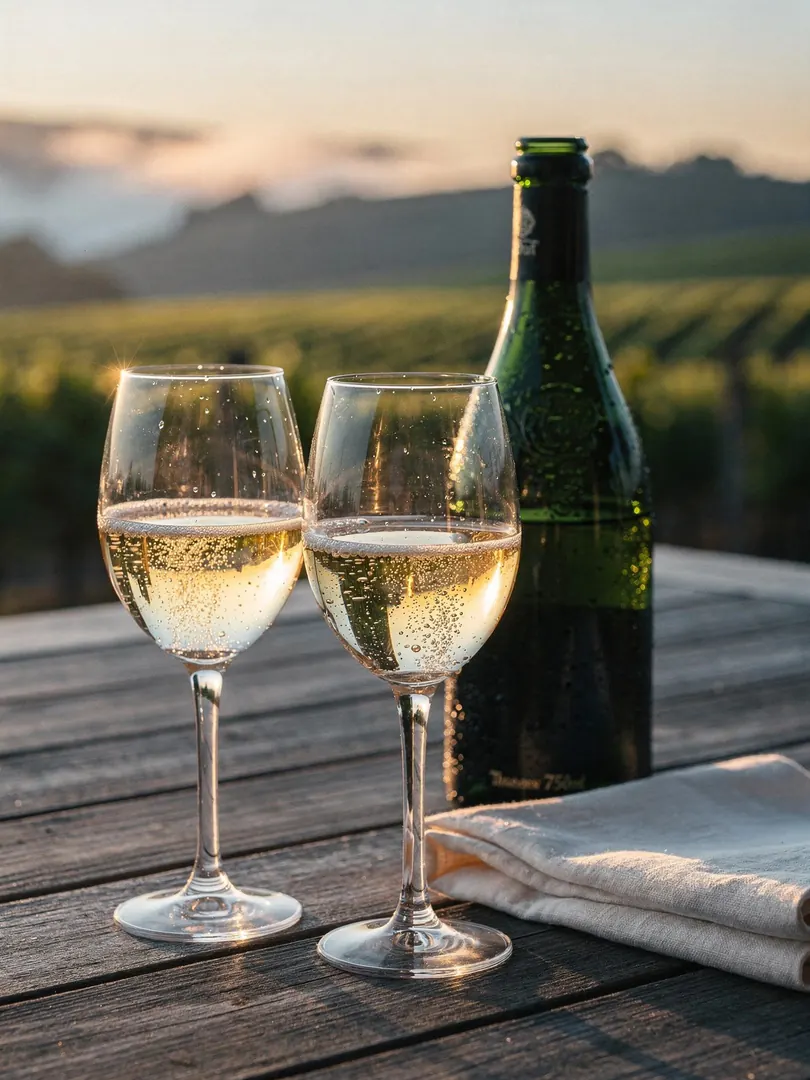
A tulip-shaped glass works better than a flat coupe. It concentrates the aromas at the rim, and the bubbles rise longer thanks to the smaller surface area. A slender white wine glass will do in a pinch.
Chill the wine to about 6 to 9 degrees Celsius (43–48°F), either in the fridge or for half an hour in a bucket of cold water. Too cold suppresses the aromas; too warm sends the bubbles rushing wildly to the surface. Let the wine warm slowly in the glass, since pear, brioche, and nut notes often only emerge after a few minutes.
When opening, hold the cork firmly, loosen the wire cage, and turn the bottle rather than the cork. That way the pressure escapes with a quiet sigh instead of a loud pop, and no wine is lost. Keep the bottle angled away from everyone nearby.