Isasmendi & Cafayate
Region & History
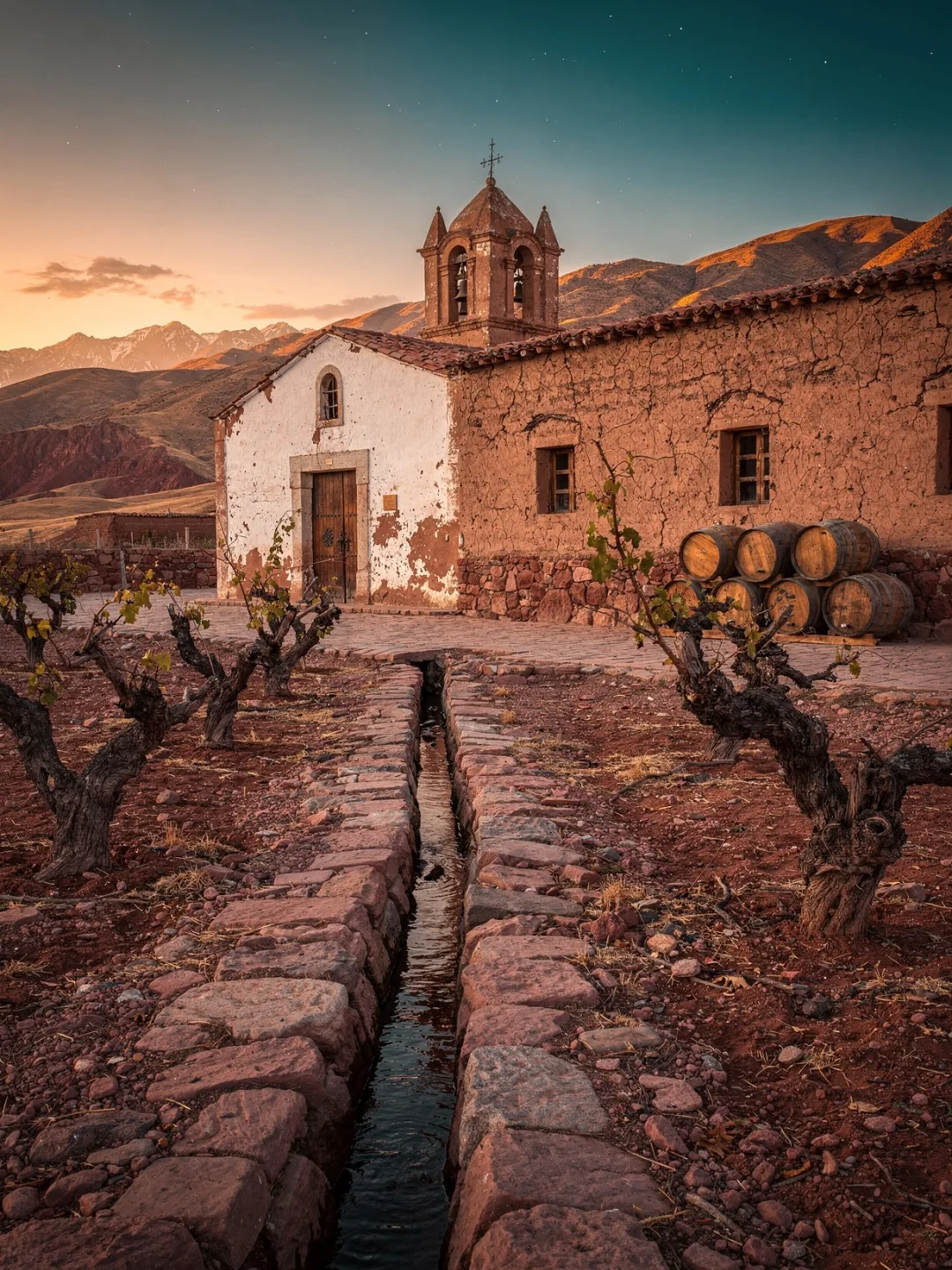
Long before any Spaniard laid eyes on a vine here, the Diaguita-Calchaquí lived in this valley. They built terraces into the slopes and channeled water from the Río Calchaquí through canals, some of which still irrigate vineyards today. From 1560 onward, Spanish troops advanced into the region. The Calchaquí resisted for more than a hundred years, with a final uprising in 1657 led by an Andalusian who claimed descent from the Incas. In the end, of half a million people in northwestern Argentina, barely twenty thousand remained.
Only after this did the vines arrive. Starting in the late sixteenth century, Spanish missionaries and Jesuits brought planting material from Peru, some via Chile, some from the Canary Islands. The valley was dry, high, and sunny — exactly what the vines preferred over the humid plains below.
The most important name of this early era is Nicolás Severo de Isasmendi y Echalar, the last Spanish governor of Salta del Tucumán before independence. In 1831, he founded the Colomé estate near Molinos, today the oldest still-operating bodega in Argentina. He is buried in the Church of San Pedro Nolasco in Molinos, a seventeenth-century building. His daughter Ascensión went even further. In 1854, together with her husband José Benjamín Dávalos, she brought French Malbec and Cabernet Sauvignon cuttings to Colomé — before phylloxera destroyed the European mother vines.
Cafayate itself is younger. The town was only founded in 1840, established by Manuel Fernando de Aramburu on the site of a former mission station. It quickly grew into the valley's center. In 1850, the Bodega Etchart opened there, which later made Torrontés famous. A vineyard planted in 1862 still stands today — considered the oldest living vineyard in Argentina.
El Esteco followed in 1892, founded by the French brothers David and Salvador Michel — soon the largest bodega in the province. In 2001, after a hundred and seventy years, the Isasmendi-Dávalos family sold Colomé to the Swiss couple Donald and Úrsula Hess. They turned it into a biodynamic operation. Just a few kilometers away, starting in 1998, Arnaldo Etchart built the Bodega San Pedro de Yacochuya together with French oenologist Michel Rolland. Its first vintage was bottled in 1999.
Today, the region's name is officially protected: IG Cafayate and IG Valles Calchaquíes, two Indicaciones Geográficas registered with the Instituto Nacional de Vitivinicultura. A Denominación de Origen Controlada, stricter than any IG, does not yet exist in Salta.