Hack, Hahndorf, Croser
Region & History
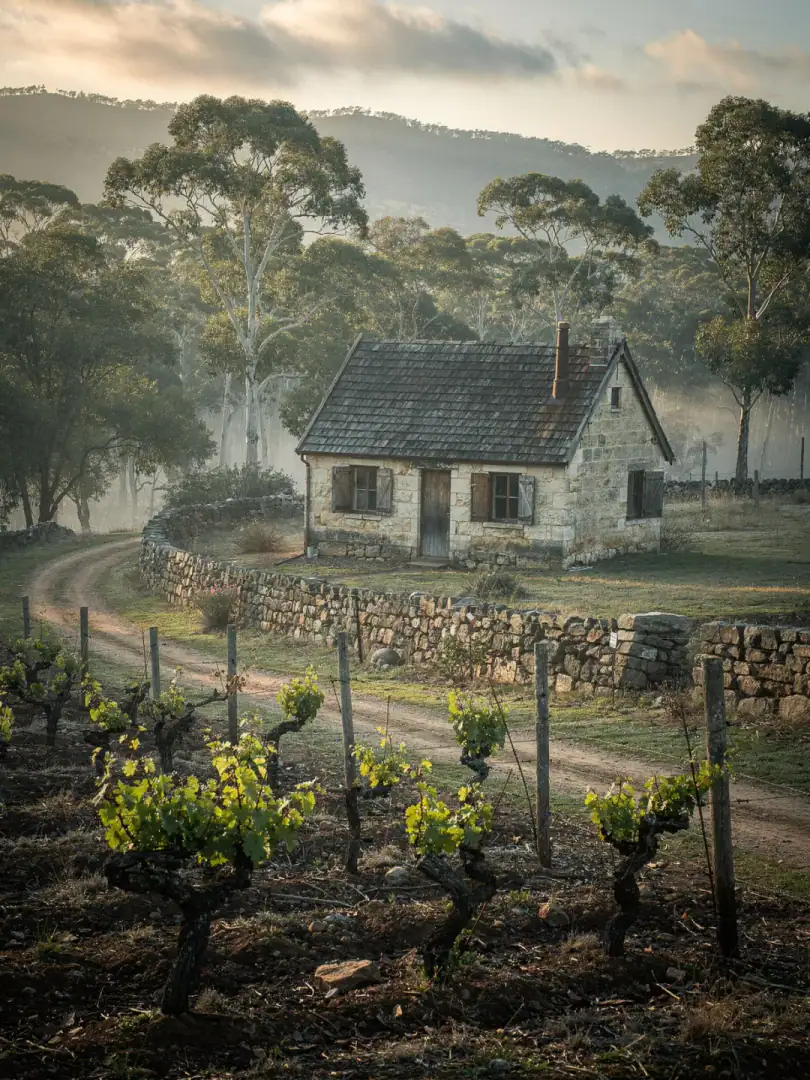
John Barton Hack planted the first vines of the Adelaide Hills in 1839, down in Echunga, deep in the south of what is now the wine region. Four years later he pressed one of the first wines of the young colony of South Australia, barely three decades after the first settlers had even landed. Wine was nothing new here that had to be invented.
A few years later, Lutheran religious refugees arrived from Prussia. In 1839 they founded the village of Hahndorf — to this day the oldest surviving German settlement in Australia, with narrow front gardens and a long main street that still looks the same. Around 1842, the first vines stood there and in nearby Lobethal. They needed only bread and something to drink.
Then came the crash, and it came from London. When the Empire abolished the tariff advantage for its colonies in the early twentieth century, exports collapsed, and one winery after another went bankrupt. For nearly fifty years, the slopes gave way to dairy cows, sheep, and above all fruit trees. To this day, the Adelaide Hills are therefore called South Australia's fruit basket, known for cherries and apples rather than grapes.
The comeback began in 1976. That year, Brian Croser founded Petaluma and deliberately searched for the coolest site in the region, rather than simply improving an existing one. He found it in the Piccadilly Valley and planted Chardonnay and Pinot Noir there; his Tiers vineyard from 1979 was the first new vine planted in the valley since the nineteenth century. Others soon followed: Stephen George, Tim Knappstein, the couple Stephen and Prue Henschke. Then came the cousins Michael Hill Smith and Martin Shaw, who founded Shaw + Smith in 1989.
In 1998, "Adelaide Hills" was registered as a protected geographical indication. The strip runs along the Mount Lofty Ranges from near Mount Pleasant in the north to Mount Compass in the south. South Australia was spared from phylloxera, the pest that elsewhere forced almost every vineyard in the world onto American rootstock. Some vines here still stand on their own roots to this day as a result.