Sauvignon Blanc & Co.
Grape Varieties
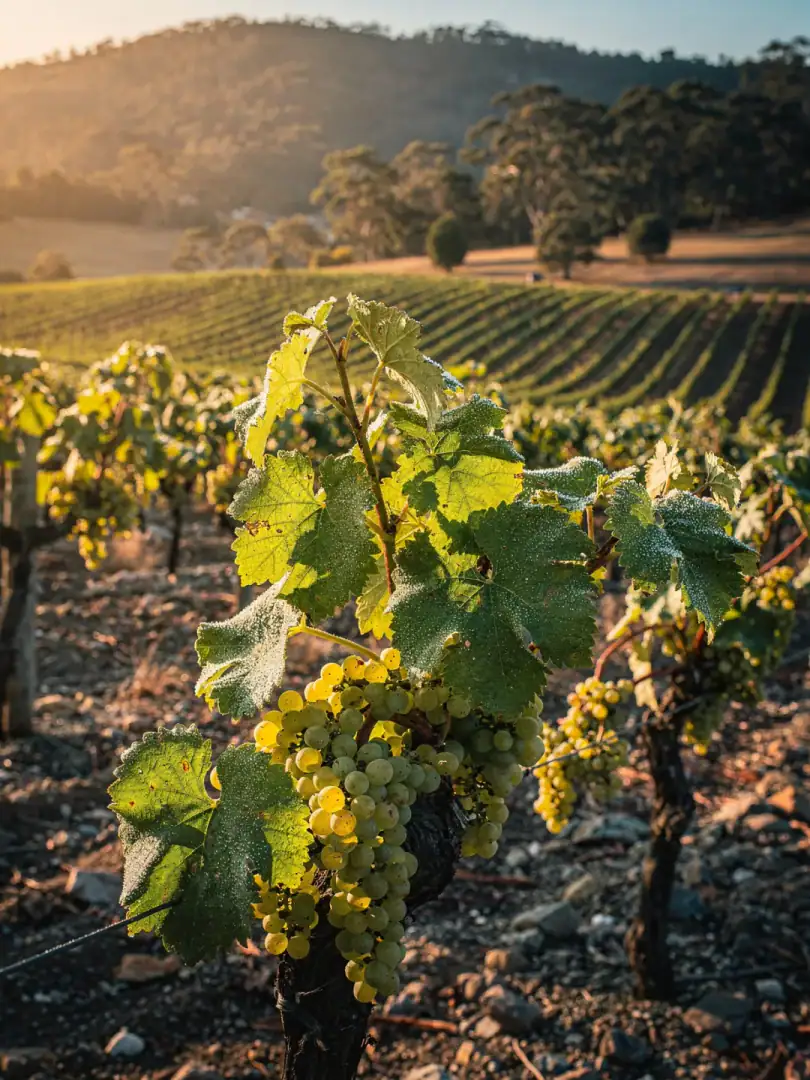
Sauvignon Blanc is the variety that made the Adelaide Hills famous. Yet the first serious row of it was only planted in the ground in 1989. That year, cousins Michael Hill Smith and Martin Shaw founded Shaw + Smith and built their Sauvignon Blanc deliberately around the cool nights of the hills. The result smells of gooseberry and passion fruit, not the heavy tropical fruit of warmer sites.
Almost as important is Chardonnay. It arrived in the hills for an entirely different reason, though. In the 1970s, Brian Croser sought a site cool enough for sparkling wine made by traditional bottle fermentation, and found it in the Piccadilly Valley. Chardonnay and Pinot Noir have since provided the base for both the region's sparkling wine and its full-bodied still wines.
Alongside these grows a small but vocal faction of newcomers. Larry Jacobs of Hahndorf Hill was the first to plant Grüner Veltliner, the Austrian white with the peppery bite, in 2006. The first vintage was already in the glass by 2010. Today the variety is the most widely planted newcomer in the hills, closely followed by Pinot Gris, which shows finer fruit here than in warmer corners of Australia.
Nebbiolo is the outsider with the biggest ambition. The variety needs long ripening with cool nights, otherwise it stays hard and without aroma. That's exactly what the higher sites around Piccadilly and Lenswood offer. Only a few hectares are planted so far, but connoisseurs already call the Adelaide Hills one of the country's best Nebbiolo terroirs.
Shiraz exists here too. It just tastes different from the dense, warm Shiraz of the Barossa Valley or from the coast near McLaren Vale. At the elevation of the Adelaide Hills, it ripens more slowly and retains white pepper spice along with a leaner body. This shows just how strongly climate here determines the character of a variety.