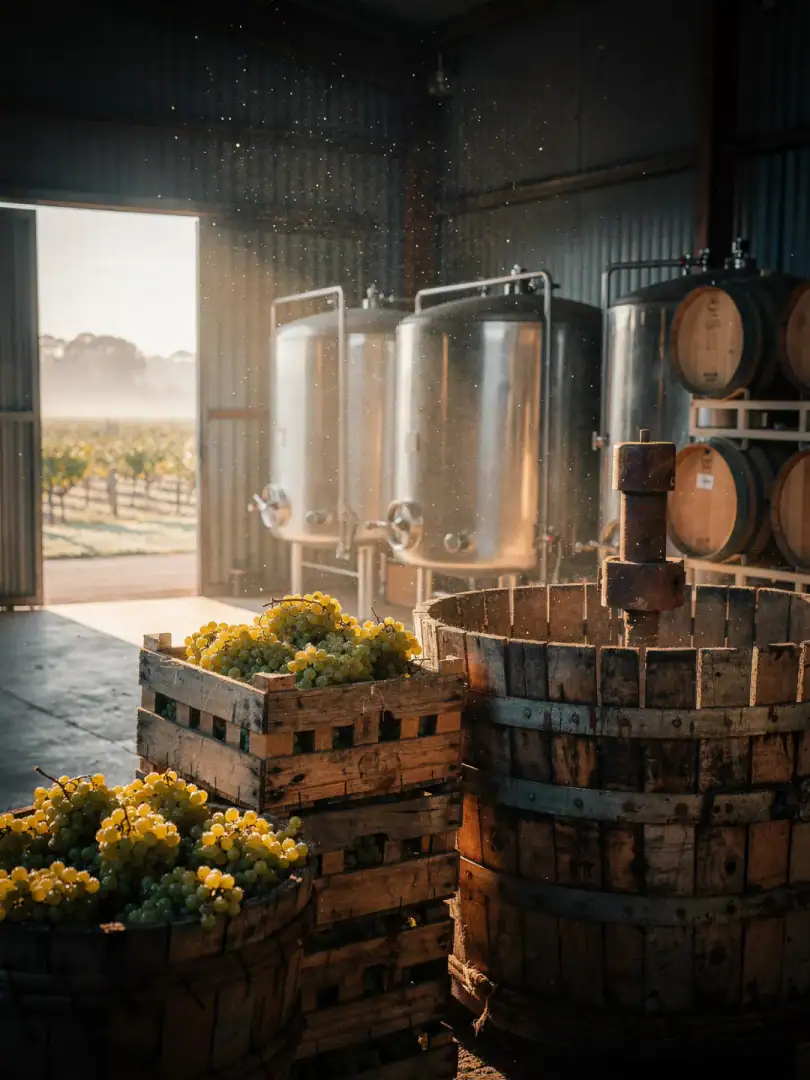
Bottle fermentation, hand harvest
Production
Grapes harvested in the Adelaide Hills are often picked by hand, early in the morning. The night has kept the berries cool until then. Many vineyards lie on slopes so steep that no mechanical harvester can manage them. Cool grapes retain more freshness during pressing than those already warmed by the midday sun.
An additional step applies to the region's sparkling wine. Croser, the sparkling wine from Petaluma, has been on the market since 1987 and undergoes a second fermentation in its own bottle according to the classic method. Base wine from Chardonnay and Pinot Noir from the Piccadilly Valley is dosed with yeast and sugar, ferments again, and the resulting carbon dioxide has nowhere to go but into the glass. The spent yeast stays in contact with the wine for months, lending it notes of brioche.
Because the grapes here naturally carry plenty of acidity, winemakers less often need to add acid afterward than in warmer regions. One less step of craft that the cool climate spares them.
A young scene centered around Basket Range, deep in the hills, works quite differently. There, winemakers let the grapes ferment with their own wild yeasts. They often skip added sulfur and leave white varieties on their skins for days, until the wine takes on color and tannin like a red wine. Such wines are called orange wine, precisely because of this color.
Both schools — the precise approach of Petaluma and the wild one of Basket Range — harvest the same cool fruit. They treat it in completely different ways. This very range is what makes the Adelaide Hills a wine region where tradition and experiment share the same slope.