Silesians, old vines
Region & History
In 1836, the colony of South Australia was founded. Shortly afterward, surveyor William Light crossed a dry, hilly valley north of Adelaide. He named it after a hill in Spain where he had fought in 1811: Barrosa. At the time, the valley was still unsettled.
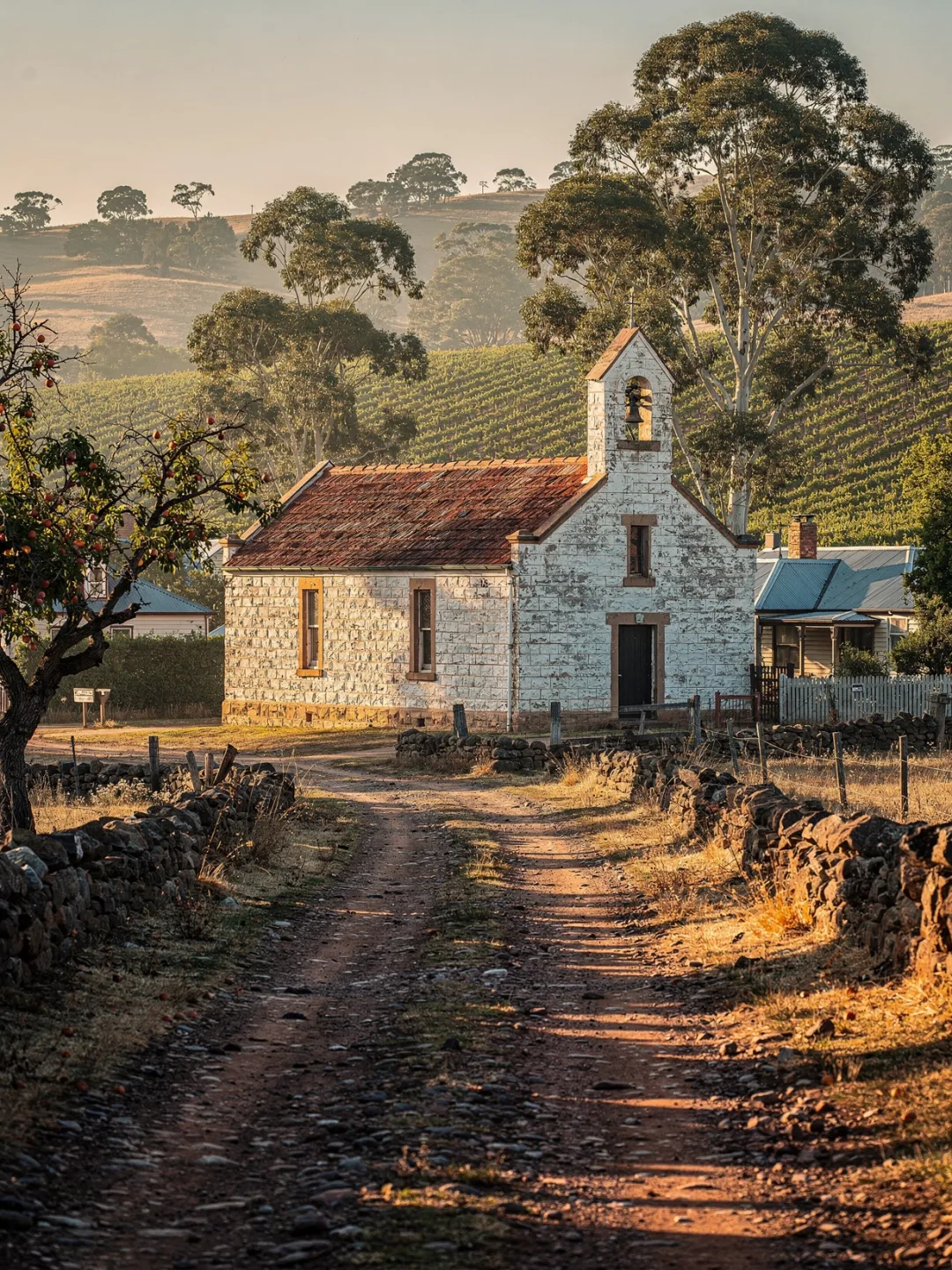
In 1842, Lutheran Silesians reached the valley, led by Pastor August Kavel. Their passage had been paid for by the English merchant George Fife Angas, who promised them freedom of religion in the new colony. The settlers founded Bethany, the valley's first village, modeled on Silesian linear villages: a path down the middle, with farmsteads lined up along it. They also brought crafts and farming knowledge from a completely different climate zone. As it turned out, that knowledge suited the dry, warm Barossa Valley better than they had expected.
Five years later, in 1847, Bavarian immigrant Johann Gramp planted the first vines on the banks of Jacob's Creek. This later became the Orlando winery. Within a few decades, other families followed: Oscar Seppelt in Seppeltsfield, Samuel Smith at Yalumba, William Salter at Saltram, and Johann Henschke further east with his own winery. By the 1890s, a settler valley had turned into a wine region. To this day, its labels still bear German family names.
What sets this wine region apart from almost any other in the world only became apparent decades later. In the 1870s, the phylloxera louse devastated Europe first, then Australia's east coast. South Australia sealed its borders with strict quarantine regulations and remained one of the few wine regions in the world to be spared. That's why vines from the 1840s and 1850s still stand on their own roots today, never grafted onto American rootstock. At the Turkey Flat vineyard in Tanunda, vines from 1847 still bear grapes, and they count among the oldest vines in the world.
To safeguard this heritage, the industry established the Barossa Old Vine Charter in 2009. It's an age ladder for the label: Old Vine from 35 years, Survivor Vine from 75, Centenarian Vine from 100, and Ancestor Vine from 125 years. Anyone who buys a bottle labeled "Ancestor Vine" today is drinking from a vineyard that was already standing before Kavel's grandchildren were even born.