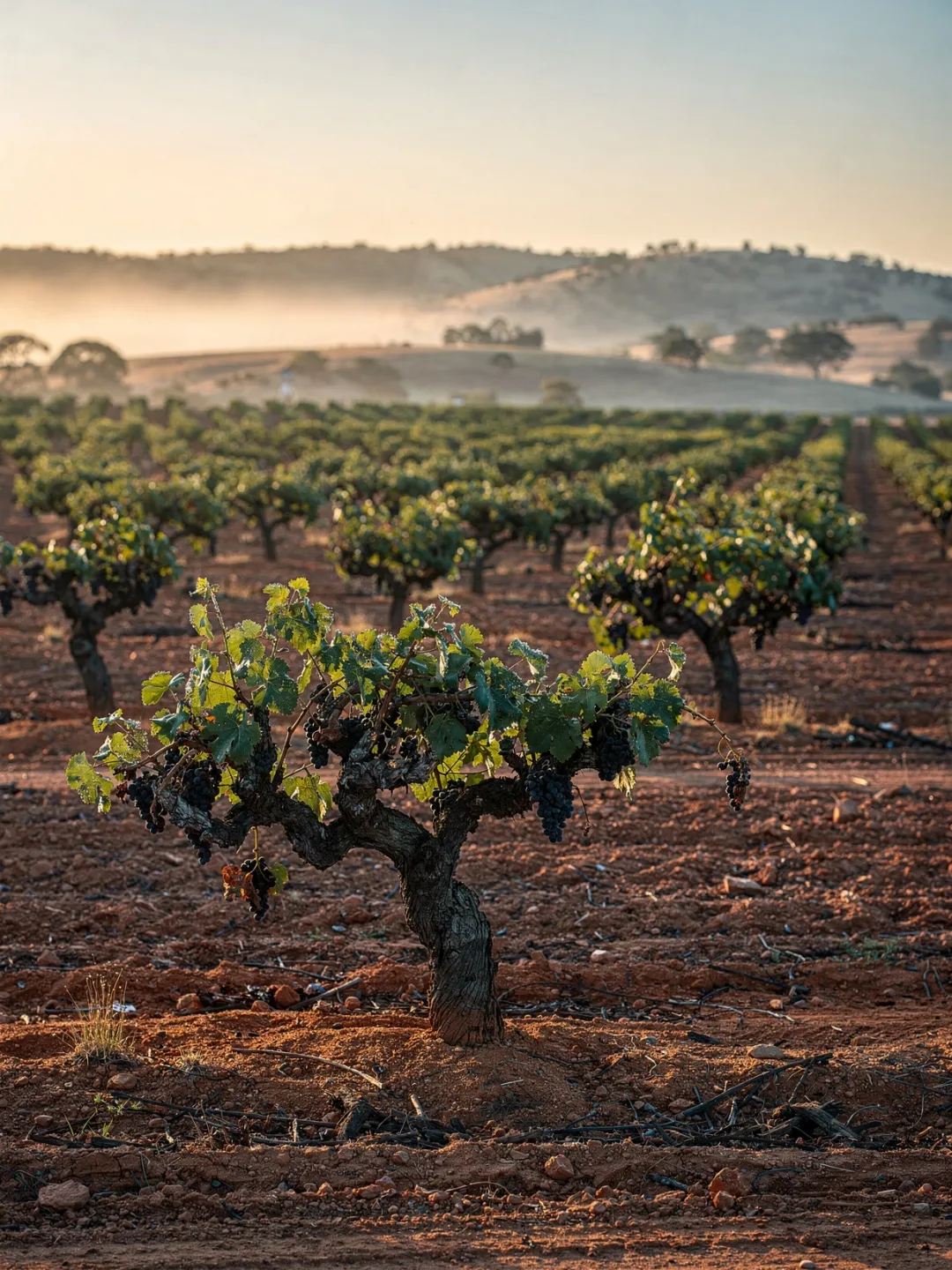
Shiraz, Grenache, Mataro
Grape Varieties
Shiraz defines the Barossa Valley like no other grape variety, though that wasn't always a given. The first vines arrived with immigrants in the 1840s from France, where the same variety is called Syrah. In the hot, dry valley, they found conditions that suited them even better than some steep slope along the Rhône. What ripened here turned out darker and denser, more readily accumulating sugar than the European original.
Alongside Shiraz stand two old companions that hardly anyone outside Australia knows by these names. Grenache, called Garnacha in Spain, buds late and tolerates heat and drought almost effortlessly. Many vines in the valley grow as low bushes without wire trellising, some over a hundred years old, ungrafted on their own roots from before phylloxera. Mataro is the Australian name for Mourvèdre, a thick-skinned, tannin-rich variety that lends the wine spice and structure without ever stealing the spotlight.
These three varieties combine to create the GSM. This blend of Grenache, Shiraz, and Mataro exists in this exact combination practically nowhere else. Grenache brings fruit and sweetness on the palate. Shiraz provides color, body, and dark spice. Mataro holds it all together with its firm tannin. None of the three varieties alone would tell such a complete story.
A few kilometers further east, the valley rises into the higher elevations of the neighboring Eden Valley. There, almost everything revolves around a fourth variety: Riesling. Very little of it grows in the Barossa Valley itself, since the valley floor is too warm. The difference shows how close two neighbors can lie and yet taste so different, and anyone who tastes both wines side by side would hardly believe the vineyards are only half an hour apart by car.