Lamb and Riesling
Wine & Food
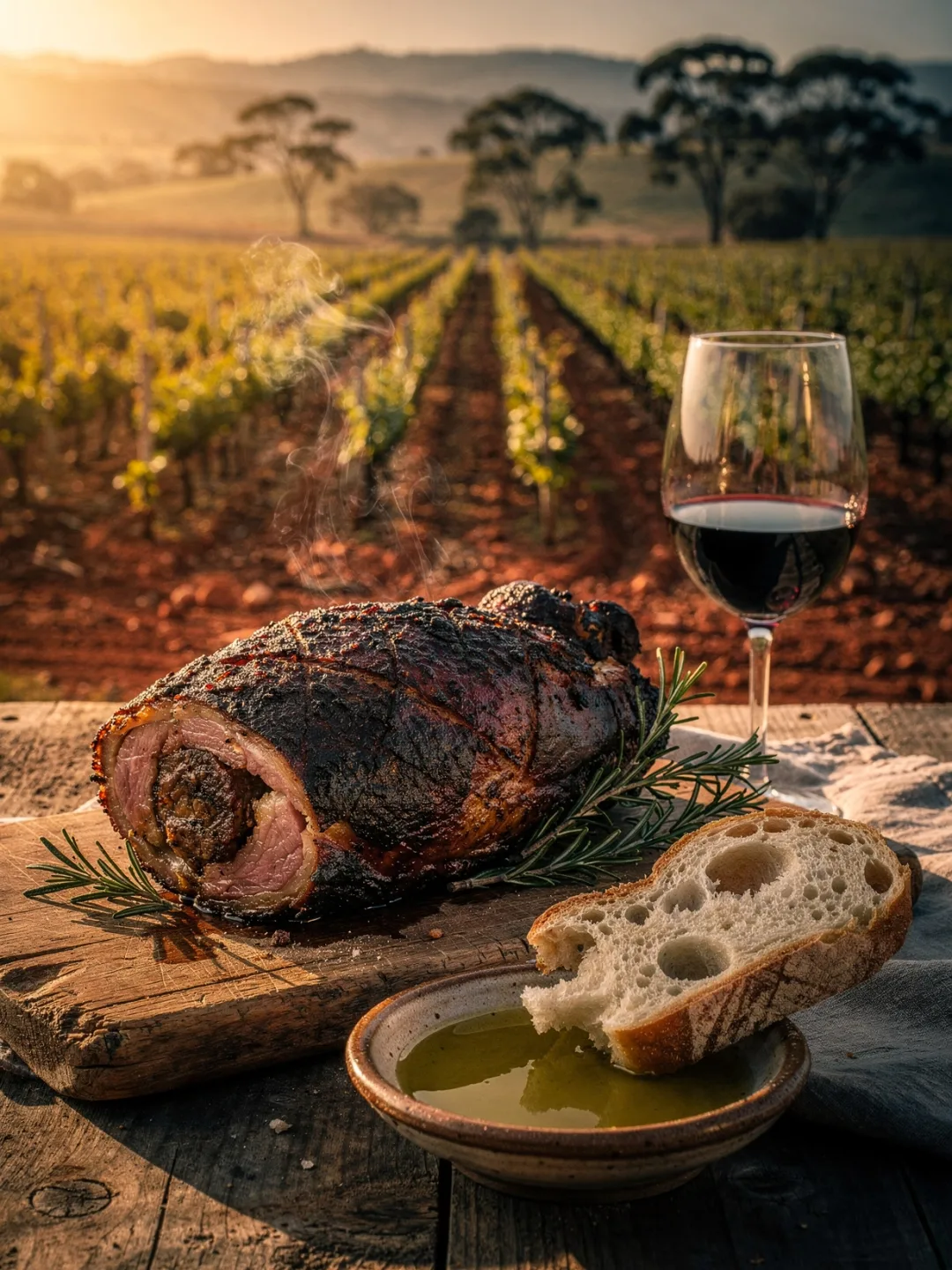
Around Clare Valley, about as many sheep graze as vines grow. This neighborhood shapes the valley's cuisine. Lamb from the pastures around Clare usually ends up slow-braised or grilled over embers on the table. Rosemary and a splash of locally pressed olive oil finish it off. The best match is a robust red wine from that same soil.
An aged Cabernet-Malbec from Wendouree or a Shiraz from the Armagh vineyard easily stands up to the lamb's fat and the rosemary, with the firm tannin binding the fat. The dark fruit carries the grilled, roasted notes further along. After a few years in the cellar, the wine softens enough to stop fighting the dish and start playing with it instead.
Riesling takes on a different role at the table. At the start of an evening, it pairs well with fresh bread, olive oil, and a soft local goat or cow's milk cheese, its acidity cutting through the fat and building appetite for more. A dry Watervale Riesling also pairs well with the free-range eggs many small farms in the valley sell. It tastes better with them than any supermarket-shelf white wine.
Grain shapes the landscape just as much as vines do. Many farms sell their flour directly from the farmhouse, baked into sourdough bread at small bakeries along the Riesling Trail. Cyclists riding the old railway line between Auburn and Clare often stop at the very same spot, where bread, oil, and a glass of wine sit together on a table.
In the end, it's this simple togetherness that defines the valley's cuisine. Lamb from the pasture next door, oil from the estate's own trees, bread from its own grain. Alongside sits a glass of wine, grown on the very same limestone or slate soil as the meat or vegetables just five hundred meters away.