The short answer
A cheese board isn't a single flavor. Mild, salty, creamy, and strongly aged cheeses call for very different companions.
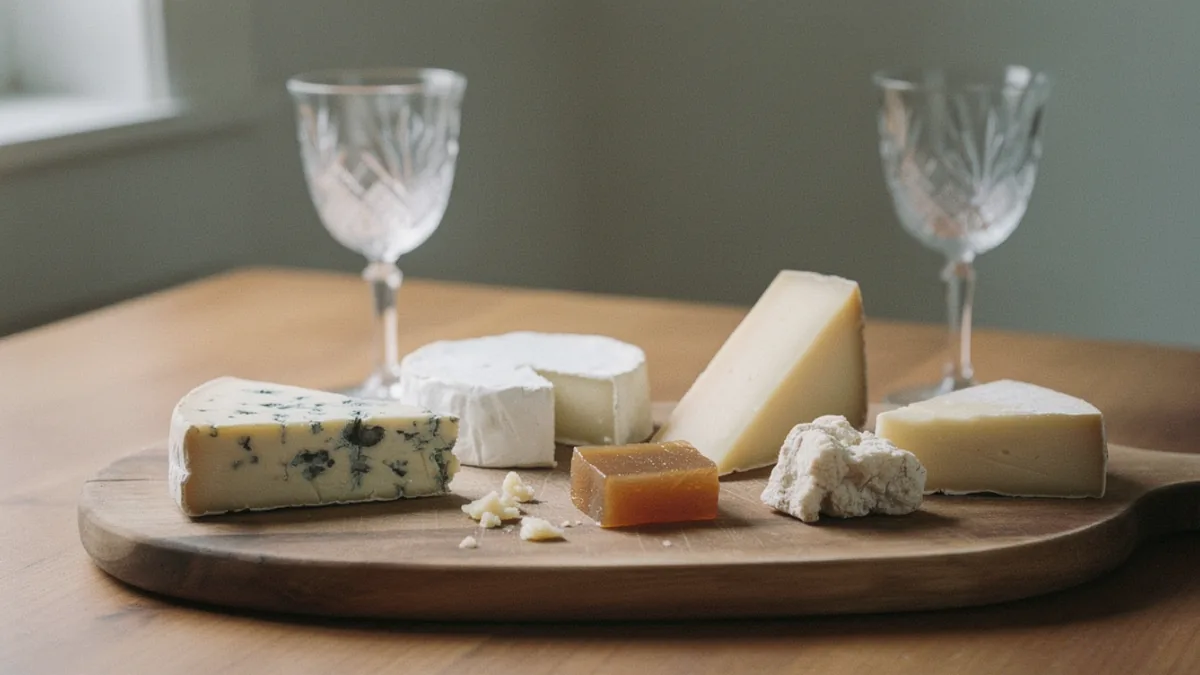
Describing the cheese more precisely
As a personal idea to try, I'd test a fresh white wine with mild fresh cheese. With nutty-tasting hard cheese, a fuller white wine can be appealing. Bold blue cheese is a good occasion to compare a wine with pronounced sweetness in a small tasting.
Sweetness is its own quality here. A fruity aroma alone doesn't make the wine sweet. So check the sweetness indication on the label as soon as you're deliberately looking for a sweet contrast.
The question of which wine suits gets easier as soon as you put the cheese into words. Is it mild and fresh, salty, creamy, or strongly aged? This description gets you further than the name of the cheese type alone. Two pieces with the same name can be aged to very different degrees, and that's exactly what decides which wine still holds up alongside it.
The sweetness indication is usually on the back label and ranges from dry to sweet. It describes what you'll experience on the palate, not what you smell in the nose. If you're deliberately looking for a sweet counterpoint to blue cheese, that's the line to read. A single sip in the glass is enough for a first impression of whether this contrast appeals to you.
A board doesn't need just one bottle
If five very different cheeses sit on the board, hardly any single wine will work equally well with all of them. You can limit the selection to two similar cheese styles. Or you can offer two small drink directions.
Try the cheese first without fig mustard, then with it. A sweet accompaniment can matter more than the type of cheese. Note both down when a pairing works well: the cheese and the accompaniment. That way the moment can genuinely be repeated later, instead of just hoping the name on the wine bottle will do the trick again.
Two drink directions doesn't mean two bottles per guest. It's enough to pour a small amount of each and pass them around the table. Whoever prefers can stick to one glass. Whoever is curious can compare. For the board itself, limiting the selection is the easier path: a few cheeses in the same direction give a clearer picture than a board where everything drowns everything else out.
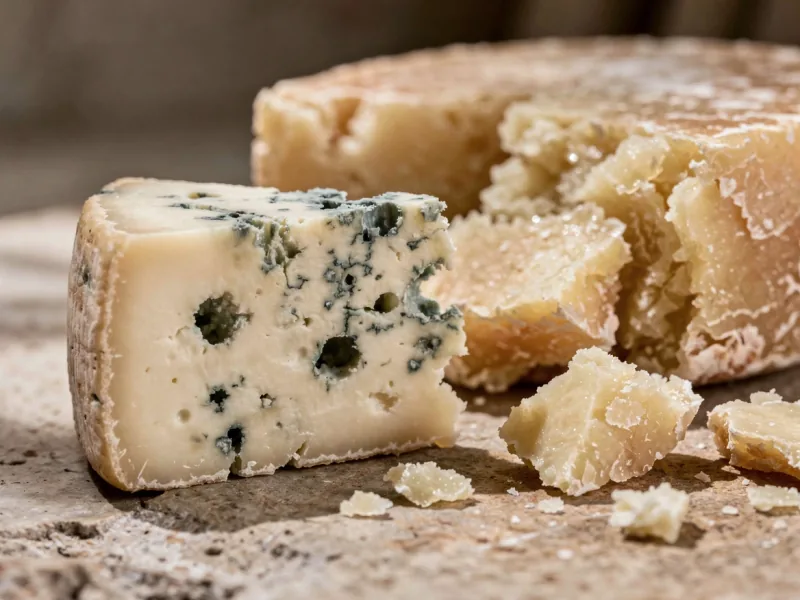
Which wine for which preparation of cheese?
Three starting points as they typically occur on a cheese board, each with a wine direction to try and the reasoning behind it. The reasoning carries the furthest, since it also applies to cheeses that don't appear here at all. How aged and how salty your piece is remains the starting point.
You're free to swap out the wine suggestion, just not the underlying characteristic. So ask in the shop about freshness, body, or sweetness rather than a specific name. That way you'll still get somewhere even if the bottle mentioned happens to be out of stock.
| On the plate | Suggestion to try | What matters here |
|---|---|---|
| Mild and creamy | Fresh white wine as a first attempt | Check whether the freshness stays pleasant alongside the cheese. |
| Strongly aged | Increase the wine's intensity | Salt and spice can shift the impression of the wine. |
| Mixed board | Compare two different companions | A single bottle doesn't have to suit every cheese. |
Why red wine with cheese often misses the mark
The most common misconception: cheese is one flavor, and red wine is the answer to it. There's a lot of taste ground between a mild fresh cheese and a strongly aged piece. Anyone who always reaches for the same bottle notices this quickly. One combination is a hit one evening, the next on the same board feels flat.
The second misconception concerns sweetness. A wine that smells of fruit can be completely dry on the palate. And a sweet wine doesn't have to smell like dessert. The expectation that everything should blend smoothly together can also be misleading. With bold blue cheese, it's precisely the contrast of salt and sweetness that makes the pairing interesting.
A third point is often forgotten: the accompaniments matter too. Grapes, fig mustard, nuts, and bread noticeably change the bite. Anyone who only weighs the cheese against the wine will be surprised at the table by a completely different result.