Riddoch's Fruit Colony
Region & History
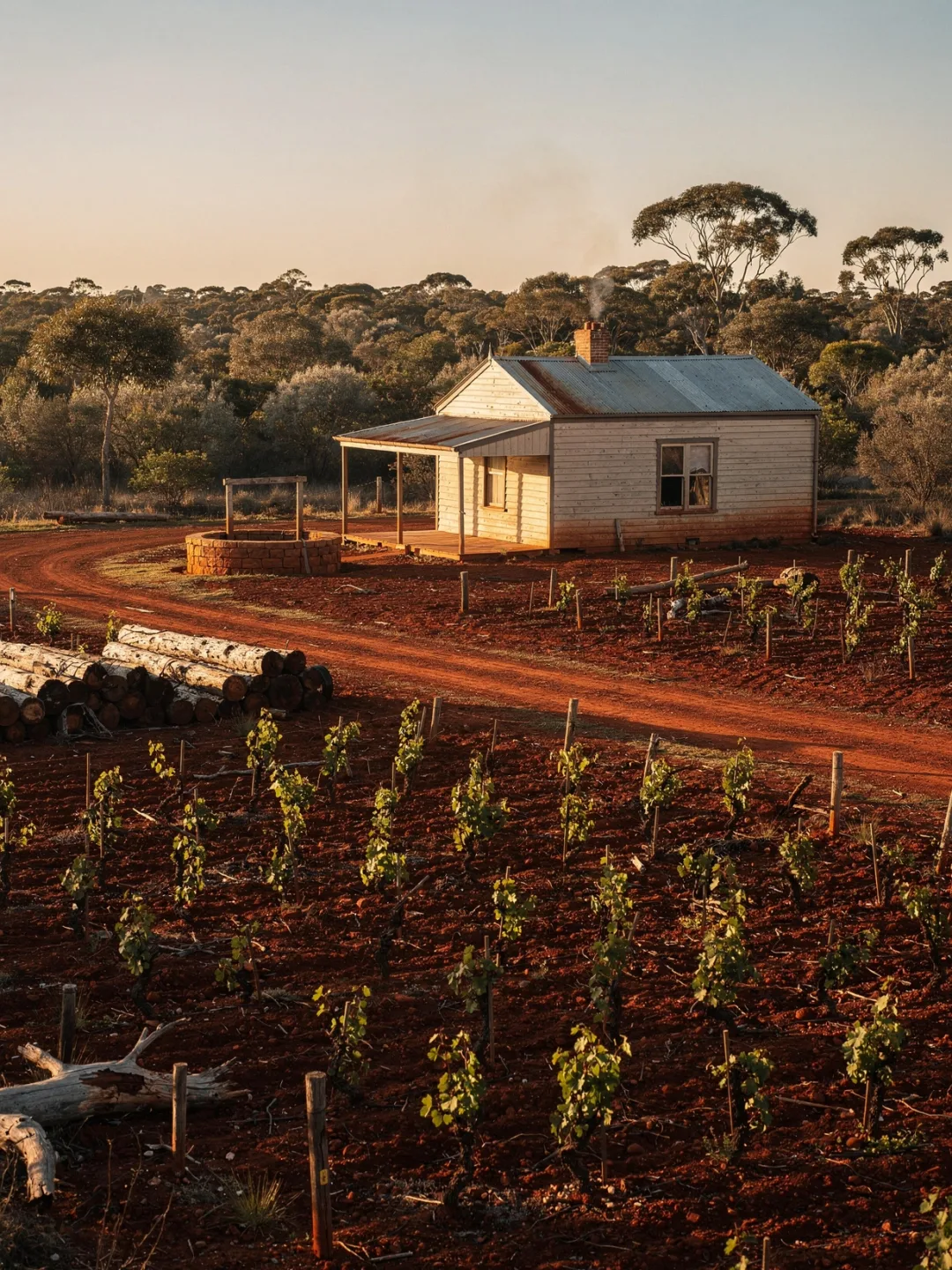
In 1890, John Riddoch divided a strip of red earth near Penola into small parcels. He had come to Australia as the son of a Scottish tenant farmer, made his fortune as a shopkeeper on the Ballarat goldfields, and later bought the grazing land known as Yallum Estate. On his new land, the Coonawarra Fruit Colony, small tenant farmers were meant to grow fruit and wine to make a living. Each family received four hectares.
In the very first year, twenty-six settlers planted ninety-five thousand vines and ten thousand fruit trees. The soil was so red that people soon called it Terra Rossa, Italian for red earth, though hardly anyone at the time suspected how well it would suit wine in particular. The dream of the small farm didn't last long. The banking crisis of 1893 plunged half of Australia into depression, many tenants abandoned their plots, and mainly the larger wine estates survived.
In 1895, Coonawarra bottled its first harvest of its own. Arthur Perkins, South Australia's state viticulturist, came especially to see it. He immediately recognized what was coming together here: the red soil, the mild climate near the coast, and the vines Riddoch had imported. His judgment prevailed. It soon became clear that Coonawarra suited red wine like almost no other spot in Australia, above all for the grape variety that is now world-famous: Cabernet Sauvignon.
A century later, winemakers argued over this very strip of red earth, though not with spades but in court. When Australia built a legal system of geographic origins in the 1990s, officials had to determine for the first time where Coonawarra ends and ordinary farmland begins. Winemakers with vines in the middle of the strip wanted to draw the boundary tightly. Winemakers with vines at the edge wanted it drawn more broadly, and the dispute eventually landed before Australia's Federal Court. It lasted eight years. Only in January 2003 was the boundary finally settled, shortly after the wine company Beringer Blass had sued over the exclusion of its Robertson's Well vineyard. The dispute showed just how much a single word on a label can be worth.