Cabernet Wins Late
Grape Varieties
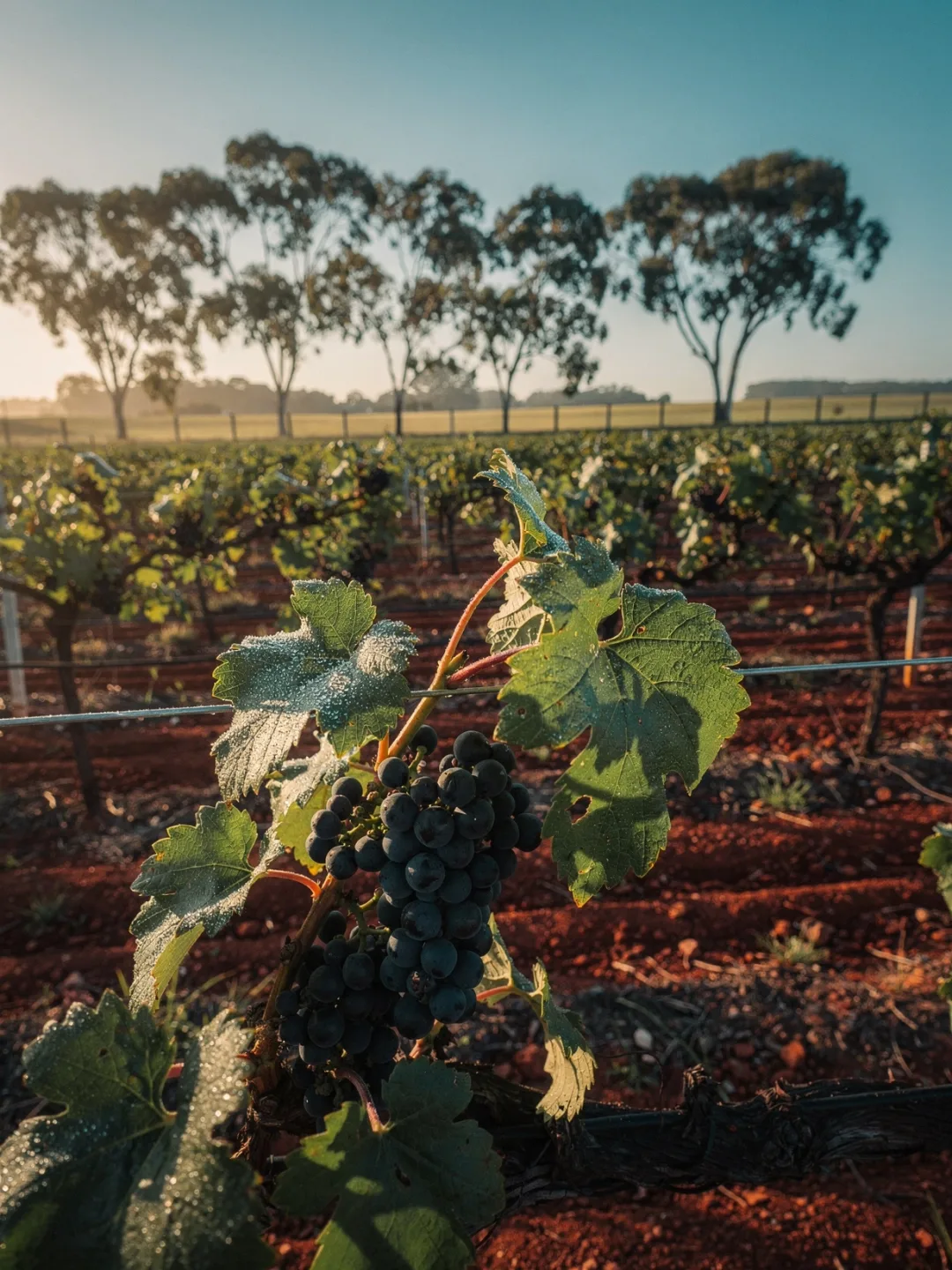
In Coonawarra's early decades, the variety that made the place world-famous today wasn't even the dominant one. Until well into the 1950s, Shiraz mostly filled the rows, robust and high-yielding, well suited to the simple blending wines that back then went from Coonawarra to Adelaide and Sydney. Only after that did the balance shift. Cabernet Sauvignon spread because winemakers noticed that this variety in particular could make the most of the red soil and cool climate. Both principal varieties still grow almost exclusively on the narrow strip of the Limestone Coast, hardly anywhere beyond it.
Cabernet Sauvignon ripens late and has a thick skin. Most of the tannin sits precisely in that skin, the furry substance that leaves the tongue dry after a sip. In Coonawarra, thanks to the cool nights, the grape hangs on the vine for a long time without scorching. That's exactly what it needs to let tannin and color truly ripen. It only tastes green and bitter if it lacks that time.
Alongside Cabernet Sauvignon, Shiraz remains a fixture today, medium-bodied and spicy, with a touch of raspberry instead of Cabernet's black fruit. Winemakers have blended the two varieties into a single wine for generations. In Australia, this was long known simply as Claret, after the English term for Bordeaux red wine. Merlot appears more rarely on its own. Mostly it rounds off the edges of Cabernet Sauvignon as a blending partner, since it ripens softer and delivers sweet fruit earlier.
White wine remains something of a footnote in Coonawarra. Mostly it's Chardonnay from the cooler parcels in the north of the strip. For visitors, though, one thing matters above all: two red grape varieties that together tell more about the place than any brochure ever could.