Early and Dry
Winemaking
Winemaking here begins with a decision no one else would make: harvesting early, before the grapes even taste ripe. Around Pokolbin, Semillon grapes often go into the press at just ten or eleven percent potential alcohol, weeks before a winemaker in cooler countries would even think about picking.
After that, little happens. The must is gently pressed and fermented cool, often at just fourteen to sixteen degrees, so the delicate citrus aromas don't cook off in the heat. The finished wine stays completely dry, no residual sugar remains, and no oak barrel comes into play. This restraint is deliberate, not a matter of economy: even a touch of oak would smother the fine citrus notes that are meant to become honey only after years.
Anyone who thinks this makes the wine simple is mistaken. This very austerity in youth is a risk, since a failed vintage can't later be disguised with wood or residual sweetness. In Broke Fordwich, winemakers say Semillon isn't made in the cellar — it's merely left there.
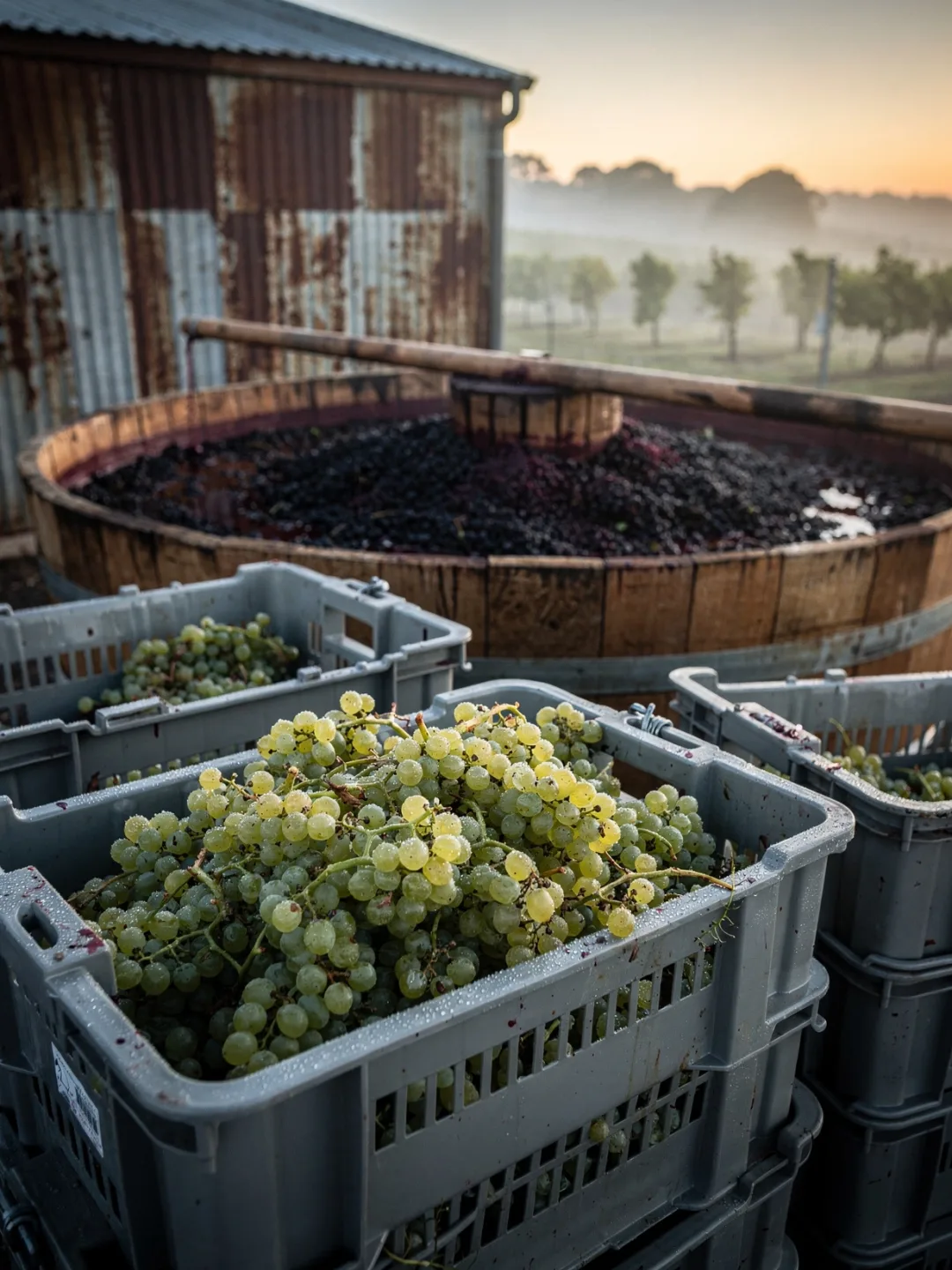
Shiraz gets more attention. It ferments in open vats and is regularly punched down during fermentation. Part of it then ages in large, often already-used barrels, since new oak would overwhelm the restrained, more savory-than-sweet fruit of this cooler growing region.
In the end, what belongs together goes its separate ways. Young Semillon goes into the bottle almost untouched and often lies there for a decade before showing its true face. The Shiraz is ready to drink sooner, but it too gains from cellaring, just on an entirely different timeline.