Bottle Fermentation in Coldstream
Production
In 1986, Moët & Chandon sent its chief winemaker Tony Jordan on a search that lasted eighteen months, looking for a cool site with enough diversity of soil and climate to produce good blends. He found it in Coldstream, on an old dairy farm called Green Point.
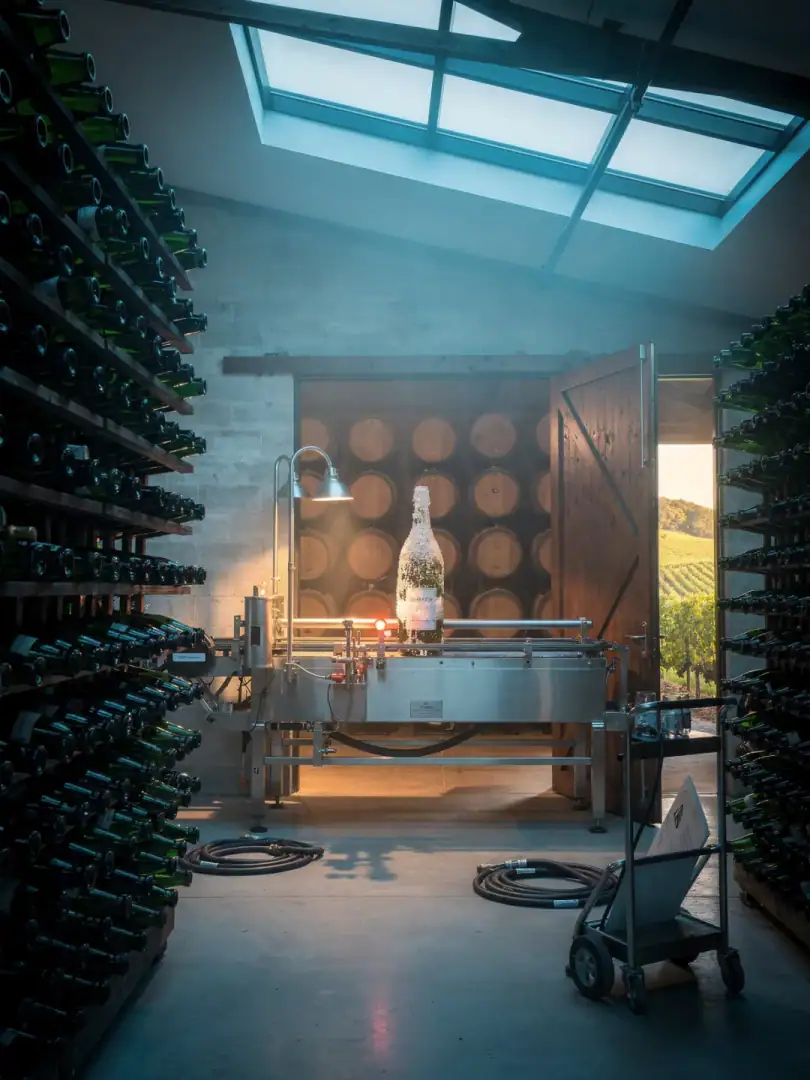
There, sparkling wine is made using the same method as in Champagne: second fermentation in the bottle, from Chardonnay, Pinot Noir, and Pinot Meunier. Harvest for this often begins as early as late February, considerably earlier than for the still wines, because the grapes are picked less ripe and with higher acidity in mind. The grapes come from across the whole valley, from the cool upper Yarra as much as from the warmer valley floor. Only the blend achieves real complexity — a single site alone couldn't deliver that. Domaine Chandon was the first winery of its kind in Australia.
The small producers who revived the region in the seventies work quite differently. At Yarra Yering and Mount Mary, fermentation mostly relies on the estate's own wild yeasts, without added cultured strains, and the wine then ages in French oak, often used rather than new, so the wood doesn't mask the fruit. Handwork remains the rule here, not the exception. Less intervention, more patience: that's more a guiding principle here than an exception.
So two worlds of winemaking stand side by side. Here, the large, precise cellar technology of a Champagne house in Coldstream; there, the small, often family-run cellars further up the valley. Both draw their grapes from the same narrow strip of land. Neither could exist without the cool climate of the Yarra Valley.