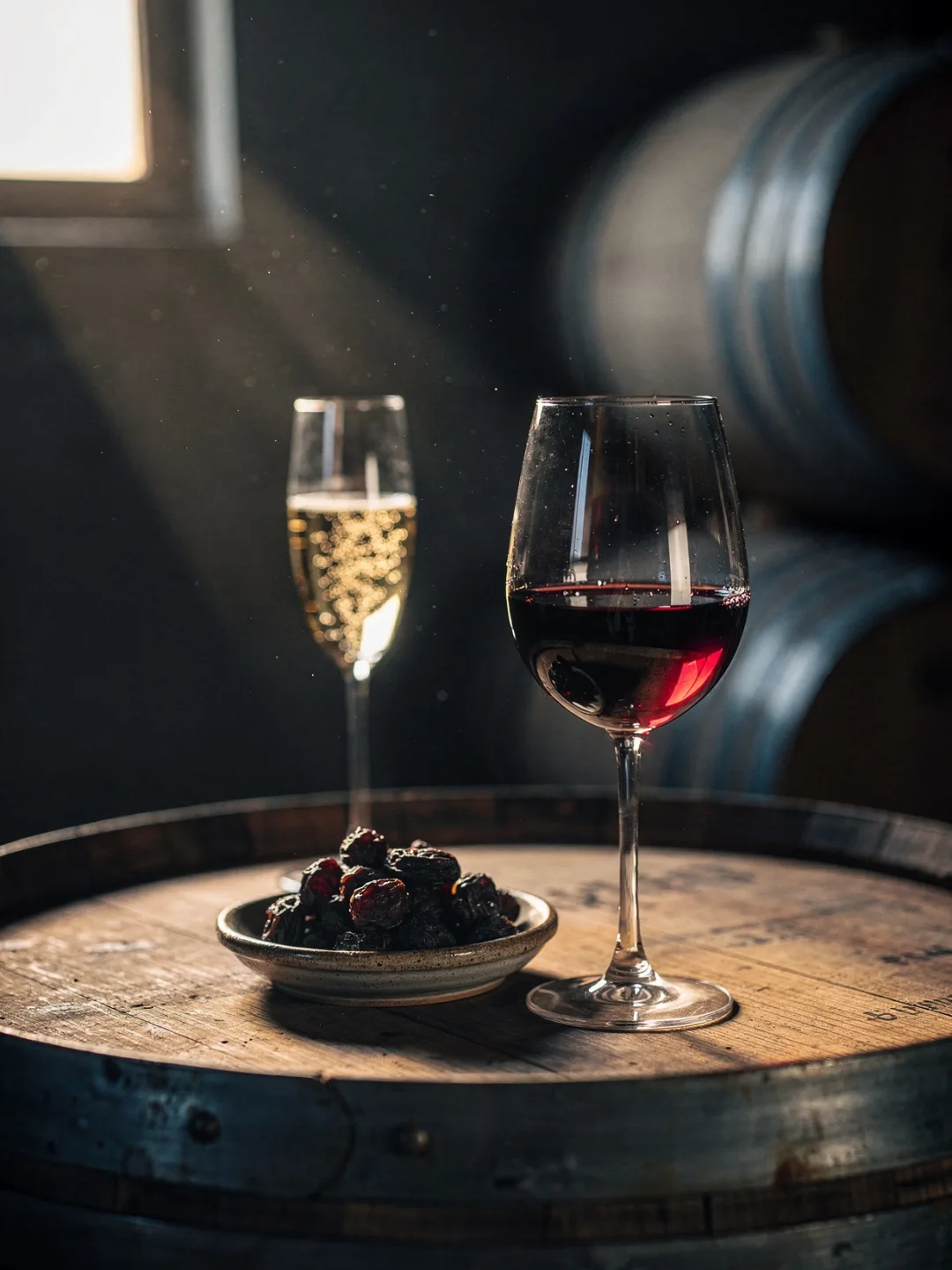
Burgundy Glass & Sparkling Wine Glass
Glassware
A glass decides more than you'd think, and with Yarra Pinot Noir the difference is especially pronounced. The variety is light in colour, delicate in tannin, the drying compound from skins and seeds, and pronounced in aroma. It's precisely that aroma that needs a wide, bowl-shaped Burgundy glass to first gather it and then slowly release it.
A narrow glass compresses the fine cherry and wild strawberry notes together and lets the alcohol dominate, while a wide glass increases the surface area where the wine comes into contact with air. It's exactly that surface area a Pinot Noir from the cool, high-elevation sites around Warburton needs in order to show its aromas at all. Chardonnay, too, gets a bowl-shaped glass, similar to the one used for white Burgundy.
For the sparkling wine from Coldstream, the opposite holds true. Domaine Chandon bottles its sparkling wine using traditional bottle fermentation, with a fine, long-lasting mousse — the rising carbon dioxide bubbles — but neither the narrow flute nor the flat coupe of old does it justice. A tulip-shaped glass with enough width lets the mousse rise properly. That way, the aromas of toasted bread and citrus peel don't get lost in a glass that's too narrow.
Temperature matters just as much as shape. The sparkling wine comes well chilled straight from the fridge, keeping its freshness intact. The Pinot Noir, on the other hand, should be cooler than room temperature, though it still stays noticeably warmer than the sparkling wine. Served cold, it tastes thin and hard, even though that's not its true character.