Monastery, Rider, Riesling
Region & History
Wine has grown here for over a thousand years, but the Rheingau as we know it today begins in a monastery. On February 13, 1136, Abbot Ruthard and twelve monks set out from Clairvaux in Burgundy and settled in the valley near Eltville, founding Kloster Eberbach. It was the only daughter foundation of Bernard of Clairvaux on German soil. What they brought with them was more than faith. It was a way of working: testing soils, separating vineyard sites, documenting harvests, year after year.
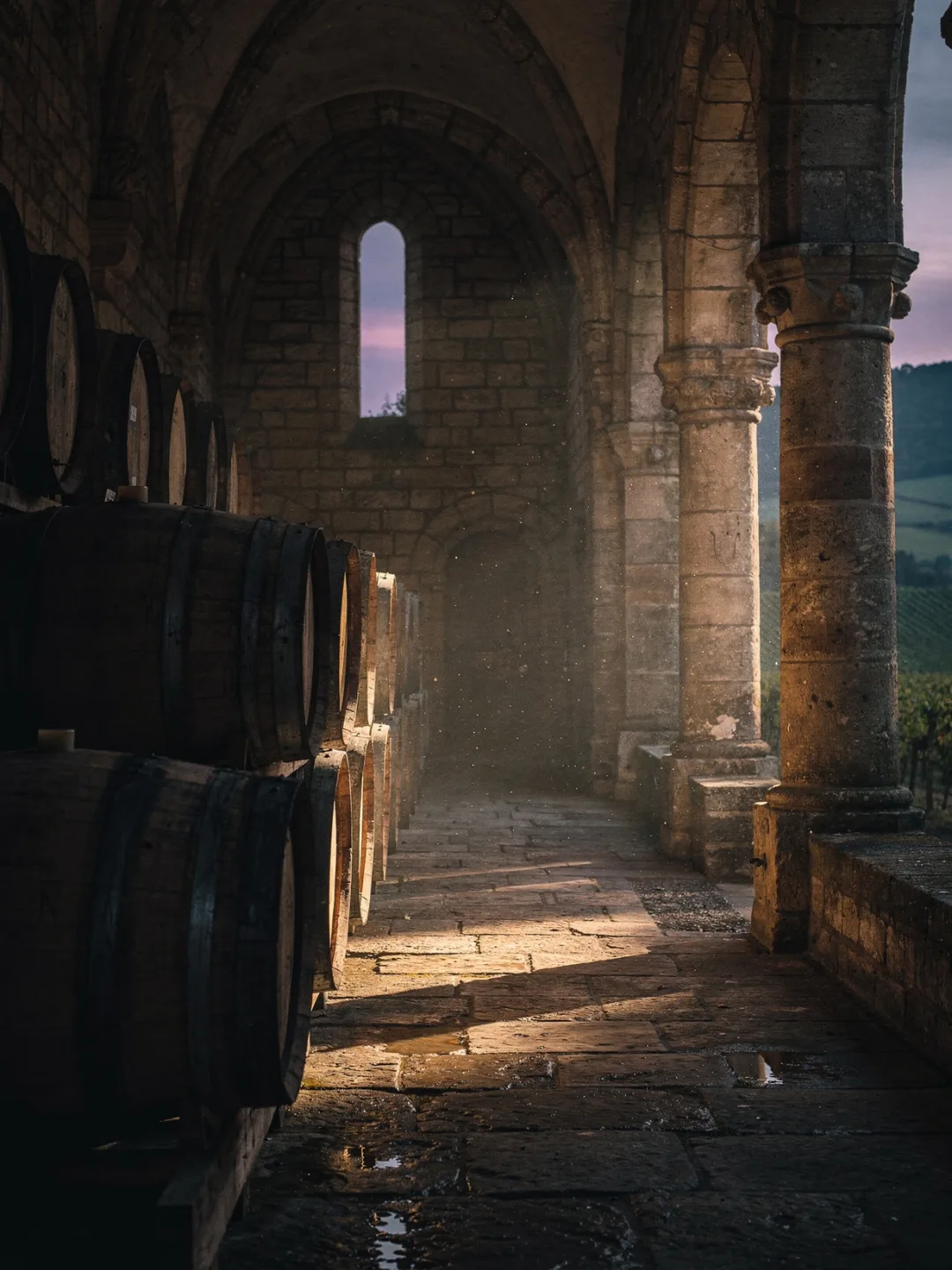
Downstream, in Johannisberg, something happened in 1720 that still resonates today. Monks planted the world's first enclosed vineyard consisting of a single grape variety: Riesling. Schloss Johannisberg has called itself the world's oldest Riesling estate ever since, and a year later the 260-meter-long cellar gallery beneath the castle was completed, room enough for thousands of barrels.
The most important accident in German wine history happened in 1775, and it happened purely because of bureaucracy. Johannisberg belonged at the time to the Prince-Abbot of Fulda, who decreed by edict when the harvest could begin. A rider had to fetch the permission from 220 kilometers away. He arrived fourteen days late. The grapes had long since passed full ripeness, some already shriveled and covered in grey mold. The monks fully expected a lost vintage. They picked anyway. What emerged from the seemingly rotten berries in the barrel surpassed every wine ever pressed in Johannisberg before. Noble rot had been discovered, and with it, the Spätlese.
The messenger himself has stood as a bronze figure in the courtyard of Schloss Johannisberg since the 1960s, a grape held aloft in his hand: the Spätlesereiter. From the same monastic estate comes a second word that still appears in every German wine law today. In the Cabinetkeller of Kloster Eberbach, first mentioned in 1730, the monks stored their best vintages separately from the ordinary stock, in their own locked cabinet. The name stuck to the finest barrels.
After the war, the Rheingau too drifted toward sweet and cheap. In 1984, a handful of winegrowers in Geisenheim pushed back and founded the Charta association: dry Riesling, strict yield limits, no significant residual sugar. State recognition followed in 1999. Since that vintage, wines from classified sites may be sold as Erstes Gewächs — the Rheingau's own answer to the question of what a great dry wine should be here.