The short answer
Riesling is a white grape variety. Its wines are usually fresh and fragrant with fruit. It comes dry, off-dry, and dessert-sweet. So the variety name alone won't tell you how sweet the bottle tastes.
What shapes the style
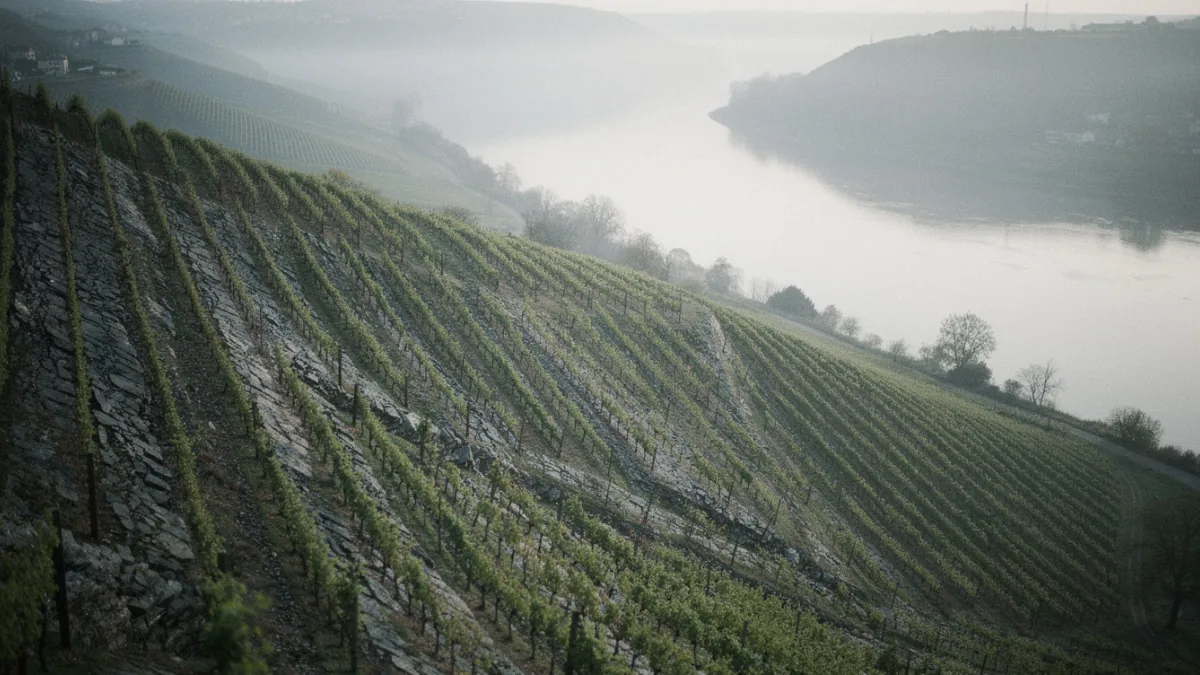
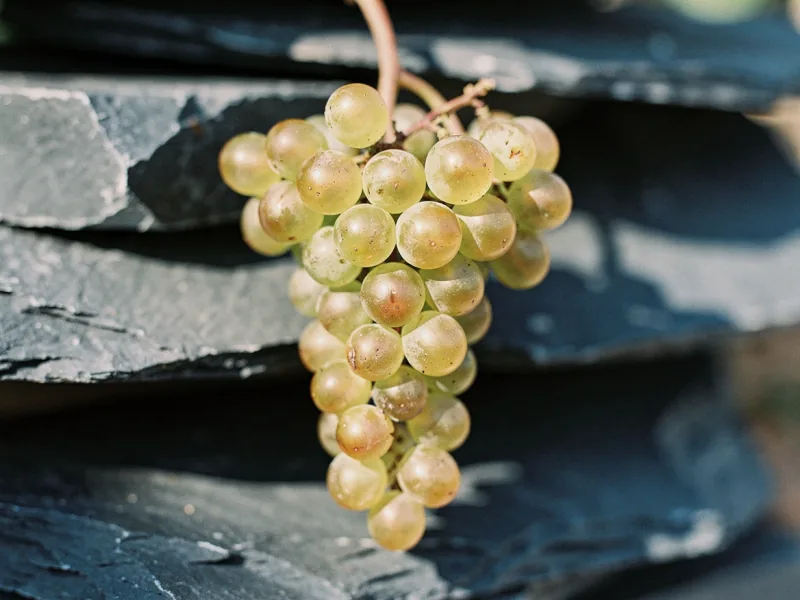
Apple and peach are the most common descriptors for the aroma. In aged Rieslings, other impressions join in, sometimes including the so-called petrol note. Not every bottle has to show that, though. Origin, age, and the work in the cellar shape the style. Riesling is also used to make sparkling wine.
A single bottle doesn't describe the whole variety. A light, off-dry wine and a bold, dry bottling are two completely different experiences. Off-dry means: some of the sugar from the grape remains in the wine. If one Riesling didn't suit you, the next one could still be exactly your thing.
The petrol note regularly causes confusion. The name already gives it away: a scent that simply doesn't smell like fruit. Some people love it in aged Rieslings, others clearly reject it. Both are fine. Young wines usually don't show it at all. Its absence isn't a flaw—it's a matter of age and origin.
Riesling sparkling wine is worth trying if you like the freshness of the variety. You'll find that same character here, just with bubbles. The question of sweetness stays the same, though. Even with sparkling wine, the variety name doesn't tell you how sweet the bottle ultimately tastes.
What to say in the shop
Don't just say Riesling in the shop. Add whether you'd like some sweetness and whether you enjoy bold freshness. For a spicy dish, I'd personally look first for an approachable style with a bit of sweetness rather than the boldest wine on the shelf. That's a suggestion for your plate, not a rule.
You'll learn fastest by comparing. Take two wines with clearly different sweetness levels. Pay attention to which impression sticks: pleasantly fresh, too sharp, or too sweet. These three words will help you more at your next purchase than a memorized list of aroma descriptors.
Keep two things separate here: aroma and sweetness. A wine can smell strongly of peach and still taste dry. If you ask for something fruity in the shop, you often won't get what you actually mean. Better to say directly whether you want sweetness on your tongue. Everything else can be narrowed down calmly from there.
How to find a Riesling you'll enjoy
Four steps take you from the question in the shop to your own comparison at home. They don't replace expert knowledge. They just help sort out what you actually want.
| Step | Specific question or action |
|---|---|
| In conversation | Dry or off-dry? |
| On the label | Read the sweetness level alongside the grape variety. |
| While tasting | Is the acidity pleasant to me, or too intense? |
| Your comparison | Compare two Rieslings with different sweetness levels but a similar occasion. |
Riesling isn't automatically sweet
The most persistent equation is Riesling equals sweet. It's not true. The variety covers dry, off-dry, and dessert-sweet wines. Just as common is the reverse assumption: that a fruity aroma automatically means sweetness on the palate. That doesn't hold either. Go by the sweetness level on the label. That way you'll miss the mark much less often.
A second misunderstanding concerns the petrol note. Many consider it a flaw. In some aged bottles, it's simply part of the character. And one more thing: a disappointing bottle says little about the whole variety. There are worlds of difference between a light, off-dry wine and a bold, dry bottling, even though the same word appears on both labels.
Comparing dry and off-dry Riesling
Take two bottles with clearly different sweetness levels and open them the same evening. Same glasses, same temperature, small pours. Try both side by side first, without food. Then taste them again with whatever's on the table. Often the impression shifts noticeably, especially with spicy or richly seasoned dishes.
Jot down at most three words for each wine. Pleasantly fresh, too sharp, too sweet—that's plenty. With a description like that, a shop assistant can actually work with you next time. And you'll quickly notice which direction your own taste leans.