Using Pettenthal as an Example
Tasting
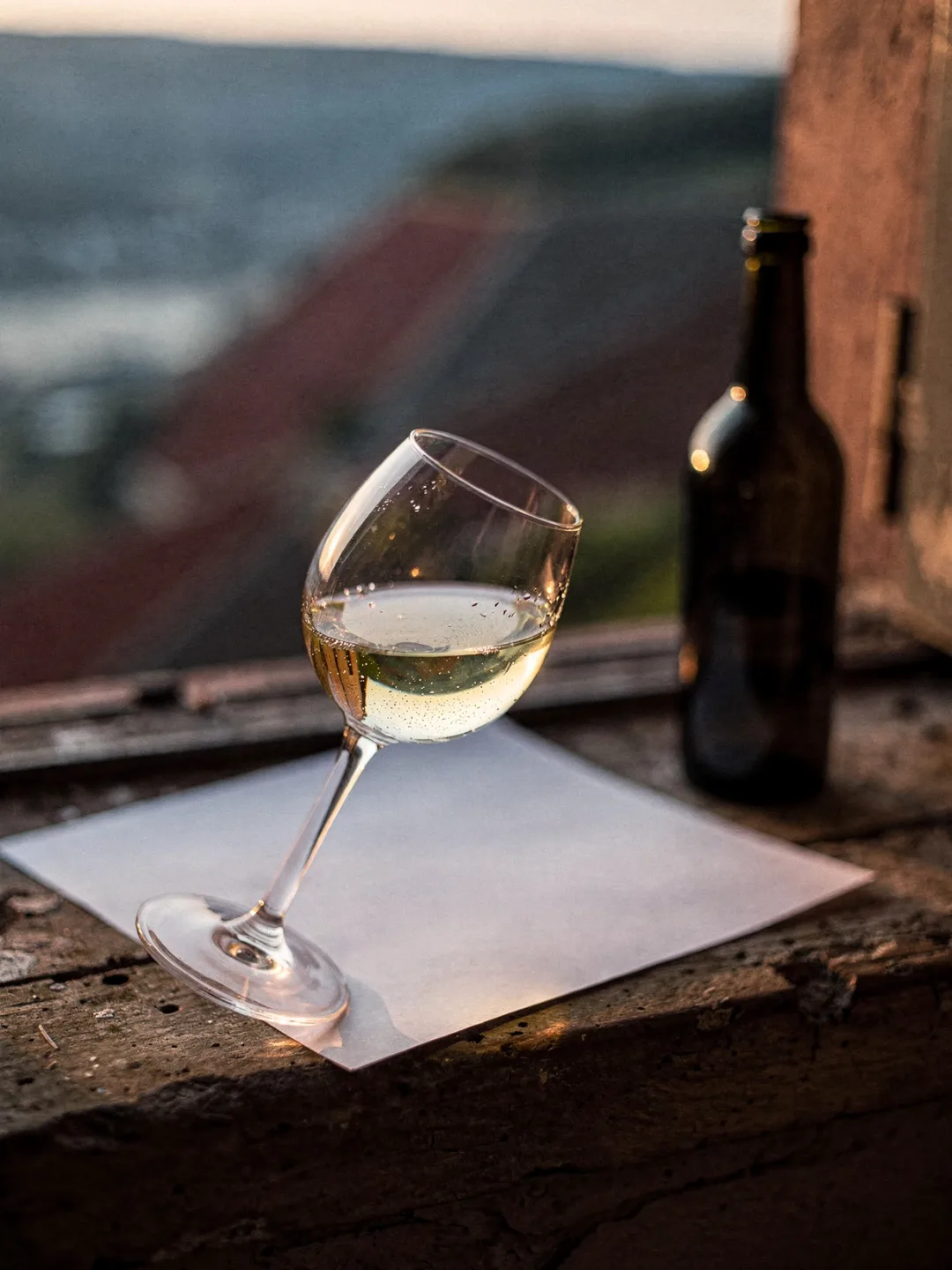
Take a glass of Riesling from the Niersteiner Pettenthal and hold it against a white sheet of paper. Young, it shows a pale green-yellow with an almost silvery shimmer, barely darker than water with a drop of lemon juice, and only after eight to ten years does the color slowly drift toward gold. That's a good sign. Something interesting is happening in the glass right then.
Simply smell it twice: once with the glass still, once after swirling. Young, stone fruit dominates — white peach, sometimes a touch of apricot — alongside a note many describe as flint or struck stone, which comes from the iron-rich Rotliegend soil. This changes over the years, as older Rheinhessen Rieslings develop a scent of petrol that delights connoisseurs and sometimes puzzles newcomers.
On the palate, pay attention to two things that must support one another: acidity and extract. The acidity of a Riesling from the Roter Hang runs high, and without enough fruit sweetness or extract behind it, the wine would quickly taste sharp and unpleasant. A good Grosses Gewächs balances both sides, so the acidity reads as tension rather than harshness.
Sometimes something resembling sugar or glass splinters turns up at the bottom of the bottle or on the cork: tartrate crystals. These are precipitated acid crystals, not a fault and not a foreign body, and they occur more often in cool, long-aged Rheinhessen Rieslings than in wines from warmer regions. There's no cause for concern. Anyone who finds them in the glass can keep drinking without worry.
Finally, count. How long does the flavor linger after you swallow? With a simple estate wine, that's three or four seconds, but a Grosses Gewächs from the Pettenthal or Rothenberg often stretches on for twenty seconds or more. In the end, only a salty, mineral note remains once the fruit and acidity have long faded.