Chalk & Flint
Soils
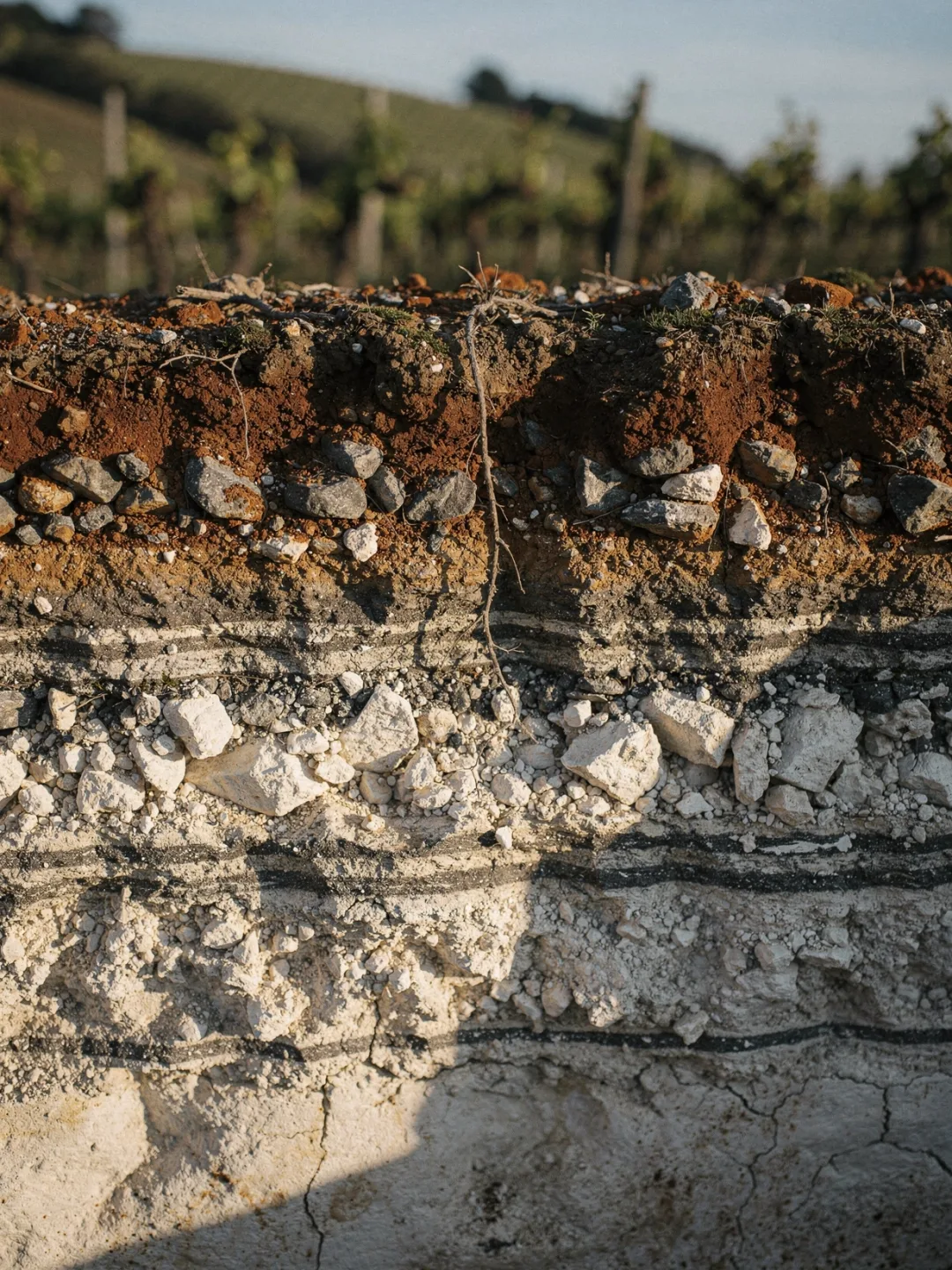
Dig a hole in a vineyard on the North Downs. After the first twenty or thirty centimetres, the earth turns reddish-brown and full of sharp-edged flints that look as if someone buried them there on purpose. Only beneath that does the actual bedrock appear: pure, white chalk.
This chalk is ancient. It formed around eighty million years ago on the floor of a warm, shallow sea. Microscopic calcite skeletons from countless algae settled there layer by layer. The same rock stratum dips beneath the English Channel and resurfaces in Champagne. Geologists have since identified small differences in age and in the fossils it contains.
For the vine root, this is a stroke of luck. Chalk is porous like a sponge, letting water pass through while also holding a reserve for dry spells. The root doesn't have to fight its way between stones. It grows steadily downward and finds there the even moisture that makes ripe grapes possible at all, without rot or stress.
Right at the top, however, lies that reddish clay layer full of flints that experts call clay-with-flints. It holds considerably more water than the chalk beneath and can be several metres thick in places. Where it stays thin or is absent altogether, as at Taittinger's Domaine Evremond in Chilham, the vines root more quickly straight into the chalk and ultimately produce the leaner, more mineral grapes that remind some connoisseurs instantly of chalk-driven wines from Champagne.
Not every Kent vineyard sits on chalk at all. The county's oldest sites, including Biddenden, lie further south in the Weald, on heavy clay and sandstone rather than limestone. These soils warm up more slowly in spring, but in return hold more water through a dry summer. Two completely different soils, one single county: that's why Kentish wines never taste quite the same from one vineyard to the next.
Reddish-brown clay full of sharp-edged flint nodules, called clay-with-flints in Kent — a surface layer over the chalk.
The root: This is where the fine roots sit. The dense, water-retentive layer only lets them push slowly down into the depths.